


MBBR Media
JUNTAI- Professional China MBBR Manufacturer and Supplier
105 extrusion production lines丨clients from 100+ countries丨30000m2 factory aera


Juntai Water Treatment Calculator: Optimize Your System Design in Minutes
What is the Juntai Water Treatment Calculator?
Juntai’s Water Treatment Calculator is an AI-powered engineering tool designed for wastewater engineers, plant managers, and sustainability professionals. This web-based platform analyzes 15+ critical parameters – including influent COD/BOD levels, flow rates (up to 10,000 m³/day), and discharge compliance targets – to generate precise recommendations for:
MBBR Biofilm Media → Calculate carrier fill ratios & surface area requirements
Clarifier Sizing → Determine optimal inclined tube settler dimensions
Aeration Systems → Estimate diffuser quantities & energy consumption
Cost Projections → Compare CAPEX/OPEX across multiple scenarios
Frequently asked questions (FAQ):
What is MBBR?
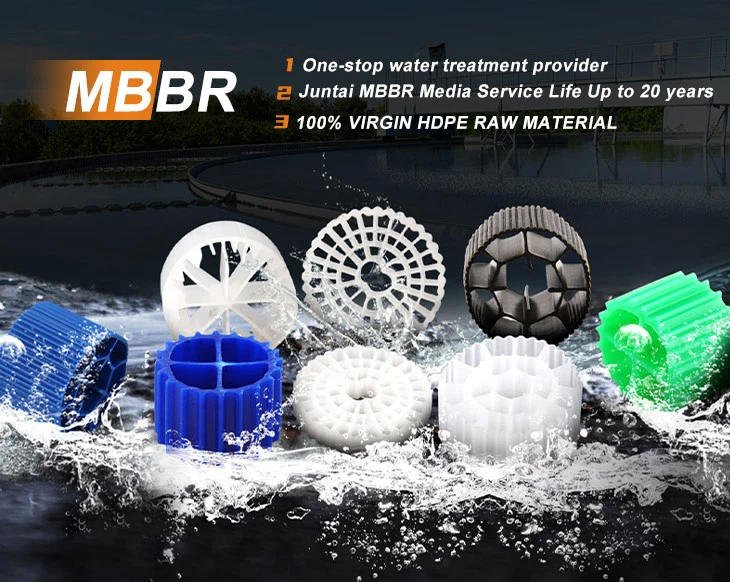
MBBR (Moving Bed Biofilm Reactor) is an advanced wastewater treatment technology that uses suspended plastic carriers (MBBR media) to provide growth surfaces for microorganisms. With 15 years of manufacturing experience, Juntai produces carriers boasting a specific surface area of 800-1,200㎡/m³, successfully implemented in 500+ municipal and industrial wastewater projects worldwide.
What are the advantages of MBBR?
Juntai MBBR solutions offer three core benefits:
Superior Treatment Efficiency - Patented vortex design achieves 95% COD removal rate
Zero-Clog Operation - Special surface texture prevents biofilm over-accumulation
Cost Efficiency - 40% lower energy consumption vs. traditional activated sludge systems
Our HDPE media has passed 10,000-hour durability tests with a service life exceeding 10 years.
How to select the right MBBR model?
Based on Juntai engineering team's 20-year field experience:
-Municipal/Industrial Wastewater: Recommended MBBR-19 (950㎡/m³) or MBBR-37 (1,200㎡/m³)
-Aquaculture Recirculation: Specialized MBBR-64 (anti-fouling coating) and MBBR-90 (ultra-high porosity)
Note: Model numbers indicate specific surface area grades. Higher numbers handle heavier pollution loads. Use our online selector tool for customized solutions in 5 minutes.
How is MBBR produced?
Through Juntai's 105 fully automated extrusion lines:
1.Food-grade HDPE material pretreatment
2.Precision mold extrusion under constant temperature
3.Surface micropore activation
4.Three-stage QC: density/porosity/impact resistance
All batches come with SGS-certified physical-chemical performance reports.
Where to buy the best MBBR?
As one of the world's largest MBBR manufacturers, Juntai offers:
✅ Factory-direct pricing (no middleman markup)
✅ Free sample testing (20kg trial batches available)
✅ technical support (biofilm cultivation guidance)
Trusted by Fortune 500 clients with exports to 100+ countries.
Can Juntai handle my project with on-time delivery?
With daily production capacity of 50 tons and in-house logistics:
Guaranteed Delivery: 7 working days for orders <500 tons
Quality Assurance: 12-month warranty + lifetime technical support
Emergency Response: 72-hour response and fast shipping available (served 30+ urgent wastewater projects)
MBBR applications in different industries

Pulp & Paper Industry
MBBR systems tackle high-volume wastewater from paper mills, efficiently degrading lignins and organic solvents. Juntai’s biofilm carriers reduce COD by 85-92% while handling pH fluctuations common in pulping processes.

Dairy Processing Plants
Combat milk-processing wastewater with BOD levels up to 4,000 mg/L using MBBR. Our HDPE media achieves 90% fat/oil removal, ensuring compliance with EU Directive 2020/741 discharge limits.

Chemical Manufacturing
Treat complex organics (phenols, benzene derivatives) with shock-load resistant MBBR configurations. Juntai’s anti-corrosion JT-MBBR-37 model maintains 95% treatment stability under variable TDS (up to 15,000 ppm).

Textile Industry
Compact MBBR units remove azo dyes and formaldehyde in space-constrained dye houses. Achieve 80% color removal with Juntai’s porous media, certified for textile effluent by Oeko-Tex® STeP.

Aquaculture & RAS Systems
Control ammonia spikes (NH3-N >5mg/L) in recirculating systems using Juntai’s aqua-optimized JT-MBBR-90. Maintain dissolved oxygen >6mg/L while reducing water exchange rates by 70% – ideal for shrimp hatcheries and salmon farms.

Municipal Wastewater
Scale MBBR for 50,000+ population equivalents with Juntai’s modular designs. Our systems achieve <10mg/L BOD effluent consistently, meeting Class 1A standards (40 CFR Part 133) even during peak flows.
How MBBR Works:
Efficient Wastewater Purification Explained:
The MBBR (Moving Bed Biofilm Reactor) system uses thousands of small plastic biofilm carriers suspended in a treatment tank. These carriers provide a large surface area for beneficial microorganisms to attach and grow. As wastewater flows through the reactor, the microbes break down organic matter, nitrogen, phosphorus, and other pollutants, effectively cleaning the water.
Key Process Features:
● High-Efficiency Carriers: Durable polyethylene media maximize microbial growth.
● Continuous Treatment: Moving carriers ensure constant contact between microbes and wastewater.
● Low Maintenance: Self-regulating biofilm prevents clogging and system downtime.
● Ideal for industrial and municipal applications, MBBR delivers reliable contaminant removal in compact, energy-saving systems.

AAO Process & MBBR Integration: Optimized Nutrient Removal
The AAO (Anaerobic-Anoxic-Oxic) process is a proven method for simultaneous removal of organic matter, nitrogen, and phosphorus. Here’s how MBBR enhances its efficiency:
1. Anaerobic Stage
> Objective: Initial BOD reduction (40-60%)
> Process: Microbes degrade organics without oxygen, preparing wastewater for nutrient removal.
2. Anoxic Stage
> Key Action: Denitrification (70-90% nitrate removal)
> Mechanism: Bacteria convert nitrates to nitrogen gas using organic carbon as energy.
3. Oxic Stage with MBBR
> MBBR’s Role: Biofilm carriers boost nitrification capacity by 50% vs conventional systems.
> Nitrification: Ammonia → Nitrite → Nitrate (95% efficiency)
> HRT Reduction: Achieve treatment goals in 4-6 hours vs 8+ hours in ASP
Why Combine AAO + MBBR?

Space Savings
Compact MBBR units cut tank volume needs by 30%

Energy Efficiency
Targeted aeration reduces power use by 25%

Stability
Biofilm resists shock loads (up to 5kg COD/m³/day)

Juntai MBBR Media: Engineered for Excellence
Advanced HDPE Material
Core Composition: 100% High-Density Polyethylene (HDPE)
Density: 0.96 g/cm³ (Customizable for specific wastewater profiles)
Why HDPE Outperforms Standard PE:

Extended Lifespan
- Withstands harsh chemical/thermal conditions (pH 2-12, -40°C to 80°C)
- 20+ years of service life, validated by accelerated aging tests

Mechanical Resilience
- Impact strength >10 kJ/m² prevents fracturing in high-shear environments
- Retains structural integrity under continuous aeration

Biofilm Optimization
- Microsurface texture enhances microbial adhesion (30% faster colonization vs. LDPE
- Cleanroom Manufacturing: ISO Class 8 facilities eliminate particulate contamination
- Automated Extrusion: 45+ high-speed lines ensure ±0.05mm dimensional accuracy
- Real-Time QC: Laser scanners detect defects at 200 frames/sec


Global Logistics Network
- Consignment Ready: Pre-stocked hubs in EU/NA/ASEAN regions
- Certified Packaging: UV-resistant crates with moisture control
- Duty-Free Solutions: INCOTERM optimization for 100+ countries
Lifecycle Support
- Performance Testing: Free biofilm activation guidance pre-deployment
- Maintenance Programs: Carrier integrity inspections via drone-assisted tank scans
- Technical Hotline: 24/7 multilingual engineer support
Juntai Factory: Innovating Water Treatment Solutions Since 2013
As a National High-Tech Enterprise certified in 2019, Juntai specializes in advanced water treatment technologies from our 6,760 m² ISO 9001-compliant factory in Anqing, Anhui Province.
Core Capabilities:
- Patented Product Portfolio: MBBR biofilm media, tube settlers, disc/tube diffusers, and PVC components
- Scalable Manufacturing: 55 high-speed extrusion/injection lines producing:
100,000+ m³/year MBBR carriers
8,000+ tons/year tube settlers & aeration systems
- Global Compliance: CE, NSF, and RoHS certifications for international projects
Engineering Excellence:
Developed 120+ proprietary technologies, including anti-clogging diffuser designs and high-surface-area biofilm carriers (up to 1,200 m²/m³).
Our R&D team holds 23 patents optimizing:
Nutrient removal efficiency
Chemical resistance (pH 2-12 tolerance)
Operational lifespan (>15 years)
Trusted by municipal and industrial clients worldwide, Juntai delivers precision-engineered solutions for wastewater treatment, aquaculture, and process water applications.
MBBR Bio-Media Storage Guide | Ensure Optimal Performance
Key Storage Principles:
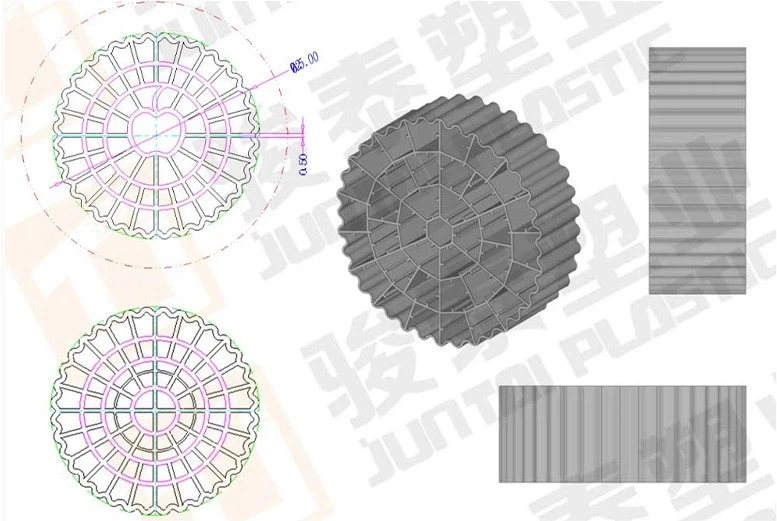
Protect Juntai MBBR carriers from UV exposure, moisture, and physicalstress to maintain their 15+ year lifespan, Follow these essentials:
Storage Conditions

Indoor Priority
- Stacking: Max 2m height (≤2 bags/layer)
- Environment: Dry, <40°C, UV-filtered lighting
- Layout: Neat alignment on pallets

Outdoor Solutions
- Base Prep: Level ground + plastic moisture barrier
- Covering: UV-resistant tarps (replace every 6 months)
- Stack Limit: 1.5m height with staggered layers
Critical Protection Measures
Sunlight Defense
- Maximum 3 hours/day direct UV exposure
- Use silver-coated covers for tropical zones
Damage Prevention
- Avoid sharp objects within 2m radius
- Forklift operation zones clearly marked
Moisture Control
- Maintain <60% relative humidity
- Desiccant packs inside sealed bags
Maintenance Checks
- Monthly: Inspect covers/seals, test bag integrity
- Annual: Lab-test sample media porosity & buoyancy
- Post-12 Months: Transfer to climate-controlled storage
Expired Media Protocol
- Visual Check: Discoloration/cracking = replace
- Revival Test: 72hr biofilm activation trial
- Disposal: Shredding service available (REACH compliant)

More FAQ
Q1:What is MBBR and how does it work?
A:MBBR (Moving Bed Biofilm Reactor) uses floating plastic carriers to grow biofilm that breaks down organic waste. Juntai's HDPE media (0.96g/cm³ density) provide 800-1,200㎡/m³ surface area – 30% higher than industry averages.
Q2:Why choose MBBR over activated sludge?
A: MBBR systems like Juntai's JT-MBBR series offer:
·50% smaller footprint
·40% lower energy costs
·No sludge bulking issues
Our ISO 9001-certified media maintain 95% COD removal efficiency for 15+ years.
Q3: How to select MBBR carrier size?
A: Juntai engineers recommend:
·MBBR-19: Municipal wastewater (8-10mm size)
·MBBR-90: Aquaculture (16mm with anti-fouling coating)
Use our free online calculator to match media to your flow rate (5-500m³/h).
Q4: Does MBBR require special maintenance?
A: Juntai's clog-resistant design needs only:
Annual visual inspection
2. Monthly DO monitoring (target >2mg/L)
3. 5-year porosity testing (free for registered users)
Q5: Can MBBR handle industrial wastewater shocks?
A: Yes. Juntai's patented vortex carriers withstand:
·pH 2-12 fluctuations
·5kg COD/m³/day load spikes
·Oil/grease up to 150mg/L
Proven in 50+ chemical plant installations.
Q6: Where to buy reliable MBBR media?
A: As a Top 3 Chinese exporter (100+ countries served), Juntai offers:
·20kg free samples with biofilm activation guide
·CE/NSF-certified bulk orders (7-day lead time)
·12-month warranty + lifetime tech support
Q7: How to store MBBR media long-term?
A: Preserve Juntai carriers with:
✅ UV-resistant tarps (provided free with orders >5 tons)
✅ Stacking height <2m (use our anti-crush pallets)
✅ Monthly moisture checks (<60% RH)
Q8: How does MBBR outperform conventional activated sludge systems?
A: MBBR combines biofilm-carrier synergy for superior efficiency:
·Biofilm phase: Hosts slow-growing nitrifiers (SRT >15 days) on high-surface-area media (~1,000 m²/m³)
·Suspended phase: Rapid COD removal via floc-forming bacteria (HRT 4–6 hrs)
·COD/N removal: 85–95% efficiency, handling shock loads up to 5 kg COD/m³·d
Q9: What critical parameters define MBBR design?
A: Key factors include:
·Carrier fill ratio: 30–50% in aerobic zones (prevents media stacking)
·Aeration intensity: 0.2–0.3 m³/m²·h for optimal fluidization
·Organic loading rate (OLR): 2–5 g COD/m²·d (media-specific)
Design formula:
Media volume (m³) = (Flow rate × ΔCOD) / (Surface area × OLR)
Q10: How to troubleshoot biofilm detachment?
A: Root causes & solutions:
·Excessive shear force: Reduce aeration to 0.15–0.2 m³/m²·h
·Nutrient imbalance: Maintain C:N:P = 100:5:1 (acetate supplementation if needed)
·Toxic shocks: Pre-treat with activated carbon or advanced oxidation
Q11: Can MBBR operate in extreme environments?
A: Adaptation strategies:
·Low temps (<10°C):
·Use porous carriers (e.g., snowflake-type) to insulate biofilm
·Pre-treat with hydrolysis to boost biodegradability
·High salinity (>20 g/L TDS):
·Anti-crystallization media coatings
·Gradual microbial acclimation (+5 g/L salinity/week)
Q12: What innovations are shaping MBBR’s future?
A: Smart MBBR advancements:
·Sensor-equipped carriers: Real-time biofilm thickness/pH monitoring
·AI-driven aeration: 30% energy savings via dynamic blower control
·Hybrid systems:
·MBBR + Anammox: 90% TN removal in landfill leachate
·MBBR + electrocoagulation: 40% higher COD removal for industrial wastewater
Q13: What are the operational costs of MBBR?
A:Cost breakdown (10,000 m³/d municipal plant):
|
Component |
Cost ($/m³) |
Notes |
|
Electricity |
0.03–0.04 |
65–70% from aeration |
|
Media replacement |
0.01–0.02 |
15–20-year lifespan |
|
Maintenance |
0.005–0.01 |
Cleaning/inspections |
|
Total |
0.045–0.07 |
vs 0.06–0.10 for ASP |
We're professional MBBR manufacturers in China, specialized in providing high quality products and service. We warmly welcome you to buy high-grade MBBR made in China here from our factory.
MBBR Bio Carrier Media, Aquaculture Filter Media, MBBR