


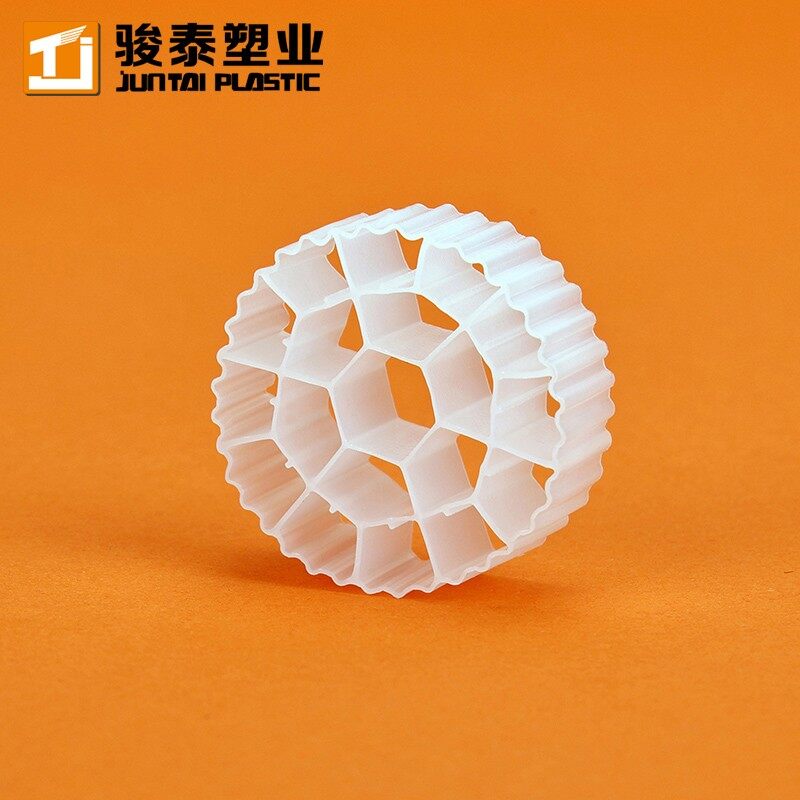
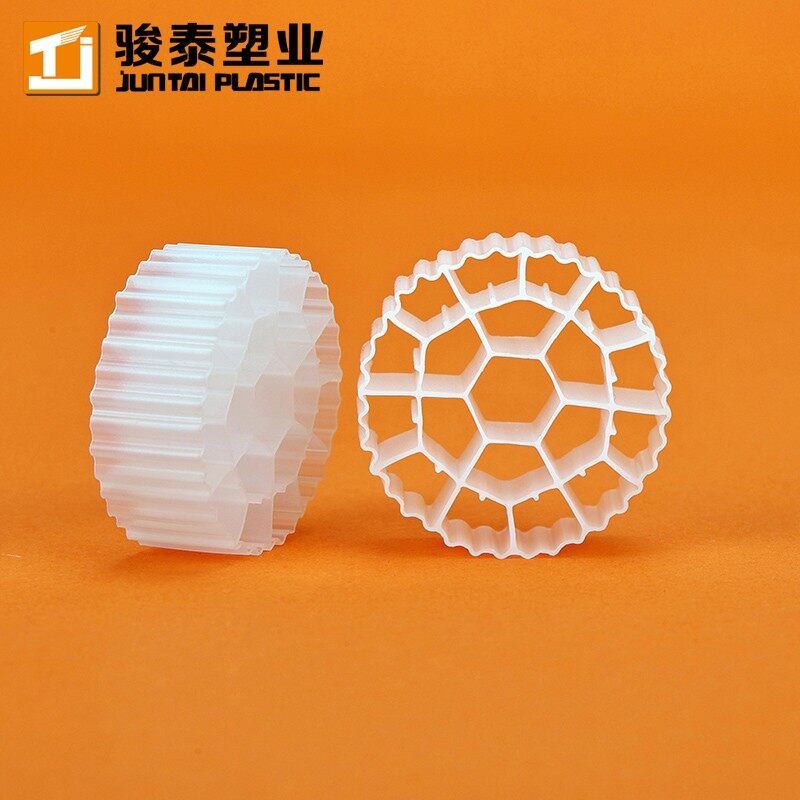
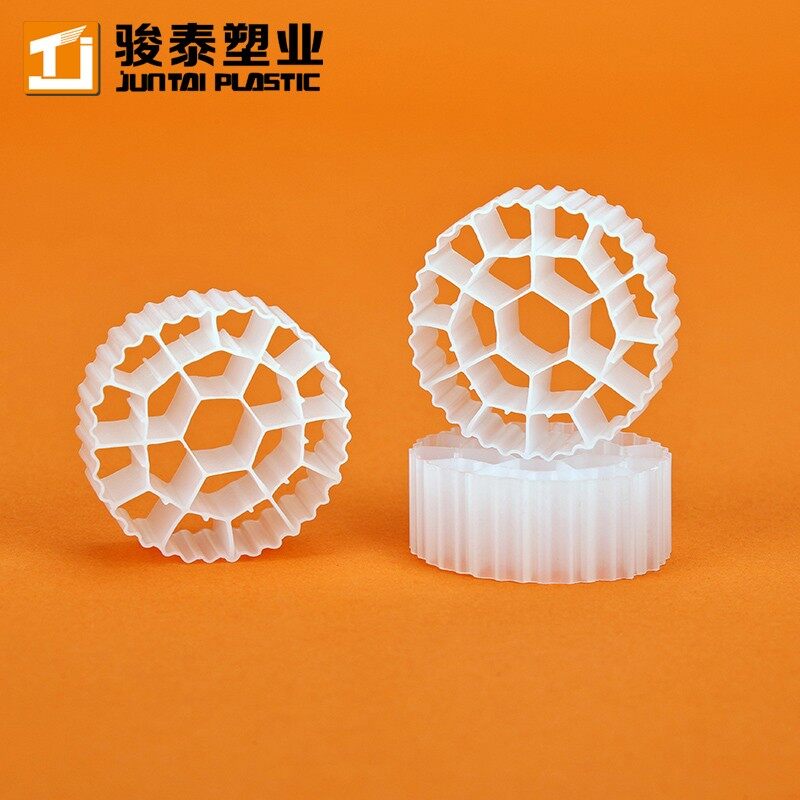
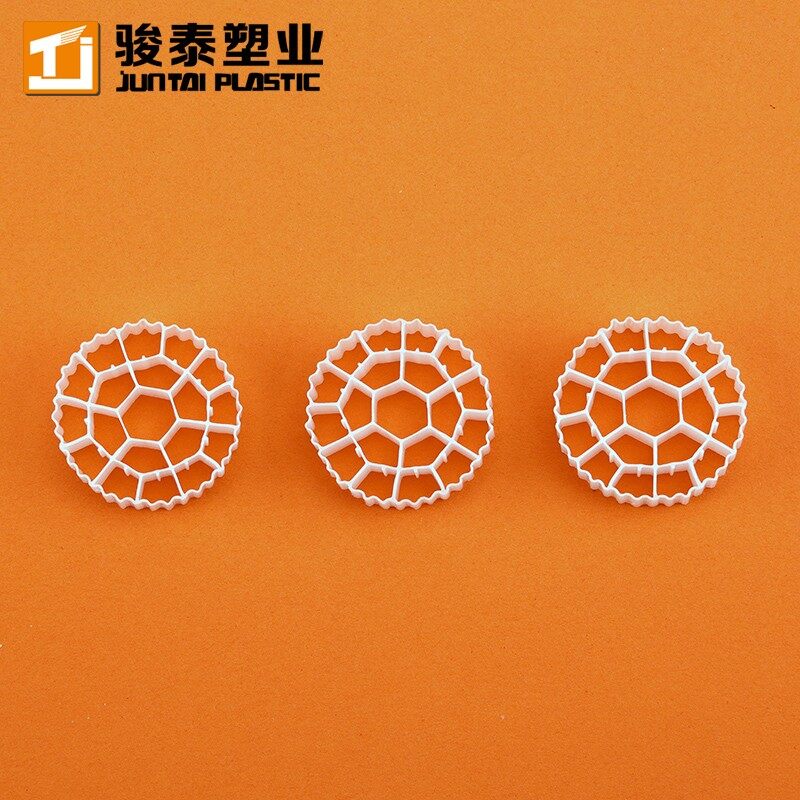
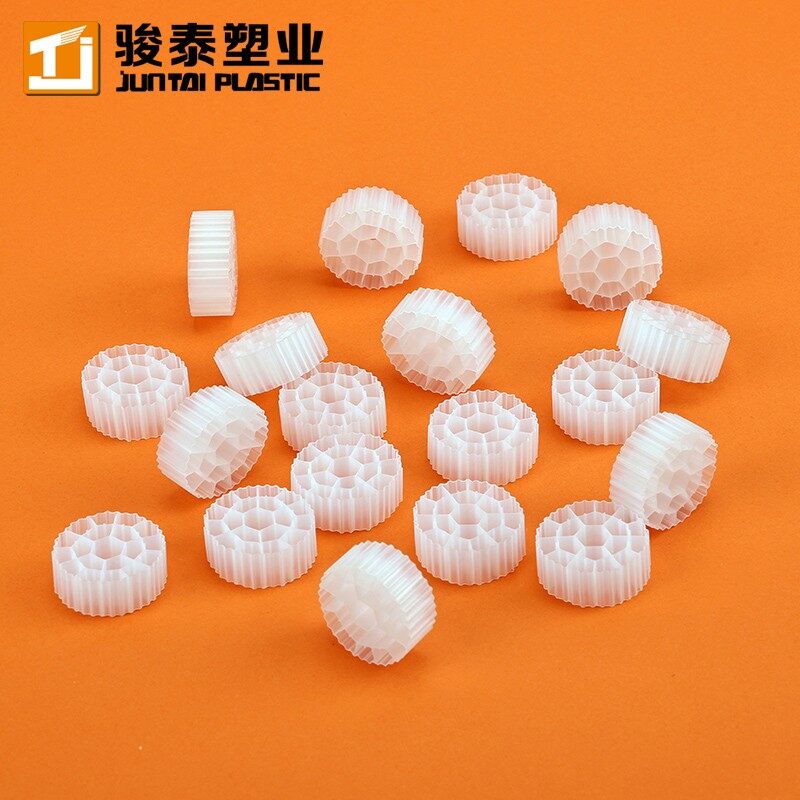
The Moving Bed Biofilm Reactor (MBBR) stands out as a wastewater treatment solution that cleverly blends the strengths of activated sludge techniques and biofilm - related systems.
MBBR Functioning Principles
Juntai's MBBR biofilm carriers revolutionize wastewater treatment by leveraging suspended biofilm technology. By introducing engineered carriers into the MBBR bioreactor, we boost biomass concentration (up to 8,000-12,000 mg/L) and microbial diversity critical for advanced treatment. Continuous movement via aeration or mechanical stirring ensures optimal contact between microorganisms and pollutants, while each mbbr biofilm carrier acts as a protected habitat for:
- Autotrophic bacteria (nitrification)
- Heterotrophic bacteria (BOD removal)
- Simultaneous nitrification/denitrification
This moving bed bioreactor process achieves:
✔️ 95%+ COD/NH3-N removal in MBBR in STP systems
✔️ 40% smaller footprint vs. fixed-film reactors
✔️ Stable performance under load fluctuations
✔️ Reduced mbbr price lifecycle costs through:
Zero carrier replacement for 15+ years
25% lower aeration energy vs. sponge carriers

Significant Design Factors
- Being Aware of Discharge Standards: You've got to know what the local discharge rules are, so the MBBR system can meet all those legal requirements.
- Water Quality Needs: If the treated water is going to be reused, say for watering plants or in some industrial processes, you need to learn about the specific water reuse standards.
- Design Calculations: Getting the design calculations right is really important. You have to think about things like what the wastewater is like, how treated you want it to be, and how big the system should be.
- Carrier Choice: Picking the right carriers is super important because their features have a big impact on how the biofilm develops and how well the whole treatment process works.
- Aeration System Setup: Coming up with an efficient aeration system is key to keeping the right amount of oxygen in there and making sure everything gets mixed up well inside the reactor.
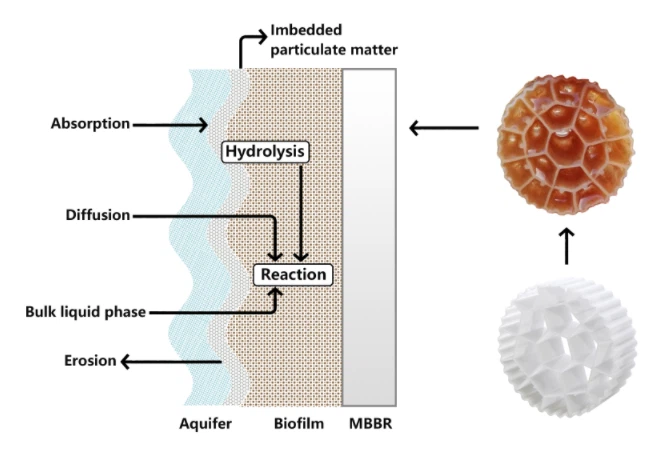
Perks of MBBR Technology
- More Reliable: The MBBR process makes the system more reliable by upping the biomass concentration and the variety of microorganisms.
- Easier to Operate: With the carriers always moving and the biofilm having this protected environment, running and keeping the system going is simpler.
- Saves Space: MBBR systems don't take up as much space as those old - fashioned activated sludge systems, which is great if you don't have a lot of room.
- Handles Load Changes Well: Thanks to the biofilm's nature, the MBBR system can automatically deal with changes in how much wastewater there is, keeping the treatment performance steady.
Where MBBR Technology Can Be Used
MBBR technology is really flexible and can be put to use in all sorts of places, such as:
- Municipal Wastewater Treatment: More and more, MBBR systems are being used in municipal wastewater treatment plants to hit those tough discharge standards.
- Industrial Wastewater Treatment: Industries like automotive, chemical, food and beverage, and metal plating are using MBBR systems to treat their wastewater efficiently.
- Decentralized Treatment Options: MBBR technology is perfect for decentralized wastewater treatment in small communities, out - of the - way places, or industrial sites. It's flexible and can grow as needed.
By looking at these design ideas and the good things about it, MBBR technology offers an efficient, reliable, and adaptable answer for all kinds of wastewater treatment situations.


