


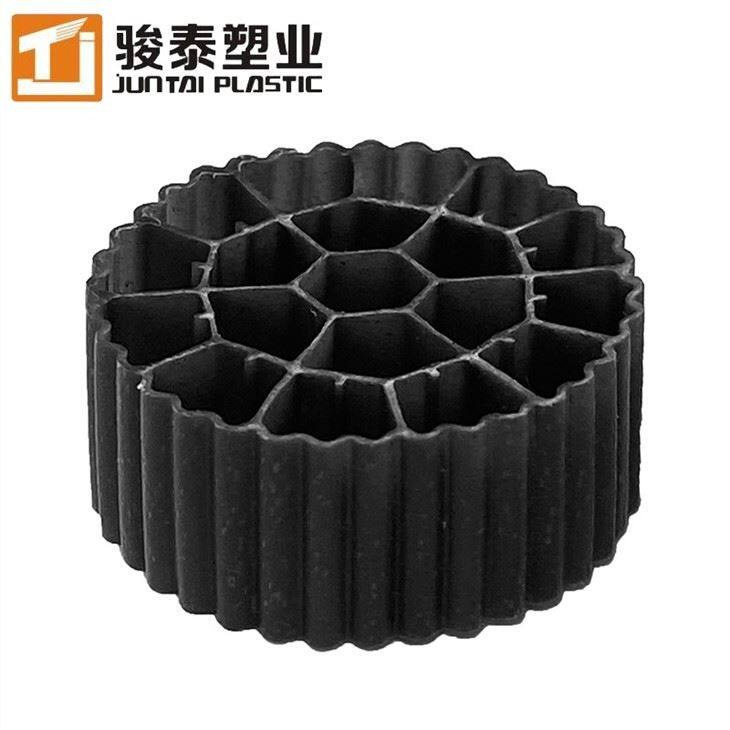
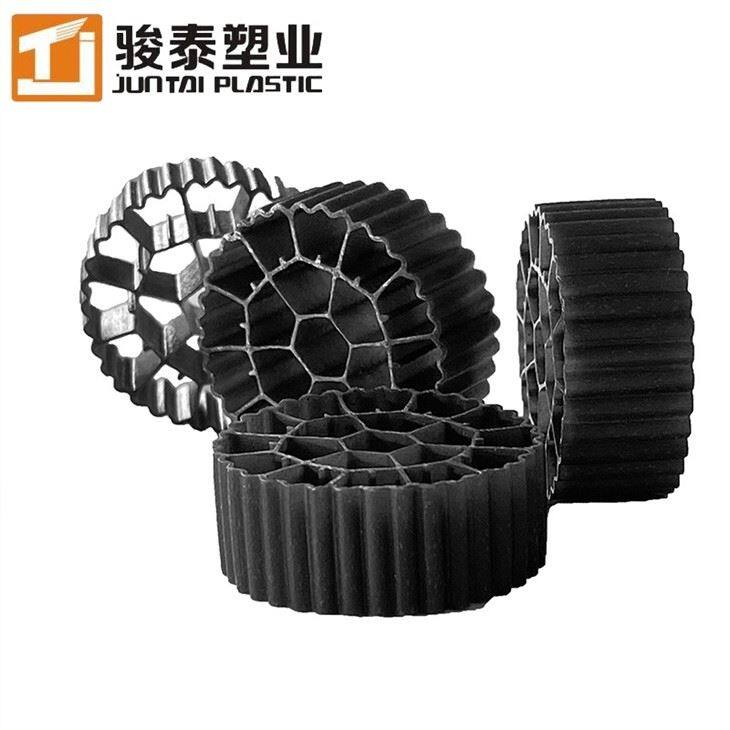
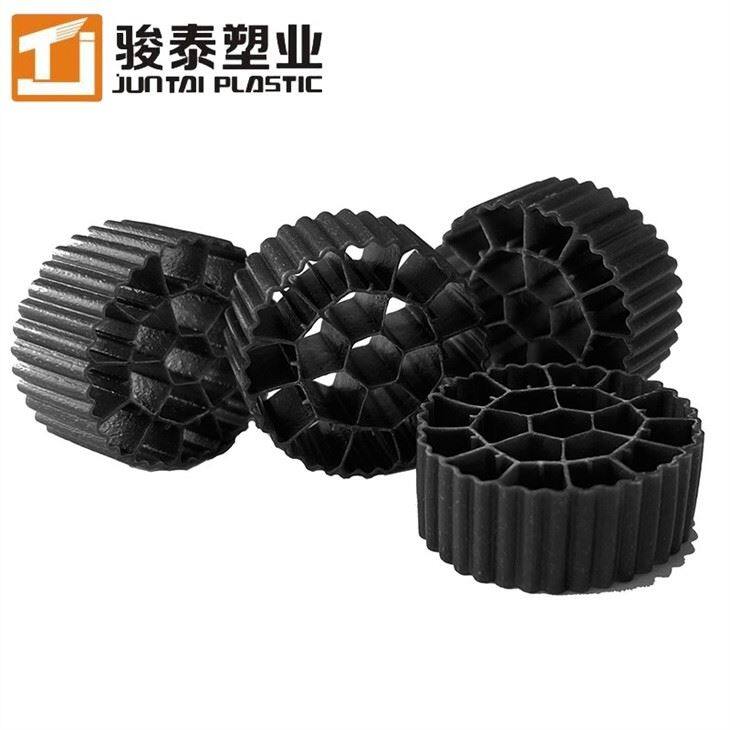
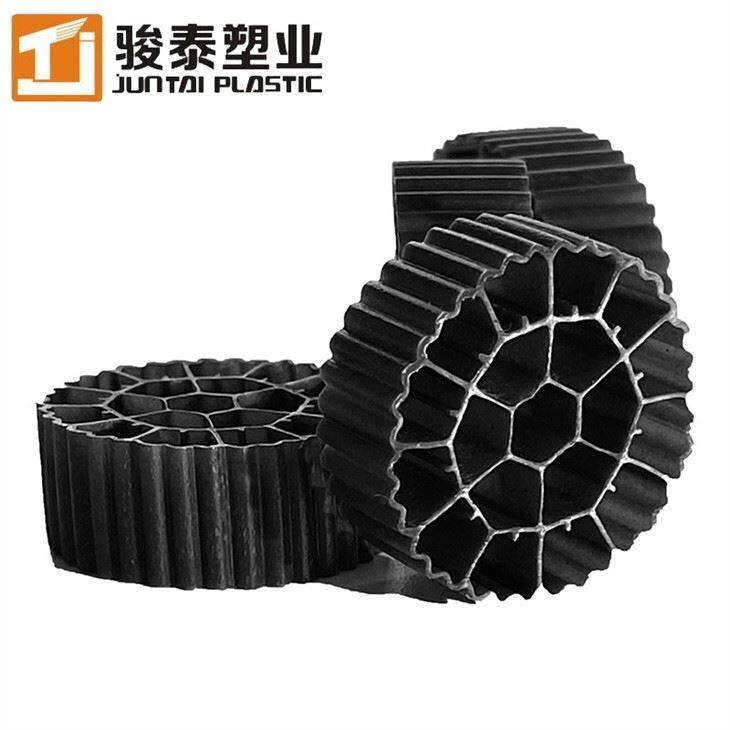
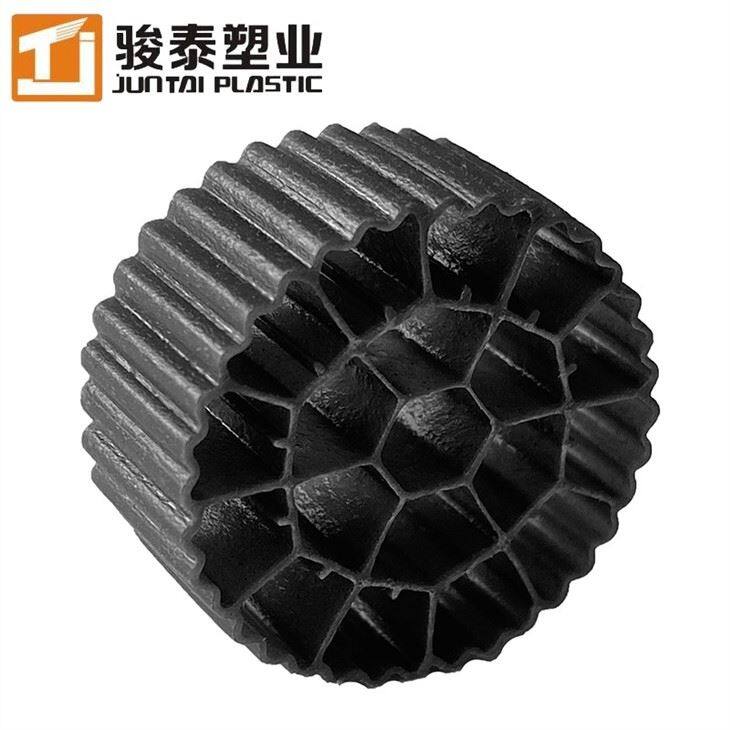
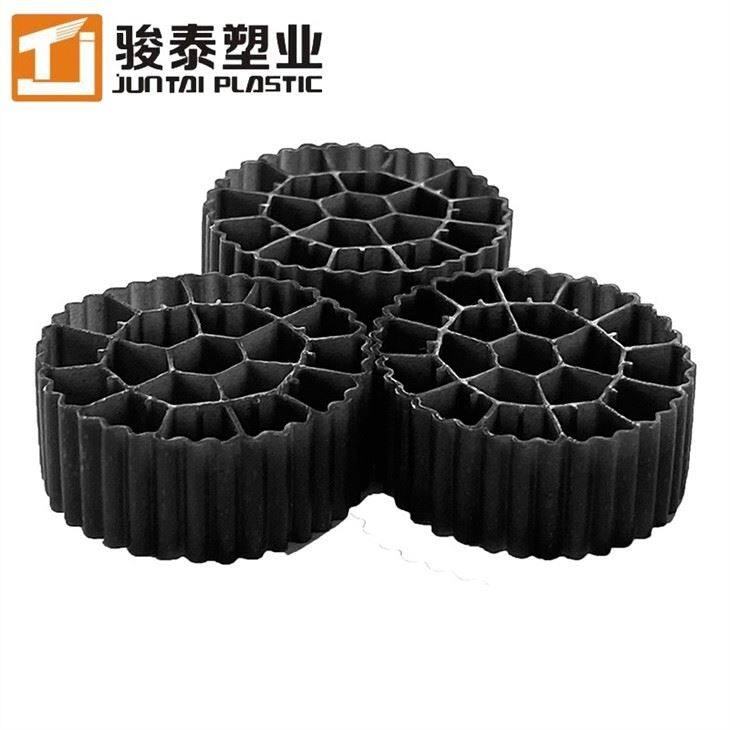
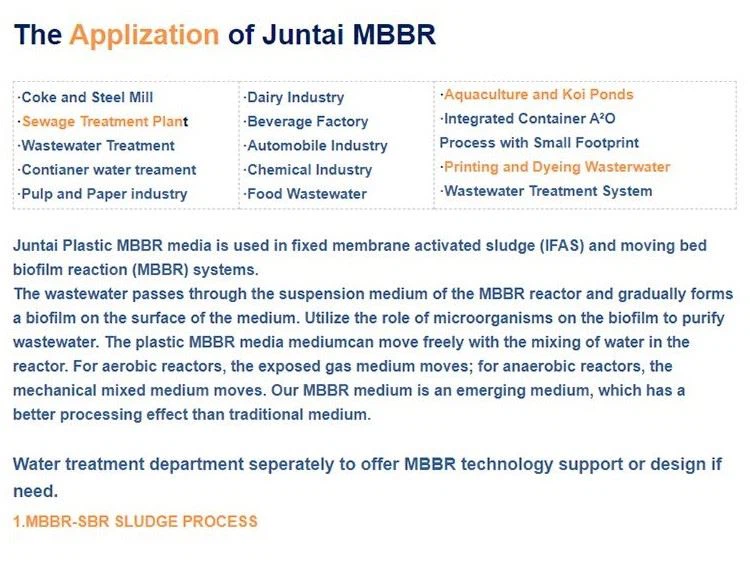
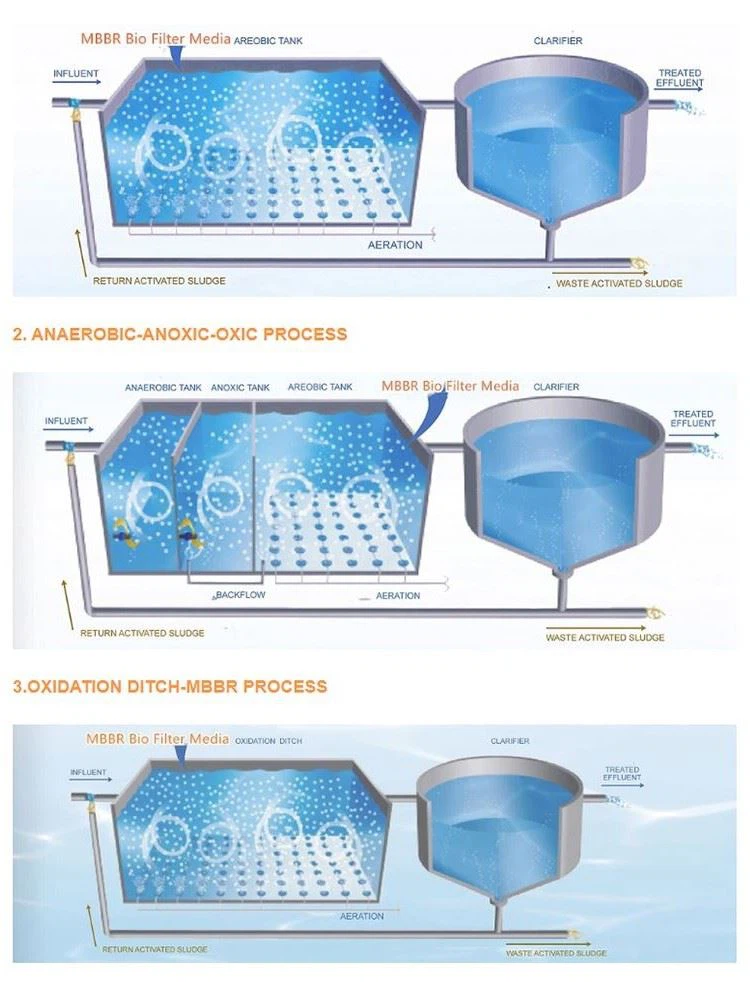
The Moving Bed Biofilm Reactor (MBBR) process revolutionizes wastewater treatment by leveraging a hybrid biofilm reactor principle. Unlike conventional systems, this mbbr technology combines the high biomass retention of fixed-film systems with the operational flexibility of activated sludge processes, eliminating common drawbacks like sludge bulking or media clogging.
How the MBBR biofilm principle works:
1. Biofilm Development: Specially designed mbbr carrier media (e.g., HDPE/PP biofilm carriers) are suspended in mbbr tanks, providing 800-1,200 m²/m³ surface area for microbial colonization.
2. Continuous Movement: In aerobic MBBR systems, fine-bubble aeration circulates carriers, while anaerobic MBBR configurations use mechanical mixers – maintaining optimal contact between biofilm and pollutants.
3. Self-Regulating Ecosystem: The moving bed biofilm reactor process naturally balances:
- Autotrophic bacteria (nitrification) on protected inner surfaces
- Heterotrophic bacteria (BOD removal) on exterior layers
4. Hybrid Efficiency: Achieves 90-95% COD removal in mbbr wastewater treatment plants (WWTP), outperforming traditional mixed bed bioreactor designs by 30-40%.
Advantages over conventional systems:
✅ Compact Design: 50% smaller footprint vs. activated sludge for STP MBBR retrofits
✅ Process Stability: Handles 3x load fluctuations better than fixed-bed biofilm reactors
✅ Low Maintenance: No media replacement needed (15-20 year lifespan)
✅ Dual Treatment: Simultaneous carbon/nutrient removal in single mbbr system
For industrial MBBR water treatment, our biochip MBBR carriers with micro-textured surfaces boost biofilm density by 2x compared to standard mbbr filter media.


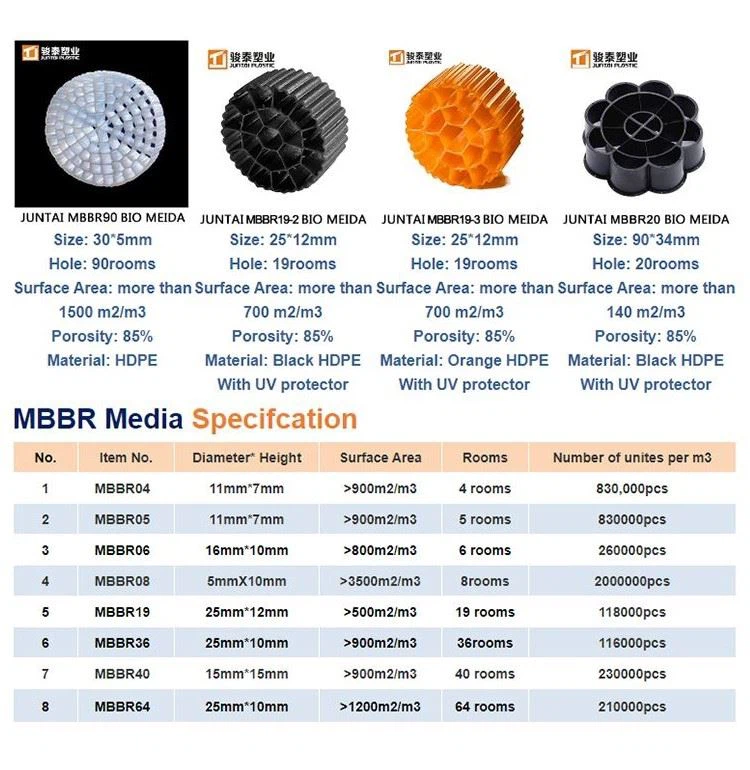


Type:MBBR19-2
Size:Φ25*12mm
Hole Numbers:19
Material: HDPE
Weight:95KG/CBM
Densilty:0.96-0.98g/cm3
Surface Area:>650m2/m3


