

Experiment and Economic Benefit Analysis of Barbel Chub (Spinibarbus denticulatus) Cultivation in Land-Based Circular Tank Recirculating Aquaculture System
Barbel chub (Spinibarbus denticulatus), commonly known as "green bamboo carp," "bamboo barb," or "green barb," belongs to the family Cyprinidae and genus Spinibarbus. It is one of the valuable commercial fish species growing in the Pearl River water system. The barbel chub has a long and laterally compressed body, a conical head, blunt snout, and a subterminal mouth shaped like a horseshoe. It has two pairs of barbels, with the maxillary barbels reaching the posterior edge of the eye diameter. There is a forward-lying barb located at the origin of the dorsal fin, hidden beneath the skin, which gives the fish its name "barbel chub." Barbel chub is characterized by strong disease resistance and high cultivation efficiency. Its meat is fatty, tender, smooth, and refreshing, making it an excellent ingredient for sashimi, favored by raw fish enthusiasts. To promote new cultivation models for barbel chub, our team conducted an experiment on land-based circular tank cultivation of barbel chub based on local conditions and analyzed its economic benefits.
1. Construction of the Land-Based Circular Tank Cultivation System
(1) Circular Tank Design
The circular tanks adopted galvanized steel frame + tarpaulin material (see Figure 1). The diameter was 10 m, water depth 1.5 m, and the tank bottom was designed in a pot-bottom shape. The gradient between the upper edge of the conical pot bottom and the pot bottom was 8%–10% (slope 8%–10%). The bottom was designed as conical to facilitate waste discharge. A net was installed at the water inlet system area to effectively prevent impurities from entering and clogging the pipes. The inlet pipe was constructed along the tank wall (in the same direction as the water flow within the tank), creating an effective water-pushing effect that kept the tank water in constant flow. The drainage system was designed to have the basic functions of controlling the inlet water level and discharging wastewater from the bottom of the tank.
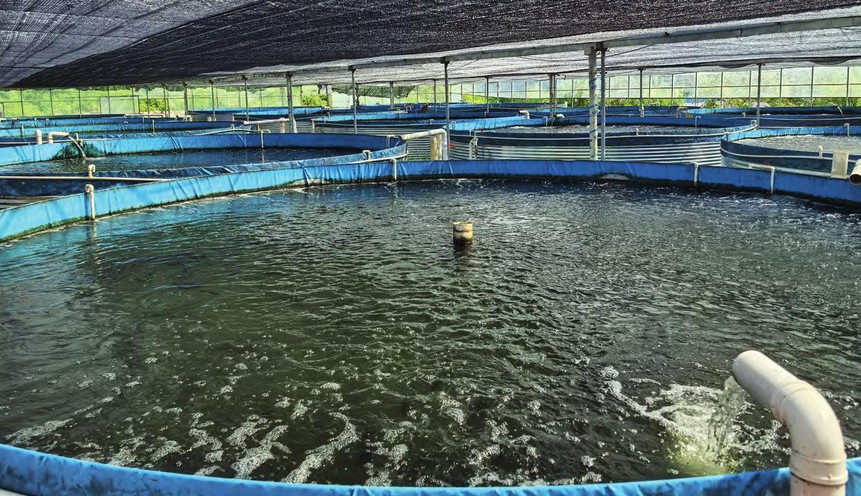
Figure 1 Schematic Diagram of Industrial Recirculating Aquaculture System
(2) Oxygenation Equipment
The main oxygenation method was "air control" oxygenation, primarily using air compressors and nano-tube aeration. Nano-aeration tubes were arranged along the inner circumference of the tank bottom, achieving good oxygenation effects, uniform air supply, and meeting the requirement of continuously maintaining dissolved oxygen above 6 mg/L in all tank waters. Backup units were also provided.
(3) Aquaculture Tailwater Treatment
a. Solid-Liquid Separation Tank
The solid-liquid separation tank consisted of a vertical flow sedimentator and an automatic drum microfilter (see Figure 2). The drainage from the cultivation tank first passed through the vertical flow sedimentator, where impurities such as residual feed and feces settled due to the vertical flow and gravity sedimentation of sediment. The clearer water entered the automatic drum microfilter from the upper drainage and foam removal pipe along the axial direction, flowing out through the screen. Impurities in the water (fine suspended solids, particulate matter, etc.) were intercepted on the inner surface of the filter net on the drum, achieving solid-liquid two-phase separation.
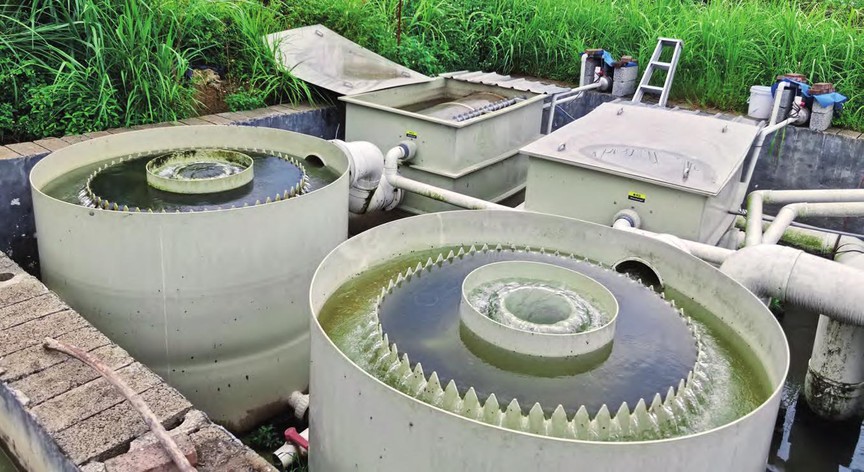
Figure 2 Vertical Flow Sedimentator + Automatic Drum Microfilter
b. "Three Ponds and Two Dams" Purification Pond
The main equipment and workflow of the "Three Ponds and Two Dams" purification pond were: Level I Sedimentation Pond → Level I Filtration Dam → Level II Aeration Pond → Level II Filtration Dam → Level III Biological Purification Pond, as shown in Figure 3.
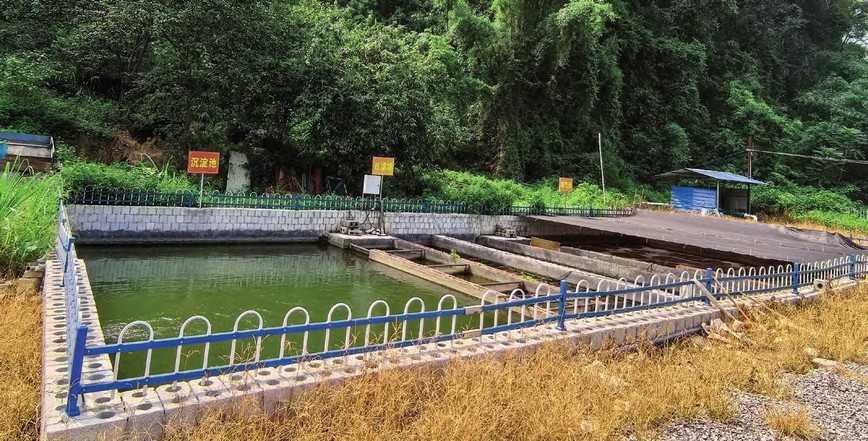
Figure 3 "Three Ponds and Two Dams" Purification System
The Level I Sedimentation Pond was a physical sedimentation unit. Tailwater after passing through the solid-liquid separation tank entered this pond, where suspended solids with higher specific gravity such as residual feed and feces naturally settled through reduced flow velocity. Shellfish and filter-feeding fish could be stocked. The Level I Filtration Dam connected the sedimentation pond and aeration pond, constructed with porous filter materials such as crushed stone and gravel. Through slow water seepage, it further intercepted fine suspended particles. The filter materials could also adsorb some ammonia nitrogen and phosphorus and provide attachment for microorganisms for preliminary biodegradation.
The Level II Aeration Pond was the core of biodegradation, utilizing microorganisms to decompose dissolved organic matter and ammonia nitrogen. Aeration equipment was provided for oxygenation, creating an environment for aerobic microorganisms and accelerating organic matter decomposition and ammonia nitrogen nitrification. Submerged or floating-leaved plants could also be planted. The Level II Filtration Dam connected the aeration pond and ecological purification pond, functioning similarly to the Level I Filtration Dam but using finer filter materials for secondary filtration to enhance effectiveness.
The Level III Biological Purification Pond was an ecological deep purification and water quality stabilization unit. Water quality was deeply treated through an ecosystem composed of large aquatic plants, algae, aquatic animals, and benthic organisms. Among them, aquatic plants absorbed nitrogen and phosphorus, aquatic animals fed on plankton and organic debris, and microorganisms attached to sediment and plant roots decomposed organic matter and carried out denitrification, deeply removing nitrogen and phosphorus, degrading trace organic matter, and stabilizing water quality. The purified water could be pumped to storage tanks for recycling, but regular testing of ammonia nitrogen, nitrite, dissolved oxygen, and other indicators was required.
2. Key Technologies for Cultivation Management
(a) Fish Stocking
This experiment used 6 circular tanks with a total cultivation water volume of 706 m³. Three different sizes of barbel chub fingerlings were selected: Type A, Type B, and Type C. Type A specifications: 32.3 g/fish, average body length 18.2 cm, fingerling price 2.8 RMB/fish; Type B specifications: 16.6 g/fish, average body length 13.2 cm, fingerling price 2.2 RMB/fish; Type C specifications: 10.2 g/fish, average body length 8.8 cm, fingerling price 1.6 RMB/fish. The fingerlings were healthy and robust. Before stocking, they were disinfected by soaking in 20 mg/L potassium permanganate solution for 15 minutes. Fingerling stocking details are shown in Table 1.
| Table 1 Stocking Conditions of Fingerlings | |||
| Tank No. | Specification (fish/kg) | Number Stocked (fish) | Density (fish/m3) |
| 1 | 31 | 1230 | 10.4 |
| 2 | 31 | 1218 | 10.3 |
| 3 | 60 | 1362 |
11.6 |
| 4 | 60 | 1420 | 12 |
| 5 | 98 | 1606 | 13.8 |
| 6 | 98 | 1588 | 13.5 |
(b) Feed Feeding
Feed formula: In the early cultivation stage (fish body weight < 500 g), tilapia extruded feed with 38% protein content was selected. In the later stage, it was adjusted to tilapia extruded feed with 36% protein content, with 0.5%–1% allicin added to enhance fish immunity.
Feeding method: The "four fixed" principles (fixed time, fixed location, fixed quality, fixed quantity) were followed. Daily feeding rate was adjusted according to water temperature: when water temperature was 20°C–28°C, feed amount was 3%–4% of fish body weight; when water temperature was 15°C–20°C, feed amount was reduced to 1%; when water temperature dropped below 15°C, no feed was given.
(c) Water Quality Control
An aquaculture monitoring instrument was used for around-the-clock monitoring of indicators such as water temperature, dissolved oxygen, pH value, and ammonia nitrogen in the experimental tanks. Daily water exchange was 10%–15%. Every two months, water quality was adjusted by splashing quicklime (20 g/m³–30 g/m³). During the cultivation period, water temperature in each experimental tank ranged from 13°C to 28°C, with an average water temperature of 22°C. During the experiment, water quality was tested every two months. Each experimental tank showed pH values of 7.0–8.2, nitrite 0.05 mg/L–0.1 mg/L, total ammonia nitrogen ≤ 0.2 mg/L, and dissolved oxygen 6.5 mg/L–7.6 mg/L.
(d) Disease Prevention and Control
Barbel chub has strong disease resistance. Therefore, in disease prevention and control, the principle of "prevention first, combining prevention and treatment" was adhered to, with "early detection, early treatment" to minimize the incidence of disease. However, fish diseases occasionally occurred during the cultivation process.
- Saprolegniasis
Symptoms of diseased fish: Diseased fish left the group and swam alone, with slow movement; gray-white cotton-like hyphae appeared on the body surface and tail fin, with inflammation at the sites of hyphae. Treatment measures: On the first day, aquatic-specific sulfonamide solution was splashed throughout the tank; on the second day, aquatic-specific povidone-iodine solution was splashed throughout the tank, repeated every other day; on the sixth day, gallnut powder was dissolved in water and splashed throughout the tank for three consecutive days. On the ninth day of treatment, the hyphae on the body surface of diseased fish disappeared, and wounds began to heal.
- Bacterial Hemorrhagic Disease
Symptoms of diseased fish: Diseased fish left the group and swam alone, with slow movement; bleeding and redness appeared on the gill covers and fin bases; irregular red spots and scale shedding were present on the body surface; dissection revealed red turbid fluid in the body cavity, with enlarged liver, spleen, and kidneys that were pale in color and mottled. Treatment measures: On the first day, aquatic-specific bromochlorohydantoin powder was splashed throughout the tank, repeated every other day; on the fourth day, aquatic-specific florfenicol powder, Sanhuang powder, and allicin were mixed with feed and fed continuously for 2–3 days. On the sixth day of treatment, the disease was effectively controlled.
3. Experimental Results and Benefit Analysis
(1) Yield and Survival Rate
This experiment produced a total of 7,578 adult fish (13,021.6 kg), marketed in three batches. The cultivation cycles and survival rates are detailed in Table 2. Overall, the larger the size of stocked fingerlings, the shorter the corresponding cultivation cycle, which helped improve survival rate, but it was necessary to balance growth speed and economic benefits.
| Table 2 Adult Fish Output Results | ||||
| Tanks | Time to Market | Cultivation Cycle | Output (kg) | Survival Rate (%) |
| 1 & 2 | Before September 2024 | 13 months | 4213.2 | 94.1 |
| 3 & 4 | Before December 2024 | 15 months | 4274.8 | 91.9 |
| 5 & 6 | Before April 2025 | 19 months | 4533.8 | 85 |
(2) Economic Benefits
The average price of adult fish was 30 RMB/kg, with a total output value of 390,650 RMB. Major costs included: fingerlings 18,085 RMB, feed 164,073 RMB (18,230 kg fed, 9 RMB/kg), fish medicine 11,464 RMB, electricity 15,228 RMB, totaling 208,850 RMB. The gross profit was calculated as 181,800 RMB (excluding labor and rent), with an input-output ratio of 1:1.87, showing significant benefits. The economic benefit analysis is shown in Table 3. After deducting labor costs of 38,000 RMB (converted) and circular tank rent of 18,000 RMB (calculated as 2,000 RMB per tank per year), the final net profit was 125,800 RMB, with a net profit margin of approximately 32.2%, indicating high economic feasibility of the experiment.
| Table 3 Economic Benefit Analysis | ||||||
| Tank No. | Output (kg) |
Fingerling Cost (RMB) |
Feed Cost (RMB) |
Other Costs (RMB) |
Output Value (RMB) |
Profit (RMB) |
| 1 | 2108.8 | 3444 | 26570 | 3642 | 63263 | 29607 |
| 2 | 2104.4 | 3410 | 26516 | 3642 | 63132 | 29564 |
| 3 | 2080 | 2996 | 26209 | 4294 | 62401 | 28902 |
| 4 | 2194.8 | 3124 | 27654 | 4294 | 65843 | 30771 |
| 5 | 2269 | 2570 | 28589 | 5410 | 68070 | 31501 |
| 6 | 2264.6 | 2541 | 28535 | 5410 | 67941 | 31455 |
| Total | 13021.6 | 18085 | 164073 | 26692 | 390650 | 181800 |
4. Summary
This experiment on land-based circular tank cultivation of barbel chub showed significant economic benefits, with a net profit of 125,800 RMB and an input-output ratio of 1:1.87, demonstrating high economic feasibility. The size of fingerlings had a clear impact on cultivation benefits.
For Type A large-sized fingerlings (32.3 g/fish) in Tanks 1 and 2, the cultivation cycle was the shortest (13 months) and survival rate was the highest (94.1%). Although the unit price of fingerlings was higher (2.8 RMB/fish), the shorter growth period resulted in less continuous investment in feed, water, and electricity, while the advantage in survival rate reduced losses, achieving the best overall benefits. For Type B medium-sized fingerlings (16.6 g/fish) in Tanks 3 and 4, the cultivation cycle was 15 months with a survival rate of 91.9%, slightly lower than Type A. Although the extended cultivation time led to increased costs, the output was close to that of Type A, with benefits ranking second. For Type C small-sized fingerlings (10.2 g/fish) in Tanks 5 and 6, the cultivation cycle was the longest (19 months), with survival rate dropping to 85.0%. Although the final yield was slightly higher, the prolonged cultivation period caused a significant increase in costs for feed, fish medicine, electricity, and other items, while the decreased survival rate further compressed profit margins, resulting in the poorest benefits.
Overall, stocking large-sized fingerlings can optimize benefits by shortening the cycle and improving survival rate. Although small-sized fingerlings have lower fingerling costs, they have longer cycles and higher risks, requiring a balanced choice based on market conditions and cultivation capabilities. Land-based circular tank recirculating aquaculture is a new intensive and efficient aquaculture model that makes full use of non-"red line farmland" and the advantages of abundant surface and groundwater resources to develop land-based "cylindrical semi-enclosed facilities." This model occupies less land, has high water resource utilization, strong scalability in cultivation scale, multiple suitable cultivation sites, low overall construction cost output, and can be flexibly installed according to local conditions. At the same time, with the creation of more comprehensive oxygenation and final tailwater treatment, it can achieve water recycling, promote zero discharge of aquaculture pollutants, and thus realize the main goal of green aquaculture. This is of great significance for promoting the green and healthy development of fisheries and structural transformation and upgrading.