


Juntai MBR Flat Sheet PVDF Membrane | Sustainable Wastewater Recycling & Reuse Solutions
From Wastewater to Resource - Reliable MBR Membrane for Long-Term, Low-Maintenance Operation.
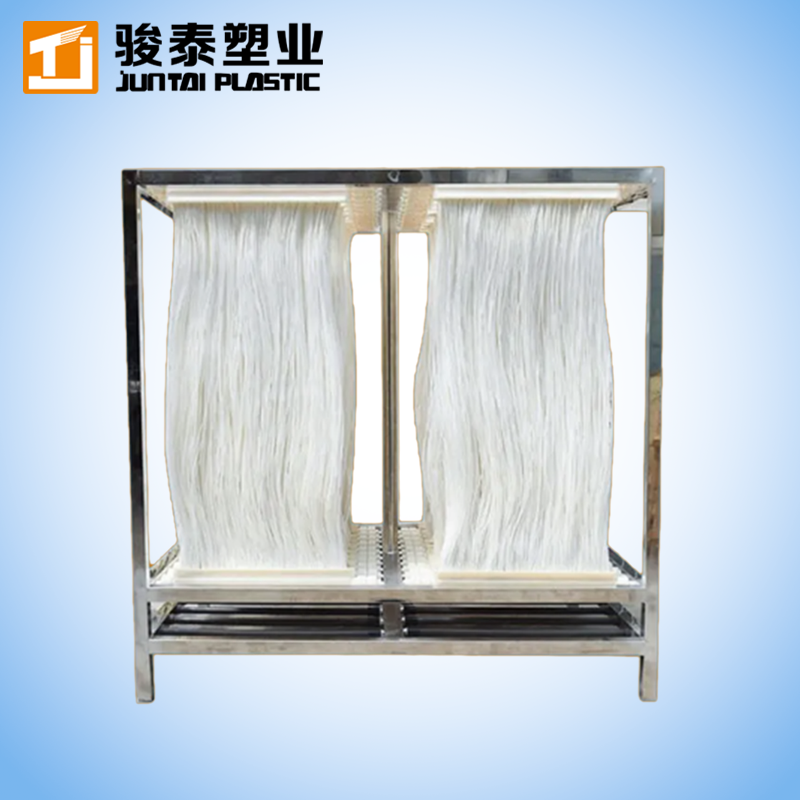
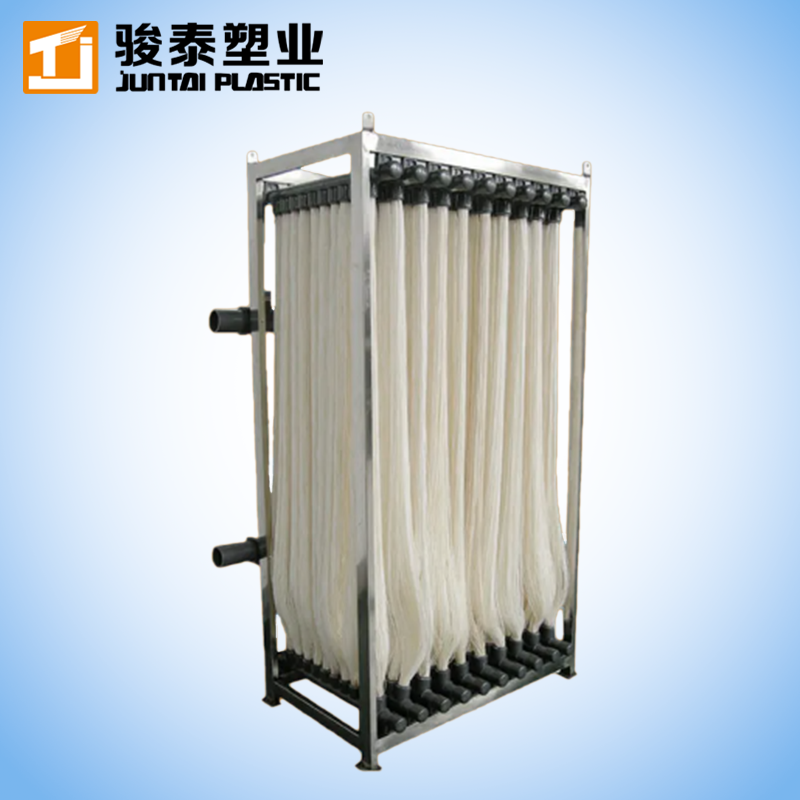
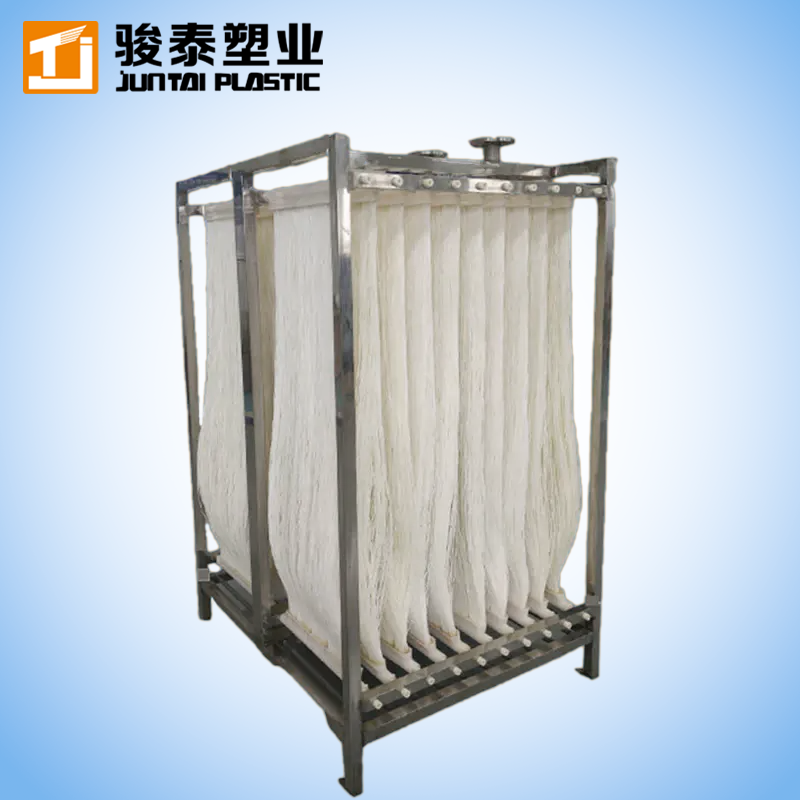
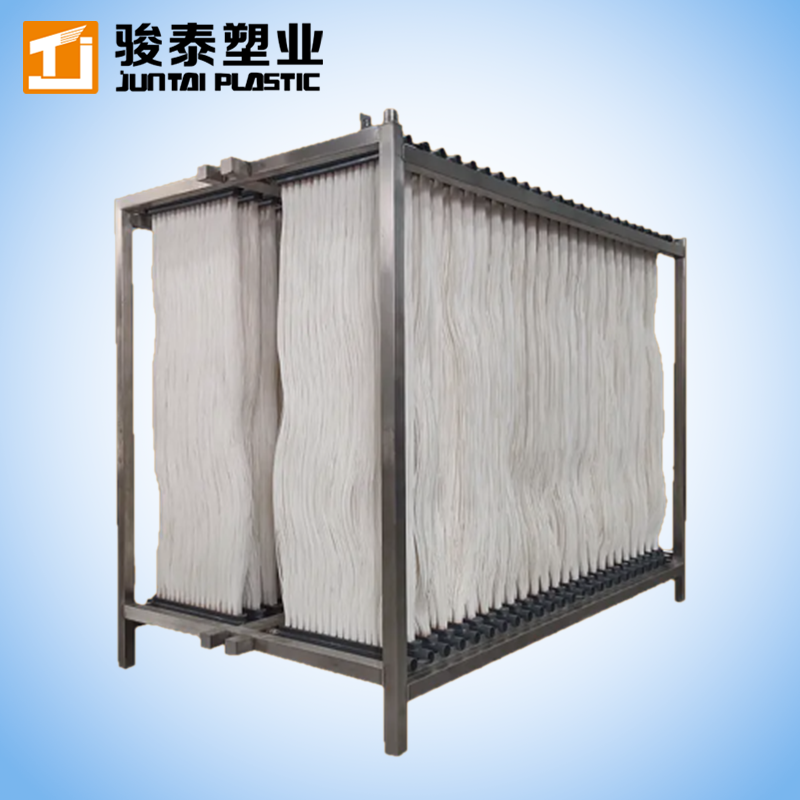
Juntai's MBR flat sheet PVDF membrane module delivers consistent effluent quality suitable for direct reuse in industrial processes, irrigation, and municipal reclamation - turning wastewater treatment from a compliance cost into a water resource recovery asset. Built on a reinforced composite PVDF structure with patented curtain-style architecture, these modules are engineered for the harsh operating conditions of municipal sewage, industrial effluent, and high-load biochemical treatment systems.
Key Features
Curtain-Style Flat Sheet Structure
The patented curtain-style module design suspends membrane sheets vertically in the bioreactor, allowing free movement that prevents fiber, hair, and sludge from accumulating at the membrane root - the most common cause of irreversible fouling in submerged MBR systems. The open-bottom configuration ensures sludge does not settle and compact beneath the module.
Patented Spinning Technology - No Broken Silk
The membrane fiber is produced using a patented spinning process with a special support structure that eliminates the broken-silk problem common in hollow fiber MBR membranes. Broken fibers cause irreversible loss of filtration integrity and require full module replacement. Juntai's flat sheet design eliminates this failure mode entirely.
Hydrophilic PVDF - Stable Flux, No On-Site Treatment
The membrane is manufactured from hydrophilically modified PVDF raw material. Unlike membranes that require on-site hydrophilic pre-treatment before commissioning, Juntai MBR sheets are ready to operate immediately after installation. The inherent hydrophilicity maintains stable operating flux over time, reducing the frequency and severity of chemical cleaning cycles.
Important: If the membrane is installed but not put into service immediately, or if operation is paused for an extended period, the membrane must be kept submerged in water at all times. Never allow installed membranes to dry out - drying causes irreversible pore collapse and permanent flux loss.
High Filtration Accuracy - 0.1 Micron Pore Size
With an interception pore diameter of 0.1 micron (100 nm), the membrane removes bacteria, suspended solids, colloids, and most pathogens in a single pass. Effluent turbidity is consistently below 1 NTU - suitable for reuse applications without additional polishing filtration in most cases.
Simple Structure, Easy Maintenance
The flat sheet module design minimizes internal complexity. There are no headers to clog, no potting compounds to crack, and no dead-end flow paths where sludge accumulates. Maintenance is limited to periodic relaxation cycles and scheduled chemical cleaning - both of which can be performed without removing the module from the tank.
PVDF Flat Sheet MBR Module - Technical Specifications
| Parameter | MBR-PVDF-4.5 | MBR-PVDF-10 | MBR-PVDF-16 |
| Module length | 750 mm | 980 mm | 1,500 mm |
| Module width | 530 mm | 650 mm | 850 mm |
| Outlet diameter | 25 mm | 32 mm | 40 mm |
| Module membrane area | 4.5 m² | 10 m² | 16 m² |
| Interception pore diameter | 0.1 micron | 0.1 micron | 0.1 micron |
| Effluent turbidity | < 1 NTU | < 1 NTU | < 1 NTU |
| Temperature range | 5°C – 45°C | 5°C – 45°C | 5°C – 45°C |
| pH tolerance | 2 – 12 | 2 – 12 | 2 – 12 |
| Permeate flow rate | 1–1.5 m³/day | 2.4–6 m³/day | 3.5–9 m³/day |
MBR Membrane Design Flux Reference Table
Membrane flux selection is critical to long-term MBR performance. Operating above design flux accelerates fouling and shortens cleaning intervals; operating too conservatively wastes capital on oversized membrane area. Use the table below as the starting point for your design - final flux selection should account for site-specific MLSS, temperature, and sludge characteristics.
| Type of Wastewater | Design Operating Flux (L/m²·h) | Maximum Flux During Peak Flow (L/m²·h) | Notes |
| Secondary settling tank effluent | 23–25 | 30 | Standard effluent, pure membrane filtration |
| Domestic / Municipal wastewater | 19–22 | 25 | Good biodegradability |
| Aquaculture wastewater | 17–18 | 22 | Good biochemistry |
| Industrial sewage | 15–16 | 17–18 | General biodegradability |
| Landfill leachate | 10–11 | 13–14 | General biodegradability |
Membrane Flux Maintenance & Cleaning Protocol
Aeration-Based Self-Cleaning
The module operates with a diaphragm aeration system using perforated aeration diffusers positioned below the membrane cassette. Coarse bubbles rise along both faces of each membrane sheet, creating a scouring flow of air and water that continuously removes loosely attached foulants from the membrane surface. This bubble-induced shear is the primary mechanism for maintaining stable flux between chemical cleaning cycles - no moving parts, no chemical dosing required during normal operation.
Intermittent Operation Mode (Suction Pump)
For optimal long-term flux stability, operate the permeate extraction pump in intermittent mode: run for 10–12 minutes, then pause for 2–3 minutes. During the pause, transmembrane pressure drops to zero and any reversible foulant cake layer relaxes and is displaced by the ongoing aeration. This simple protocol effectively prevents pore clogging and extends the interval between chemical cleanings - directly reducing operating costs.
Commissioning Note - Biological Startup
When putting the MBR system into service for the first time, allow the biochemical pool to complete its microbiological culture phase and achieve good biological activity before activating membrane filtration. Only introduce suction once the mixed liquor viscosity is sufficiently low - high-viscosity sludge at early startup stages can cause rapid irreversible fouling if filtration begins prematurely.
Application Scenarios
Municipal Sewage Treatment & Water Reclamation
Juntai MBR flat sheet modules are suitable for municipal sewage treatment plants requiring effluent quality for direct reuse - landscape irrigation, toilet flushing, industrial cooling water makeup, or river discharge under Grade 1A standards. The 0.1-micron pore size ensures complete suspended solids and bacterial removal without downstream polishing filtration.
Industrial Wastewater Treatment
For industrial facilities with process water reuse targets - food and beverage, textile, pharmaceutical, and chemical plants - the MBR system eliminates the secondary clarifier and reduces sludge volume compared to conventional activated sludge. The wide pH tolerance (2–12) allows operation across a broad range of industrial effluent chemistries.
Landfill Leachate Treatment
Landfill leachate is among the most challenging effluents for membrane systems due to high COD, ammonia, and dissolved solids. The reinforced PVDF membrane's chemical resistance and wide pH tolerance make it one of the few flat sheet options capable of sustained operation in leachate treatment at design flux of 10–11 L/m²·h.
Aquaculture Recirculating Systems (RAS)
In land-based aquaculture, MBR membranes polish the effluent from biological treatment stages to remove suspended solids and pathogens before water is recirculated to fish tanks. The low-turbidity permeate (< 1 NTU) protects fish health and reduces the risk of pathogen carryover between recirculation cycles.
Decentralized & Small-Scale Treatment
The MBR-PVDF-4.5 module (4.5 m², 1–1.5 m³/day permeate) is well suited to small-scale and decentralized applications - resort hotels, rural communities, livestock farms, and remote industrial camps where connection to centralized sewer is not feasible. The simple flat sheet design minimizes skill requirements for on-site operation and maintenance.
MBR vs. Conventional Activated Sludge - Why MBR?
| Parameter | MBR (Juntai PVDF) | Conventional Activated Sludge |
| Effluent turbidity | < 1 NTU | 5–15 NTU (secondary clarifier) |
| Secondary clarifier required | No | Yes |
| Reactor footprint | 30–50% smaller | Larger |
| MLSS operating range | 8,000–15,000 mg/L | 2,000–4,000 mg/L |
| Pathogen removal | Near-complete (0.1 µm barrier) | Partial |
| Effluent suitable for direct reuse | Yes (most applications) | Requires additional polishing |
| Sludge production | Lower (longer SRT) | Higher |
Why Choose Juntai MBR Membrane
Patented curtain-style structure - Eliminates the fiber/hair/sludge accumulation at the membrane root that shortens module life in conventional submerged flat sheet designs. The patent covers both the curtain geometry and the suspension support structure.
Reinforced composite PVDF - The membrane layer is bonded to a non-woven support fabric, providing mechanical strength that prevents membrane tearing under suction pressure fluctuations and allows safe handling during installation and cleaning.
No on-site hydrophilic treatment - Ready to commission immediately after installation. No soaking in glycerol or other wetting agents required, reducing startup time and complexity.
Wide chemical tolerance - pH 2–12 tolerance allows aggressive chemical cleaning (NaOCl, citric acid, NaOH) to restore flux after fouling without membrane degradation.
Factory-direct supply - Manufactured and supplied directly by Juntai. No trading company intermediary. Full batch traceability and technical documentation available.
Replacement module compatibility - Juntai MBR modules are dimensionally consistent across production batches, allowing straightforward replacement of individual modules in existing cassette frames without system redesign.
Frequently Asked Questions
What is the difference between flat sheet and hollow fiber MBR membranes?
Hollow fiber membranes use bundles of fine tubular fibers, offering high packing density but vulnerability to fiber breakage and difficulty cleaning when clogged with fibrous materials (hair, rags). Flat sheet membranes like Juntai's PVDF module use planar membrane sheets suspended vertically, which are more robust against physical damage, easier to inspect visually, and less prone to irreversible clogging by fibrous solids. For wastewater streams with significant hair, fiber, or stringy solids content, flat sheet is the preferred configuration.
How often does the membrane need chemical cleaning?
With correct aeration intensity and intermittent suction operation, maintenance chemical cleaning (low-dose NaOCl) is typically required every 1–3 months. Recovery cleaning (higher-dose acid/alkali) is typically required once per year. Actual frequency depends heavily on influent quality, MLSS concentration, and operating flux relative to design values.
Can the membrane be repaired if damaged?
Unlike hollow fiber membranes where individual broken fibers can sometimes be pinned off, flat sheet membrane damage typically requires replacement of the affected membrane sheet or module. The modular design allows individual module replacement without removing the entire cassette from the tank.
What aeration system is required?
Perforated pipe coarse-bubble aerators positioned directly below each membrane cassette. Aeration must be continuous during filtration cycles to maintain the scouring flow across membrane surfaces. Air flow rate and diffuser positioning specifications are provided in our installation manual - contact our team for project-specific aeration design support.
Is there a minimum order quantity?
No minimum order quantity. We supply from single replacement modules to full project quantities. Contact us with your required module model and quantity for pricing and lead time.
Request a Quote or Technical Support
Tell us your daily flow rate, wastewater type, and effluent quality targets. We will recommend the appropriate module model (MBR-PVDF-4.5 / 10 / 16), calculate the number of modules required, and provide factory-direct pricing within 24 hours.
Contact us: [[email protected]]
Website: www.juntaiplastic.com
Manufacturer: Hangzhou Juntai Plastic Products Co., Ltd. | Anhui Juntai Technology Co., Ltd.
Product Brief: Juntai MBBR (Moving Bed Biofilm Reactor) Solutions
Juntai MBBR Solutions offer a highly efficient and robust biological wastewater treatment technology based on the principle of attached growth. The system utilizes specially engineered plastic bio-carriers that move freely within the aeration tank, providing a vast surface area for beneficial microorganisms to attach and grow as a protective biofilm.
This dynamic process combines the advantages of both fixed-film and activated sludge systems, ensuring exceptional treatment efficiency and operational resilience without the risk of clogging.


