


Disc vs. Tube Diffusers: The Ultimate Guide for Wastewater Treatment Professionals
As a wastewater treatment specialist with over 15 years of experience designing and optimizing aeration systems across municipal and industrial plants, I've witnessed the critical impact diffuser selection has on plant efficiency, operational costs, and long-term reliability. The choice between disc and tube diffusers is far from trivial; it's a fundamental decision that dictates your energy consumption, maintenance protocols, and process resilience. There is no one-size-fits-all answer, but rather a systematic approach to matching diffuser technology to your specific wastewater characteristics, tank design, and operational philosophy.
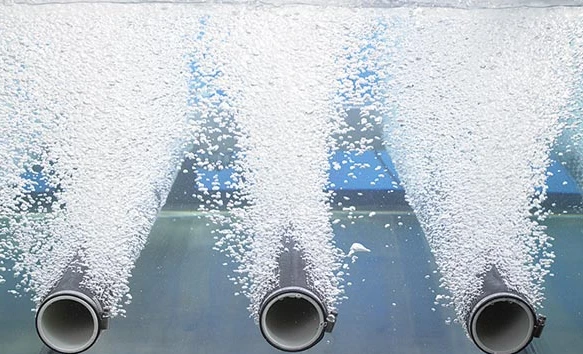
Aeration is often the single largest energy consumer in a wastewater treatment plant, accounting for 50-70% of total energy usage. Selecting the right diffuser technology is therefore paramount for optimizing operational costs and reducing carbon footprint. Both disc and tube diffusers are fine bubble diffusers, designed to maximize oxygen transfer efficiency (OTE) by creating a large surface area for oxygen to dissolve into the water through millions of tiny bubbles. However, their architectural differences lead to distinct performance characteristics, advantages, and drawbacks.
I. Core Technological Differences: Design and Hydrodynamics
Understanding the fundamental engineering differences between these diffusers explains their performance variations.
1. Physical Configuration and Flow Dynamics
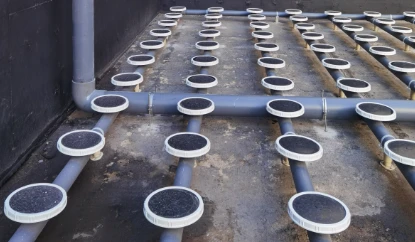
- Disc Diffusers: These are circular, flat plates typically mounted on the tank floor. Air is released through a membrane across the entire surface area, creating a wide, dome-shaped bubble plume. This upward flow pattern is excellent for oxygenation but can create weaker lateral mixing, potentially leading to dead zones, especially in corners or near tank walls.
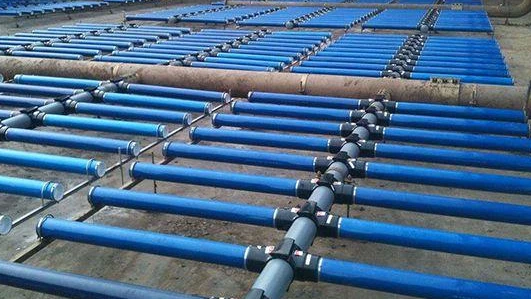
- Tube Diffusers: These are cylindrical units mounted horizontally along the tank bottom. They release bubbles along their entire length, creating a curtain of bubbles that rises vertically. This design promotes stronger lateral currents and superior overall mixing, ensuring biomass remains uniformly suspended and preventing solids deposition across a wider area of the tank floor.
2. Oxygen Transfer Efficiency (OTE): A Nuanced Comparison
The assumption that disc diffusers always have higher OTE is common but not universally true.
- Disc diffusers often have a slightly higher standardized OTE in clean water tests due to their dense bubble cloud.
- In actual wastewater, which contains surfactants that reduce OTE, the difference between the two types narrows significantly. The superior mixing of tube diffusers can sometimes lead to more effective oxygen utilization throughout the entire tank volume, potentially offsetting any minor inherent advantage in OTE that disc diffusers might have.
II. Comparative Analysis: Performance, Cost, and Operational Factors
The choice between disc and tube diffusers involves balancing capital expenditure (CAPEX), operational expenditure (OPEX), and maintenance ease. The following table summarizes the key differences.
| Feature | Disc Diffusers | Tube Diffusers | Key Implication |
|---|---|---|---|
| Oxygen Transfer Efficiency (OTE) | Slightly higher in clean water tests | Slightly lower, but excellent in practice | Diminishing real-world difference; mixing often matters more. |
| Mixing Capability | Moderate; can have dead zones below the disc | Excellent; 360° bubble release provides full-floor scrubbing | Tube diffusers prevent sludge settling more effectively. |
| Ease of Maintenance | Difficult; requires tank draining and crew entry for inspection/replacement | Easy; often designed as retractable or liftable units1 | Tube diffusers drastically reduce downtime and safety risks. |
| Clogging & Fouling Tendency | Higher risk; entire membrane is exposed to settling solids | Lower risk; continuous air scour and better mixing keep surfaces cleaner | Tube diffusers maintain performance longer, especially in challenging waters. |
| Installation CAPEX | Generally higher due to more complex piping and floor fittings | Generally lower; simpler piping layout and mounting | Tube systems can offer significant initial cost savings. |
| Floor Space Coverage | Lower density; requires more units for full coverage | Higher density; fewer units needed for equivalent mixing | Tube diffusers are better for narrow or small tanks. |
| Ideal Application | Large, wide tanks with stable loads and low scaling/fouling potential | SBR/CASS plants, high-load or fouling waters, small tanks, retrofit projects | Application dictates the optimal choice. |
III. The Maintenance Dilemma: OPEX and Downtime Implications
This is often the most decisive factor for modern plants prioritizing operational agility and cost control.
- Disc Diffuser Maintenance: Replacing a failed disc diffuser is a major undertaking. It requires shutting down the tank, draining it, sending personnel into a confined space for excavation and removal, and then reinstalling. This process is time-consuming, expensive, and poses significant safety risks. The high cost of this downtime is a major hidden OPEX factor.
- Tube Diffuser Maintenance: Many modern tube diffuser systems are designed for retrievability. They can be lifted out of the tank from the walkway while the tank remains full and operational. This allows for easy visual inspection, cleaning, and replacement without interrupting the treatment process. The OPEX savings from avoided downtime and reduced labor costs are enormous.
IV. Application-Specific Recommendations: Making the Right Choice
Based on the above analysis, here are clear guidelines for technology selection.
1. Choose Tube Diffusers If:
- You are using SBR, CASS, or other batch processes: The need for rapid, uniform mixing during the react phase is critical. Tube diffusers prevent solids from settling during idle phases, and the energy required to re-suspend sludge when starting is significantly lower (reportedly 30-40% lower according to some comparisons).
- Maintenance downtime is unacceptable: For plants that cannot afford to take tanks out of service or want to minimize confined space entry risks, retrievable tube diffusers are the superior choice.
- Your wastewater has high fouling potential: If your influent has high levels of FOG (Fats, Oils, Grease), fibers, or hardness (scale-forming cations), the self-cleaning nature and easier maintenance of tube diffusers are advantageous.
- You have a narrow or small tank: The ability to achieve higher diffuser density and better floor coverage with tube diffusers makes them ideal for such geometries.

2. Consider Disc Diffusers If:
You have a very large, wide tank: In massive tanks, the slightly higher OTE of disc diffusers might yield a marginal energy benefit, though this must be modeled carefully against mixing requirements.
Capital cost is the primary driver and water is benign: If the wastewater is pre-screened and treated to minimize fouling, and the plant is designed for easy tank drainage, the lower initial cost of disc diffusers might be appealing, though lifecycle costing often favors tubes.
You are retrofitting an existing system designed for discs: Sometimes, the existing infrastructure (air headers, floor fittings) makes a like-for-disc replacement the most logistically straightforward option.

V. The Hidden Factor: Lifecycle Cost Analysis (LCCA)
The true cost of an aeration system is not its purchase price but its total cost over 15-20 years. A proper LCCA must include:
- Initial Capital (CAPEX): Diffusers, headers, anchors, and installation labor.
- Energy Consumption (OPEX): The ongoing cost of powering blowers, calculated based on SOTE.
- Maintenance & Downtime (OPEX): The cost of labor, cleaning chemicals, and, most critically, the economic impact of process downtime for maintenance and replacement.
- Replacement Cost: The cost and labor to replace membranes or entire diffusers at end-of-life.
In most cases, when downtime and labor costs are factored in, retrievable tube diffusers demonstrate a significantly lower lifecycle cost despite a potentially higher initial unit price. The value of avoided downtime alone can justify the investment.
Conclusion: A Clear Trend Towards Operational Flexibility
While both disc and tube diffusers are capable of achieving efficient oxygenation, the industry trend is moving decisively towards tube-based systems. The reason is simple: operational flexibility and minimized lifecycle cost.
For the vast majority of applications-especially those in SBR/CASS systems, facilities with challenging wastewater, or plants where minimizing downtime is a priority-tube diffusers offer a compelling advantage with their superior mixing, easier maintenance, and lower long-term operational burden. Disc diffusers remain a viable option for large, stable, and easily accessible tanks where their marginal OTE advantage can be fully realized.
The wisest approach is to model your specific application. Partner with a reputable supplier to run detailed energy and lifecycle cost simulations for both technologies. This data-driven approach will reveal the true most cost-effective and reliable solution for your plant, ensuring optimal performance for decades to come.