



Sustainability in water treatment is usually discussed in terms of energy and chemicals, but for biological media the deciding number is service life. A media bed that lasts decades and never needs routine replacement avoids the material, transport, and downtime cost of every replacement cycle that never happens. Bio Block media makes that case on concrete figures: up to >300 m²/m³ of usable surface in a welded HDPE block that keeps passing flow at 7,500–10,000 L/h per m² - the flow rate at which conventional media would already be blinding.
What "Eco-Friendly" Actually Means For Biological Media
Modern wastewater treatment systems need to achieve reliable biological performance while keeping energy use, maintenance requirements, and equipment replacement under control. For wastewater treatment contractors, aquaculture operators, and environmental engineers, choosing the right biological filter media is an important part of that balance.
It is worth being precise about the term, because "eco-friendly" gets applied to almost everything. For biological media, the environmental case rests on three measurable properties rather than on material marketing. The first is durability: a media that does not need routine replacement avoids repeated manufacturing, shipping, and disposal. The second is hydraulic tolerance: a bed that keeps passing flow under high loading avoids the energy penalty and service disruption of a clogged filter. The third is reactor efficiency: media that packs high surface area into a compact volume lets an existing tank do more work, which avoids new concrete, new land, and new pumping capacity.
Bio Block media provides a structured surface for microorganisms to attach and develop biofilms, supporting biological treatment in applications where stable microbial growth and efficient use of reactor volume both matter. This article covers how the media works, its key technical characteristics, and where it fits into sustainable water treatment systems.
How Bio Block Media Supports Biological Treatment
Biological wastewater treatment relies on microorganisms to break down organic pollutants and, depending on the process configuration, to convert ammonia and other nitrogen compounds. The available surface for microbial attachment can influence the biological capacity of a treatment system - which is why surface area is a legitimate design variable and not a marketing number.
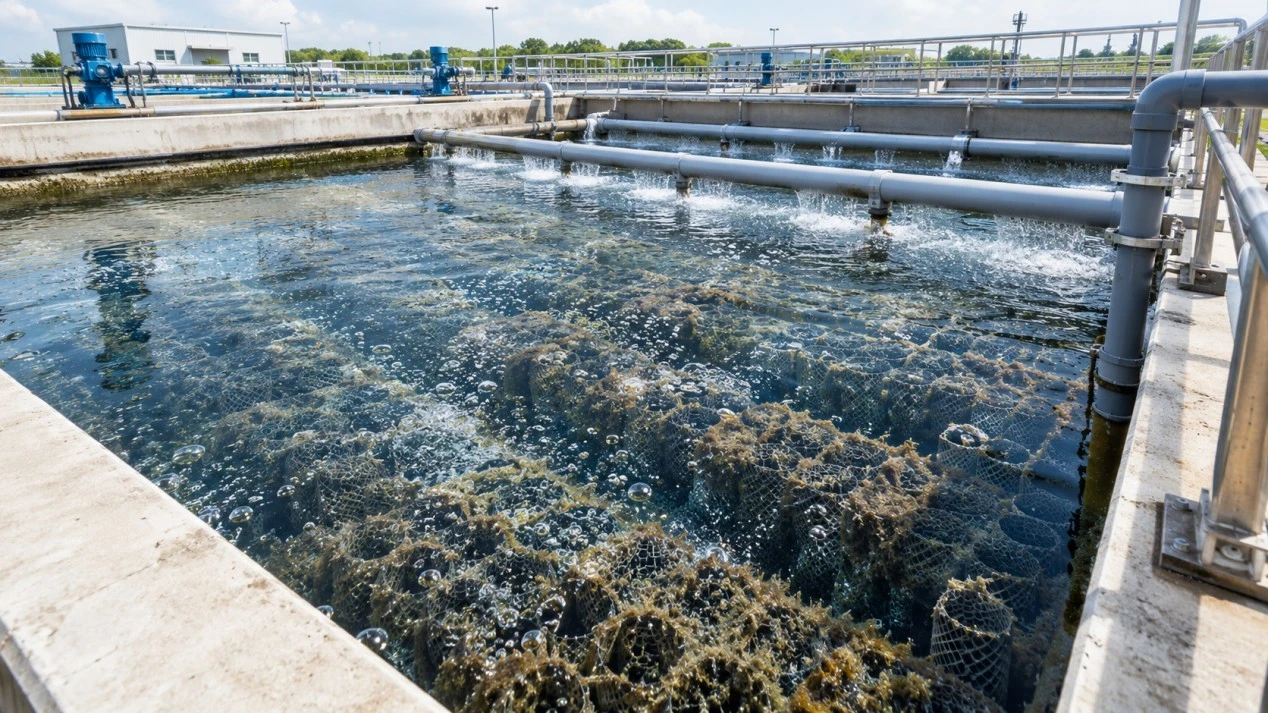
Bio Block Media is designed to provide a large protected surface within a compact media structure. As wastewater passes through the media, microorganisms attach to the surfaces and form a biofilm. The resulting biological layer can contribute to the removal of biodegradable organic matter and, under suitable operating conditions, to nitrification.
Unlike suspended-growth systems, where most microorganisms remain in the water, fixed or attached-growth media retains a portion of the active biomass on the media itself. That retention is what makes it possible to add biological capacity without significantly increasing tank volume. It also changes the failure mode: a suspended system loses biomass with the effluent whenever settling deteriorates, while a fixed bed holds its population in place and is far more forgiving of flow surges.
Key Characteristics Of Bio Block Media
The performance of biological media depends on both media design and operating conditions. Six parameters carry most of the weight.
| Parameter | Bio Block Media Consideration | Engineering Importance |
| Material | Durable plastic construction | Supports long-term operation |
| Surface Area | High available surface | Provides space for biofilm attachment |
| Porosity | Open internal structure | Allows water and microorganisms to contact the media |
| Media Structure | Three-dimensional geometry | Supports biological growth throughout the media |
| Hydraulic Flow | Designed for water circulation | Helps maintain contact between wastewater and biofilm |
| Maintenance | No routine media replacement under normal operation | Can reduce recurring material requirements |
The actual treatment capacity should not be determined by surface area alone. Organic loading, ammonia concentration, dissolved oxygen, temperature, hydraulic retention time, and biofilm thickness all influence biological performance. A media bed is a living system, and like any living system its output depends on what is fed to it and the conditions it operates in.
Bio Block Media In Sustainable Water Treatment
Sustainability in wastewater treatment is not limited to using recyclable materials. It also involves designing systems that operate reliably over an extended service period while using resources efficiently. A media that avoids replacement for the life of the plant and keeps the reactor compact delivers environmental benefit through avoided construction and avoided material turnover - benefits that never appear on a chemical consumption report but are real nonetheless.
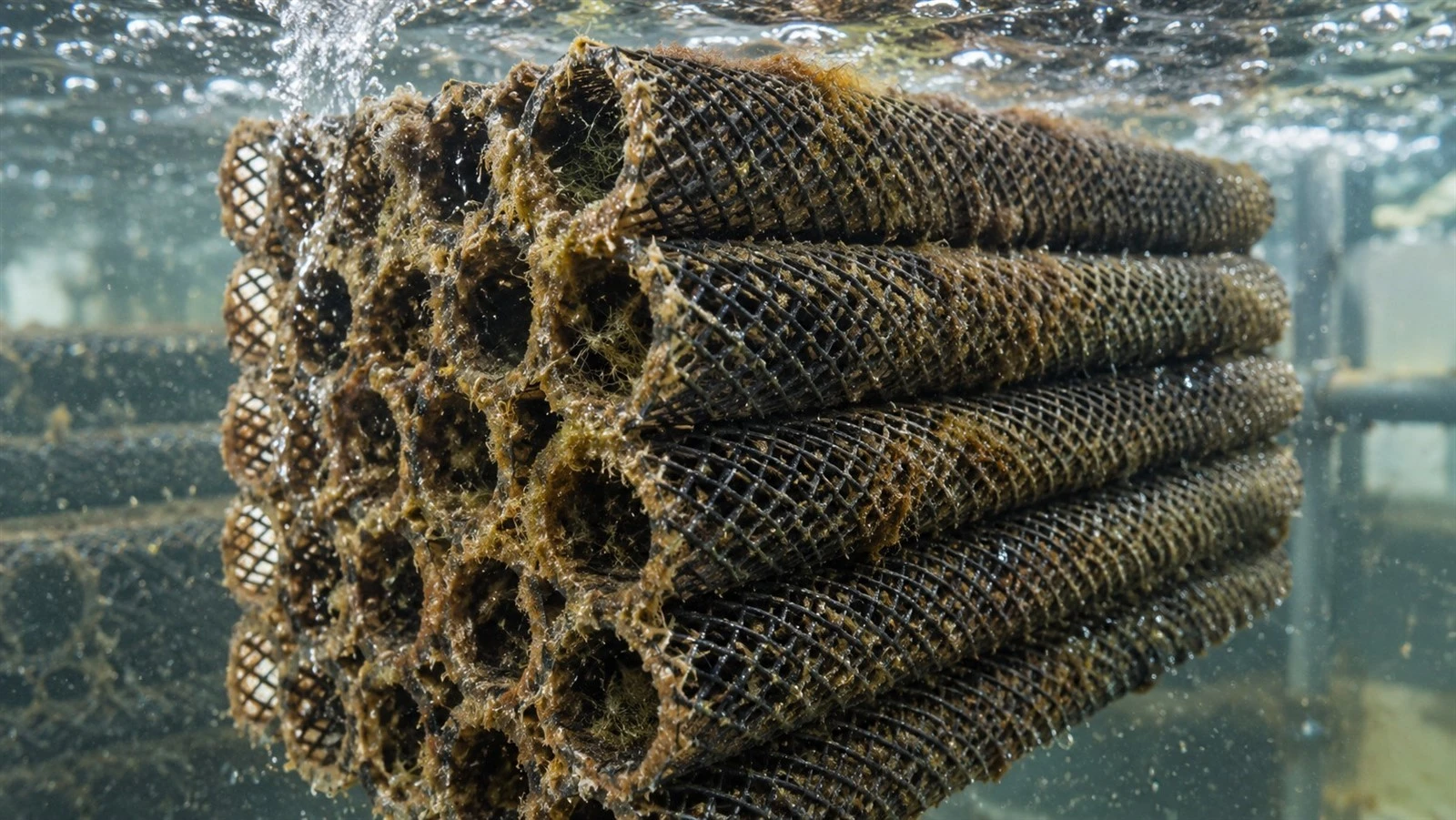
Wastewater Treatment Applications
Bio Block Media can be incorporated into biological treatment systems for applications such as:
- Municipal wastewater treatment
- Industrial wastewater treatment
- Aquaculture and recirculating water systems
- Biological filtration
- Existing treatment plant upgrades
- Polishing and tertiary biological treatment
For aquaculture applications, maintaining a stable nitrifying biofilm is particularly important because ammonia generated by fish metabolism accumulates rapidly in recirculating systems. Proper media selection, aeration, circulation, and biofilm management are therefore essential. Working installations show what this looks like in practice, both in Bio Block media for high-value aquaculture and in pond-based duty, where the media behaves differently because flow is driven by natural circulation rather than pumps - see Bio Block pond aquaculture water purification.
In wastewater treatment plants, structured biological media can also be considered when additional biological surface is required within an existing reactor. The final media quantity should be calculated from the actual pollutant loading and treatment objectives rather than from tank volume alone. Where the process calls for a suspended rather than fixed biofilm, the equivalent design logic for moving-bed MBBR carrier media applies instead.
Why Media Geometry Matters More Than The Number On The Datasheet
Two biological media products with similar nominal surface areas may not perform identically. The geometry of the media affects water distribution, oxygen availability, biofilm attachment, and the development of the biological layers. A surface that biofilm cannot reach contributes nothing, and a surface that only receives flow at low velocity will develop an anaerobic layer that contributes negatively.
An effective design should provide sufficient protected surface while allowing wastewater to circulate through the media. Excessive biofilm accumulation can also affect hydraulic conditions, so the biological process and the media structure should be evaluated together rather than sequentially. This is the same principle that governs other process internals - packing that looks optimal in isolation can underperform once real flow behaviour is accounted for, which is why plastic filter tube set bio filtration media is specified by duty rather than by surface figure alone.
What A Two-Tank Treatment Project Showed
A wastewater treatment project using biological media included two treatment tanks with working volumes of approximately 400 m³ and 302 m³.
The influent wastewater had an initial BOD concentration of approximately 1,300 mg/L and COD of approximately 3,800 mg/L. During the treatment process, BOD and COD were reduced to approximately 468 mg/L and 1,550 mg/L respectively. TSS was around 200 mg/L, against a target of below 100 mg/L.
Biological media was incorporated into the treatment process to provide additional surface for microbial attachment, and the project achieved measurable reductions in organic pollutants under the operating conditions of the system. The case illustrates an important point for engineering projects: media performance cannot be evaluated independently from the overall treatment process. Aeration, hydraulic loading, wastewater characteristics, biomass development, and operating conditions all affect the final result. Comparative performance data from the same media family points the same way, as the COD removal figures in Bio Block media COD removal in wastewater treatment show.
Selecting Bio Block Media For A New Or Existing System
Before selecting biological media, engineers and procurement teams should collect basic project information:
- Wastewater flow rate
- Reactor dimensions and working volume
- BOD and COD loading
- Ammonia and nitrogen concentrations
- Water temperature
- Existing biological treatment process
- Required treatment targets
- Aeration and circulation conditions
For retrofit projects, the existing tank configuration and hydraulic conditions should also be reviewed. The media support system, retention method, and water distribution need to be compatible with the selected media. This is where RAS projects often differ from municipal ones: the tank is smaller, the loading is more variable, and the media has to tolerate intermittent flow driven by pump cycles rather than continuous gravity feed. Site experience from Bio Block media in RAS aquaculture systems is a useful reference for that pattern.
A practical approach is to evaluate the media on effective biological surface, physical structure, durability, hydraulic behaviour, and project-specific loading rather than choosing solely by the highest advertised surface-area figure.
Conclusion
Eco-friendly Bio Block Media supports sustainable biological water treatment by providing a durable surface for microbial growth while making efficient use of available reactor space. Its suitability depends on the specific wastewater characteristics, biological loading, reactor design, aeration, and operating conditions.
For a new wastewater treatment system or an existing plant upgrade, sharing the reactor dimensions and basic water-quality data with a media supplier is what allows the appropriate media type and quantity to be determined. A project-specific evaluation provides a more reliable basis than comparing product specifications alone. The full range of structured Bio Block filter media for biological treatment covers the standard module sizes and surface areas.
Evaluate Bio Block Media Against Your Loading
Send us your reactor dimensions, BOD and COD loading, ammonia levels and treatment target, and we will calculate the media volume and module configuration your system needs.