


Fine Bubble Tube Diffuser for Wastewater Aeration | EPDM & PTFE Membrane Tube Aerator
Where Disc Diffusers Can't Fit - Tube Diffusers Deliver.
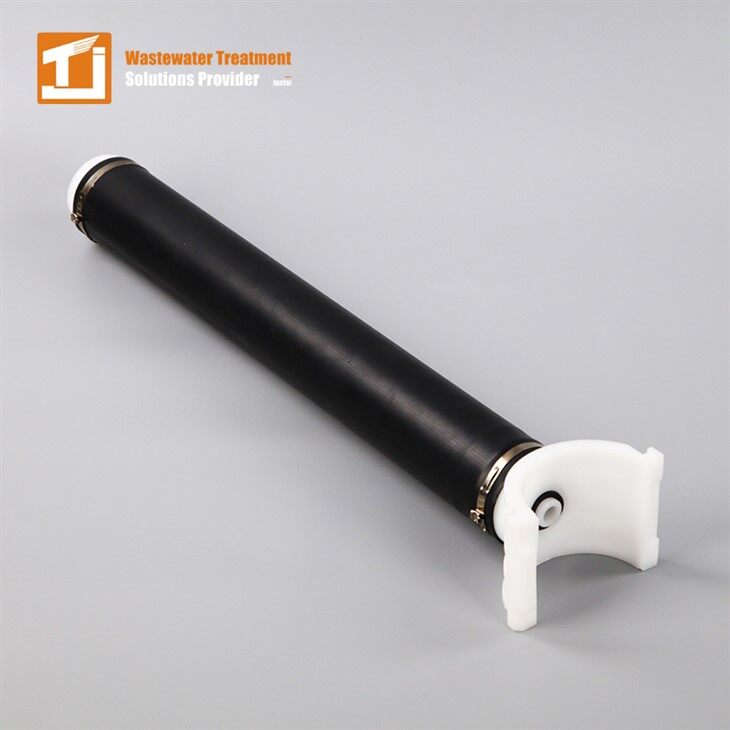
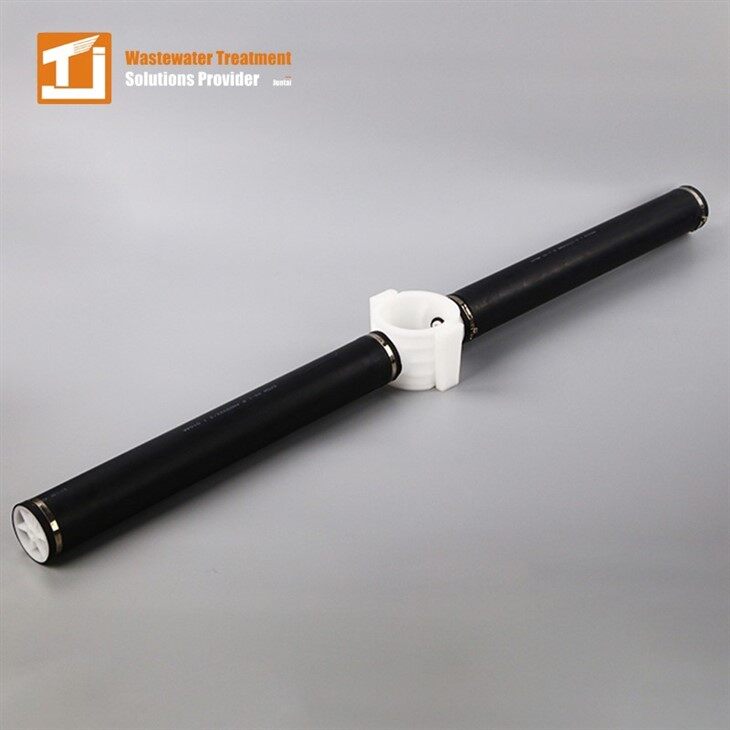
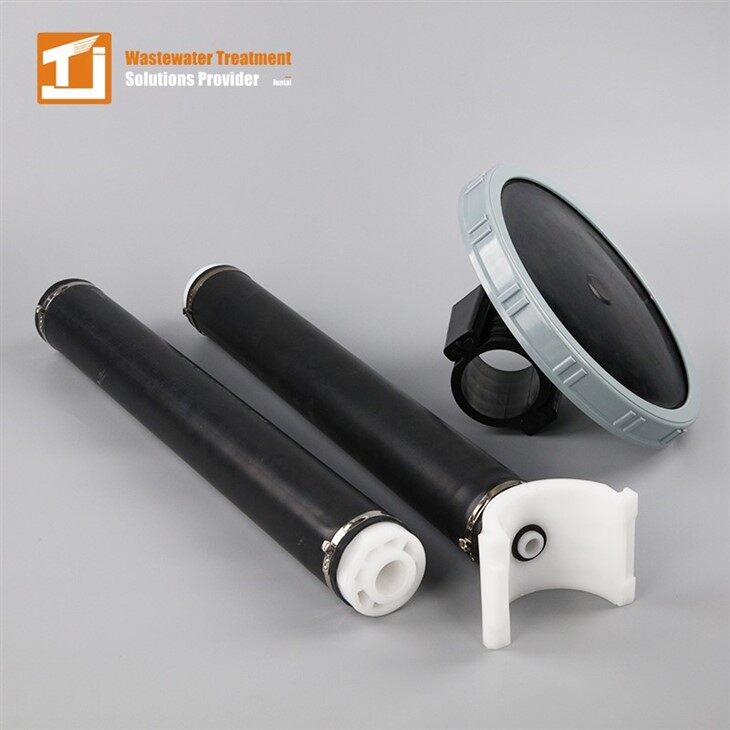
Juntai's fine bubble tube diffuser is a cylindrical submerged aerator designed for applications where disc diffusers are impractical: narrow aeration channels, MBBR reactor floors, retrofit grids in existing basins with limited pipe spacing, and sequencing batch reactors (SBR) with variable water depth. The elongated tube geometry distributes fine bubbles across a larger linear footprint per connection point than any disc diffuser, reducing the number of air supply connections, fittings, and saddle mounts required - lowering both installation cost and long-term maintenance complexity.
Available in EPDM and PTFE-coated membrane configurations, Juntai tube diffusers are manufactured and supplied factory-direct from our ISO 9001-2015 certified facility in Anhui, China.

Tube Diffuser vs. Disc Diffuser - When to Choose Each
| Parameter | Tube Diffuser | Disc Diffuser |
| Shape | Cylindrical, 500–1,000 mm length | Circular, 215–300 mm diameter |
| Coverage per connection | Higher - linear coverage | Lower - point coverage |
| Best basin geometry | Narrow channels, MBBR tanks, SBR | Wide rectangular basins, large tanks |
| Number of connection points needed | Fewer | More |
| Retrofit compatibility | Excellent - fits existing lateral pipe grids | Good |
| Airflow per unit | 1.5–6 Nm³/h per tube | 0.5–3 Nm³/h per disc |
| MBBR carrier suspension | Excellent - linear bubble curtain | Good - point source mixing |
EPDM vs. PTFE Membrane - Which to Choose
| Property | EPDM Membrane | PTFE-Coated Membrane |
| Base material | Ethylene propylene diene monomer rubber | EPDM substrate + PTFE surface coating |
| Fouling resistance | Good | Excellent - PTFE prevents biofilm adhesion |
| Chemical resistance | Good (acids, alkalis, UV) | Superior - near-universal chemical inertness |
| Service life | 7–10 years (typical) | 10–15 years |
| Cleaning frequency | Standard | Less frequent - lower fouling rate |
| Best applications | Municipal wastewater, general industrial, aquaculture | Textile, chemical, pharmaceutical, oily wastewater, high-TSS industrial |
| Unit cost | Lower | Higher (lower lifetime maintenance cost) |
Technical Specifications
| Parameter | Specification |
| Tube length | 500 mm / 750 mm / 1,000 mm (custom available) |
| Outer diameter | 63 mm / 65 mm (standard) |
| Membrane material | EPDM / PTFE-coated EPDM |
| Body material | ABS / PP (corrosion-resistant) |
| Bubble type | Fine bubble (1–3 mm diameter) |
| Airflow range per tube | 1.5–6 Nm³/h |
| Oxygen transfer efficiency (OTE) | ≥ 30–50% improvement over coarse bubble |
| Operating submergence depth | 1.5–6 m |
| Dynamic wet pressure (DWP) | ≤ 40 mbar (at rated airflow) |
| Check valve | Integral - prevents backflow of mixed liquor into air piping when blower is off |
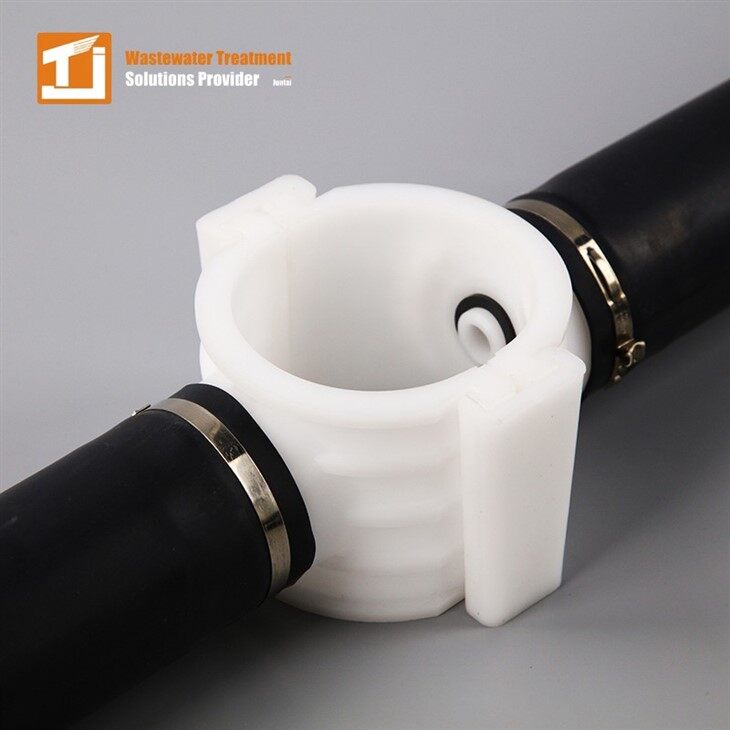
| Connection type | Threaded NPT / saddle mount / socket (project-specific) |
| Operating temperature | 5°C – 40°C |
| pH tolerance | 2–12 |
| Service life (EPDM) | 7–10 years |
| Service life (PTFE-coated) | 10–15 years |
| Certification | ISO 9001-2015, SGS, RoHS |
Key Performance Advantages
Fine Bubble Technology - 30–50% Higher Oxygen Transfer Than Coarse Bubble
Fine bubbles (1–3 mm diameter) have dramatically higher surface-area-to-volume ratios than coarse bubbles. More bubble surface in contact with the liquid means more oxygen molecules crossing the air-water interface per unit of air supplied. For biological treatment processes where dissolved oxygen is the rate-limiting factor - nitrification in particular - switching from coarse to fine bubble aeration directly increases treatment capacity without adding blower power or tank volume.
Integral Check Valve - Clean Air Piping, Always
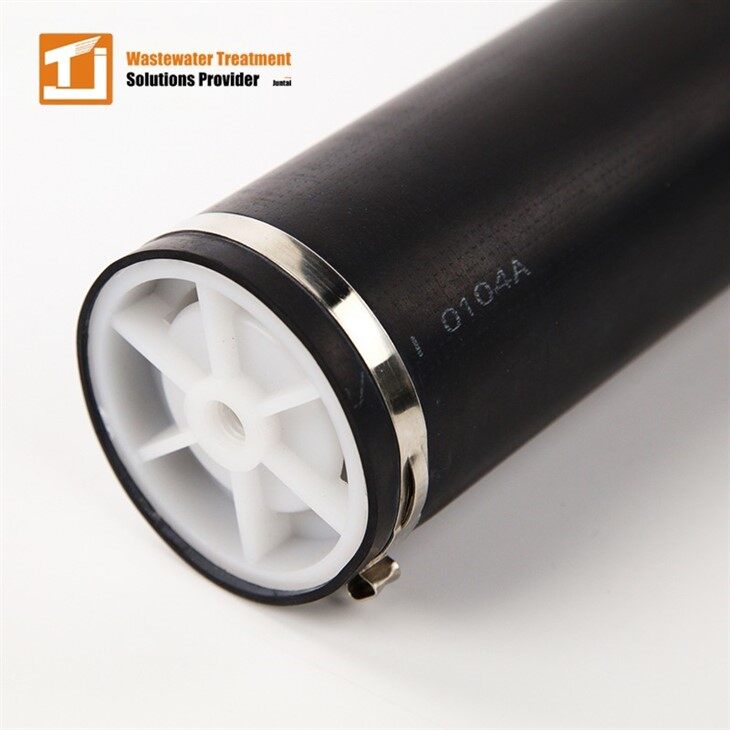
When the blower shuts down, water pressure would normally push mixed liquor back through the membrane slits and into the air distribution piping, causing fouling and corrosion inside the lateral pipes. Juntai tube diffusers incorporate an integral check valve that closes automatically when air pressure drops, keeping the piping system clean. This eliminates the costly inspection and cleaning of lateral pipes that is required for diffusers without check valves.
Self-Cleaning Slits - Sustained Flux Without Frequent Maintenance
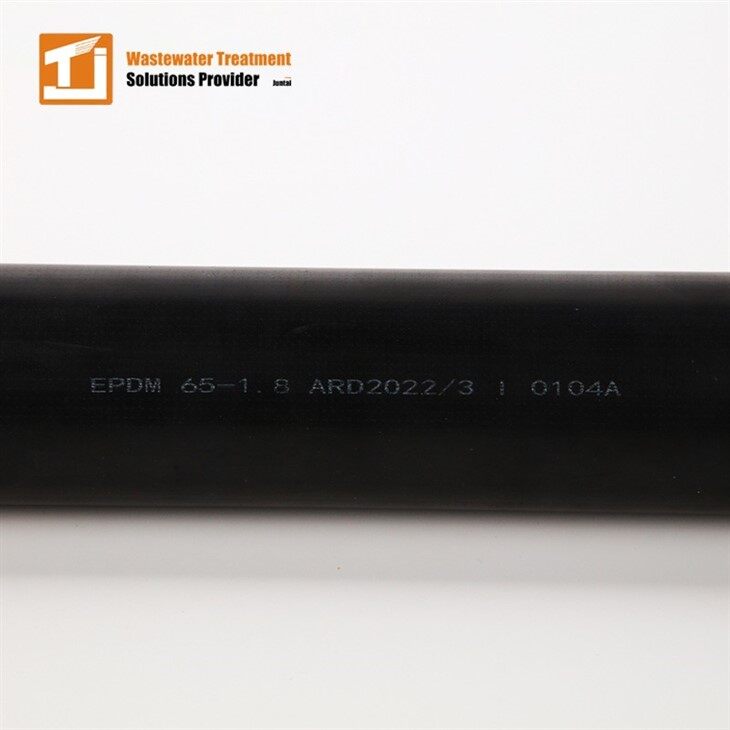
The EPDM membrane is perforated with precision laser-cut slits that close completely under zero-pressure conditions. When air pressure is applied, the slits open and bubbles are released. When the blower cycles off, the slits close - preventing fouling particles from entering the pores. This self-sealing behavior is why fine bubble membrane tube diffusers maintain stable airflow resistance over years of operation, unlike rigid porous ceramic or sintered HDPE diffusers that permanently clog.
Low Dynamic Wet Pressure - Reduced Blower Energy
Dynamic wet pressure (DWP) is the resistance the membrane imposes on the airflow, added on top of the static submergence head. Higher DWP means the blower works harder and consumes more electricity. Juntai tube diffuser membranes are manufactured with controlled slit geometry and low plasticizer content (to prevent shrinkage and hardening) that keeps DWP ≤ 40 mbar at rated airflow. Over a 10-year operating life, lower DWP translates to significant cumulative energy savings compared to high-DWP diffusers.
Membrane Replacement Without Draining the Tank
On retrievable grid installations, tube diffuser grids can be lifted to the surface for inspection and membrane replacement without dewatering the aeration basin - eliminating the downtime and cost of draining a live treatment tank. Where fixed grids are used, individual tube membranes can be replaced by isolating the affected lateral pipe without taking the entire basin offline.
Application Scenarios
MBBR Reactor Aeration
Tube diffusers are the preferred aeration method for MBBR systems because the linear bubble curtain produced along the tube length creates a consistent upward flow pattern that keeps carriers uniformly suspended across the reactor cross-section. A single tube diffuser running the full width of a narrow MBBR tank provides more uniform carrier mixing than multiple disc diffusers at equivalent airflow. Coarse bubble diffusers are not recommended for MBBR - the large bubbles create turbulence that strips biofilm from carrier surfaces.
Aeration Channels and Oxidation Ditches
In narrow rectangular aeration channels (width < 3 m), tube diffusers installed along the channel floor provide uniform dissolved oxygen distribution without the dead zones that occur between disc diffuser grid points. The long linear geometry matches the channel shape naturally, with fewer saddle connections to the lateral pipe.
SBR (Sequencing Batch Reactors)
SBR operation involves filling, aerating, settling, and decanting in the same tank - meaning the water depth above the diffusers changes significantly between phases. Tube diffusers tolerate variable submergence depth without significant change in DWP or bubble distribution quality, making them more reliable than disc diffusers in variable-depth applications.
Municipal Activated Sludge Basins
For standard municipal aeration basins, tube diffusers on retrievable lateral grids allow maintenance without taking the basin offline. Grids are lifted to the surface using the retrieval system, membranes are inspected or replaced, and the grid is re-submerged - the basin continues operating throughout. EPDM membranes are the standard choice for municipal applications with good biodegradable influent.
Industrial Wastewater - Chemical, Textile, Pharmaceutical
Industrial effluent often contains surfactants, solvents, or chemicals that accelerate EPDM membrane degradation. For these applications, PTFE-coated tube diffuser membranes provide superior chemical resistance and significantly reduced fouling frequency. The PTFE surface prevents bacterial biofilm adhesion - the primary fouling mechanism in high-organic industrial aeration basins.
Aquaculture Pond and Tank Oxygenation
In recirculating aquaculture systems and fish pond aeration, tube diffusers installed along the pond perimeter or tank floor deliver fine-bubble oxygenation with minimal mechanical disturbance to the fish. The low DWP allows use with small, low-pressure regenerative blowers - reducing capital cost for farm-scale installations.
Tube Diffuser Assembly Process


Installation Guidelines
Mounting position: Install tubes horizontally on lateral pipes, 150–300 mm above the basin floor. Avoid positioning directly on the floor - sludge accumulation below the tube will obstruct bubble release from the lower membrane surface.
Lateral pipe spacing: For uniform DO distribution, space lateral pipes at 0.5–1.0 × the tube length center-to-center. For a 1,000 mm tube, pipe spacing of 0.5–1.0 m gives full floor coverage.
Airflow commissioning: Start at minimum design airflow and ramp up gradually. Membrane slits require initial cycling to achieve stable bubble release pattern - do not run at full flow before biofilm has established on the membrane surface (first 48–72 hours).
Check valve orientation: Ensure check valve is oriented correctly relative to airflow direction during installation - incorrect orientation prevents proper sealing when the blower is off.
Cleaning: Acid wash (2% citric acid or HCl) every 1–2 years to remove mineral scale deposits from membrane slit edges. Do not use high-pressure water jets directly on the membrane surface - slit damage is permanent.
Frequently Asked Questions
What is the difference between a tube diffuser and a disc diffuser?
Both are fine bubble membrane aerators, but they differ in geometry. A disc diffuser is circular (typically 215–300 mm diameter) and mounts on a single vertical saddle connection - it distributes bubbles in a roughly circular pattern. A tube diffuser is cylindrical (500–1,000 mm long) and mounts along a lateral pipe - it distributes bubbles linearly along its full length. Tube diffusers provide greater coverage per connection point and are preferred for narrow basins, MBBR reactors, and retrofits into existing lateral pipe grids.
How do I choose between EPDM and PTFE-coated membranes?
Choose EPDM for municipal wastewater, aquaculture, and clean industrial effluent - it offers excellent performance at lower cost. Choose PTFE-coated membranes for industrial wastewater containing surfactants, oils, solvents, or aggressive chemicals that cause EPDM fouling or degradation. PTFE membranes cost more upfront but typically require less frequent cleaning and last longer in chemically challenging environments.
How often do tube diffuser membranes need replacing?
With proper operation and periodic acid cleaning, EPDM membranes last 7–10 years in municipal applications. PTFE-coated membranes achieve 10–15 years. The main indicators for replacement are: DWP rising above 80 mbar at design airflow, visible membrane cracking or tearing, or sustained DO deficiency despite adequate blower output.
Can tube diffusers be used with MBBR carriers?
Yes - and they are frequently specified together. Tube diffusers are compatible with all Juntai MBBR plastic carriers (K1, K3, K5, MBBR 04, 19, 37, 64). For MBBR applications, coarse bubble diffusers should be avoided as they strip biofilm from carrier surfaces; fine bubble tube diffusers provide the correct aeration intensity for carrier suspension without damaging the biofilm.
What blower type is compatible?
Roots blowers, screw blowers, and centrifugal turbo blowers are all compatible. The blower must deliver sufficient pressure to overcome static submergence head plus membrane DWP plus pipe friction losses. For a submergence depth of 4 m, a minimum delivery pressure of approximately 55–60 kPa is required. Our team can assist with blower sizing for your specific installation.
Related Products
Looking for aeration solutions for other applications?
• EPDM Fine Bubble Disc Diffuser - for wide rectangular aeration basins
• PTFE Disc Diffuser - for chemical and textile industrial wastewater
• MBBR Bio Carrier Media - K1, K3, K5, MBBR 04/19/37/64 for use with tube diffuser aeration
Request a Quote
To select the correct tube diffuser model and quantity for your project, provide: basin dimensions (L × W × depth), daily airflow requirement (Nm³/h), wastewater type, and preferred membrane material (EPDM or PTFE). We will return a layout recommendation and factory-direct pricing within 24 hours.
Website: www.juntaiplastic.com

Request a Customized Aeration Solution Today!
Trusted by 500+ global wastewater projects, JUNTAI Smart Tube Diffusers offer tailored configurations and expert technical support. Contact us for a free energy-saving assessment and quote!
Bubble Type: Fine Bubble
Tube Diameter(mm): 63/93/113
Membrane Material: Special Formula EPDM with UV Protector import from Germany /Silicon Membrane
Tube material:Acrylonitrile-butadiene-styrene with UV Protector (ABS)
Length(mm): 500/750/1000
Connector:3/4NPT
Flow Range(m³/h): 2-14/5-20/6-28
Service Area(m2): 0.75-2.5/1.0-3.0/1.5-2.5


