


|
78% to 94% Survival. No New Tanks. Just Better Biofilm. 78% Less Water. |
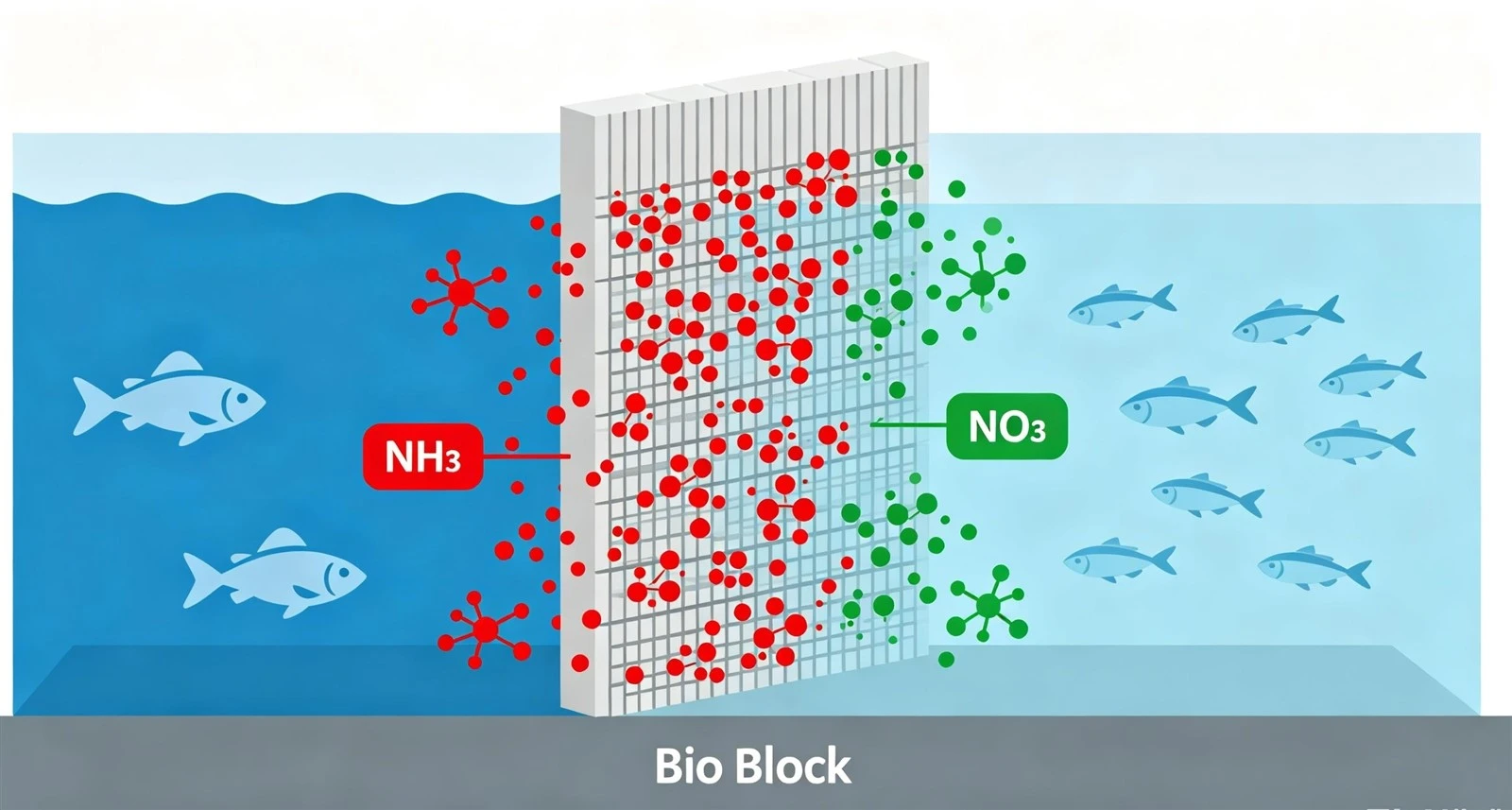
In a high-density indoor tilapia RAS at 115 fish per cubic meter, ammonia doesn't rise gradually - it spikes. One missed feeding adjustment, one underperforming biofilter, and NH3 climbs past 0.5 mg/L, suppressing appetite, then immunity, then survival. A 9,200 m² farm in Penang, Malaysia, was fighting this battle with ceramic ring biofilters that clogged on feed sludge, demanded bi-weekly cleaning, and still let ammonia drift. The switch to HDPE Bio Block at 360 m²/m³ - with an open mesh that self-cleans under normal flow - changed the economics of the entire operation. This case study covers the comparison data, the 5-month trial results, and what it means for any RAS operator tired of fighting their own biofilter.
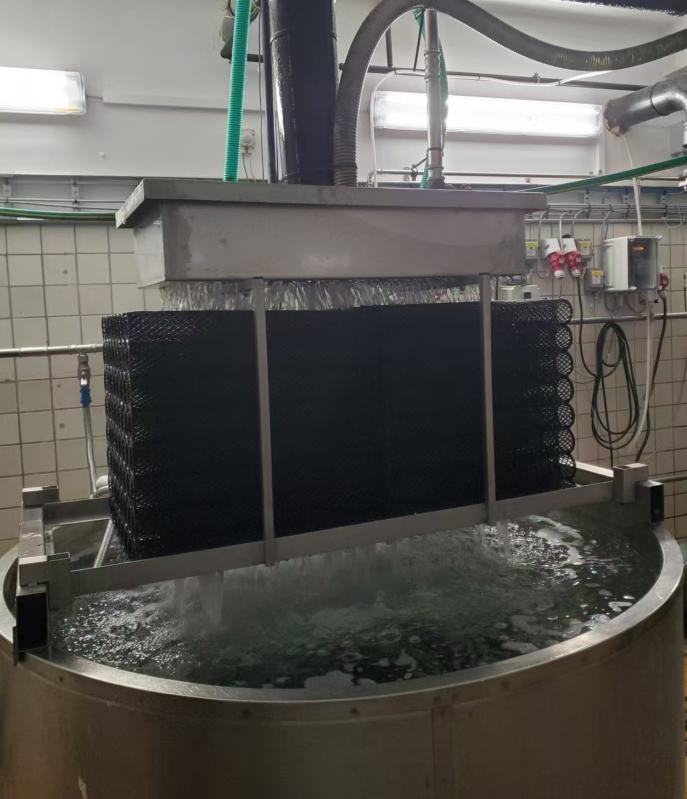
BIOFILTRATION TECHNOLOGY COMPARISON
HDPE Bio Block vs. Ceramic Ring: Performance Data
High-density indoor tilapia RAS farms face severe ammonia and nitrite accumulation from fish feed residues and excreta. Traditional ceramic biofilters struggle with clogging and limited surface area. The table below compares the two media types across six operational parameters critical to RAS biofiltration performance.
| Parameter | HDPE Bio Block | Ceramic Ring |
| Specific Surface Area | 360 m²/m³ | 220 m²/m³ |
| Ammonia Removal | 88%-93% | 62%-75% |
| Water Exchange Demand | 78% reduction | High daily replacement |
| Clogging Risk | Open mesh self-cleaning | Easy blocked by feed sludge |
| Maintenance | Monthly air flushing | Bi-weekly full tank cleaning |
| Service Life in Freshwater | 10+ years | 3-5 years |
REAL PROJECT CASE STUDY
Large Indoor Tilapia RAS Farm - Penang, Malaysia
A 9,200 m² indoor tilapia farm in Penang runs 14 culture tanks, total system water volume 4,800 m³, stocking density 115 tilapia per cubic meter. Before upgrading, the farm used ceramic ring biofilters - frequent clogging, high maintenance, unstable ammonia.
| Project Parameter | Value |
| Species | Freshwater tilapia |
| Total RAS Water Volume | 4,800 m³ |
| Bio Block SSA | 360 m²/m³ |
| Filling Ratio | 30% of filter tank volume |
5-Month Operation Outcomes
| Metric | Result |
| Ammonia Level | Below 0.35 mg/L |
| Nitrite Level | Under 0.07 mg/L |
| Tilapia Survival Rate | 78% to 94% |
| Daily Water Exchange Reduction | 78% (saving $4,500/month in freshwater) |
| FCR Improvement | 1.75 to 1.52 |
| Aeration Energy Savings | 24% reduction (over $51,000/year) |
APPLICATION GUIDELINES
How to Maximize Bio Block Performance in RAS
To get the full benefit of HDPE Bio Block media in a recirculating aquaculture system, operators should follow several best practices drawn from the Penang installation experience:
Choose UV-stabilized HDPE. Indoor RAS with artificial lighting still exposes media to UV from UV sterilizers and ambient sources. UV-stabilized grades prevent embrittlement and extend service life beyond 10 years.
Install pre-filter screens. A 60-100 micron drum filter or screen before the biofilter tank removes large particulate solids, preventing accumulation in the media bed and preserving the self-cleaning action of the open mesh structure.
Match low-power blowers for even flow distribution. The open structure of Bio Block creates low back-pressure. Size aeration blowers to deliver uniform dissolved oxygen across the entire media bed - uneven flow creates dead zones where nitrifying bacteria underperform.
Conduct monthly low-pressure air flushing. A 15-minute air flush at 1.5-2.0 bar once per month is sufficient to slough off excess biofilm and renew the active nitrifying layer. This replaces the bi-weekly full tank cleaning required by ceramic rings.
CONCLUSION
Indoor high-density tilapia, catfish and ornamental fish RAS farms can achieve dual gains of water quality optimization and cost reduction with Bio Block. The Penang case demonstrates that switching from ceramic ring to HDPE Bio Block media - with 360 m²/m³ specific surface area and an open self-cleaning mesh - delivers measurable improvements in ammonia control, survival rate, feed conversion, and operational cost. The economics are compelling: $4,500 monthly freshwater savings, $51,000 annual power savings, and a survival rate jump from 78% to 94% that directly impacts harvest revenue.
Ready to Upgrade Your RAS Biofiltration?
| Request a Quote | Download Technical Specs | Contact Our Engineers |