

High Oxygen Transfer Disc Diffuser for Intensive Aquaculture: RAS & Pond Applications
1. The Critical Role of Dissolved Oxygen in Intensive Aquaculture
Intensive aquaculture-whether in Recirculating Aquaculture Systems (RAS) or high-density ponds-relies heavily on stable dissolved oxygen (DO) levels to sustain fish and shrimp health. Unlike extensive farming, intensive operations pack 2-3 times more aquatic species per cubic meter, leading to exponential oxygen demand. A single kilogram of fish consumes 0.6-0.8kg of oxygen per day during growth, and even short-term DO dips (below 5mg/L for most commercial species) can trigger stress, reduced feed conversion rates, or mass mortality.
Common DO-related challenges in intensive aquaculture include:
- RAS Systems: Closed-loop water circulation leads to gradual oxygen depletion, especially in biofilter and fish tank zones. Traditional aerators often fail to deliver uniform oxygen distribution, creating "dead zones" with low DO.
- High-Density Ponds: Overstocking, organic waste accumulation, and hot weather cause DO to plummet at night (when phytoplankton stop photosynthesizing), risking shrimp or fish kills.
- Energy Waste: Outdated aeration equipment (e.g., paddlewheel aerators) consumes excessive power while achieving low oxygen transfer efficiency, increasing operational costs.
For farmers raising high-value species like salmon, Pacific white shrimp, or sturgeon, maintaining optimal DO (6-8mg/L) is non-negotiable-it directly impacts growth speed, disease resistance, and product quality. This is where JUNTAI high oxygen transfer disc diffuser emerges as a game-changing solution.
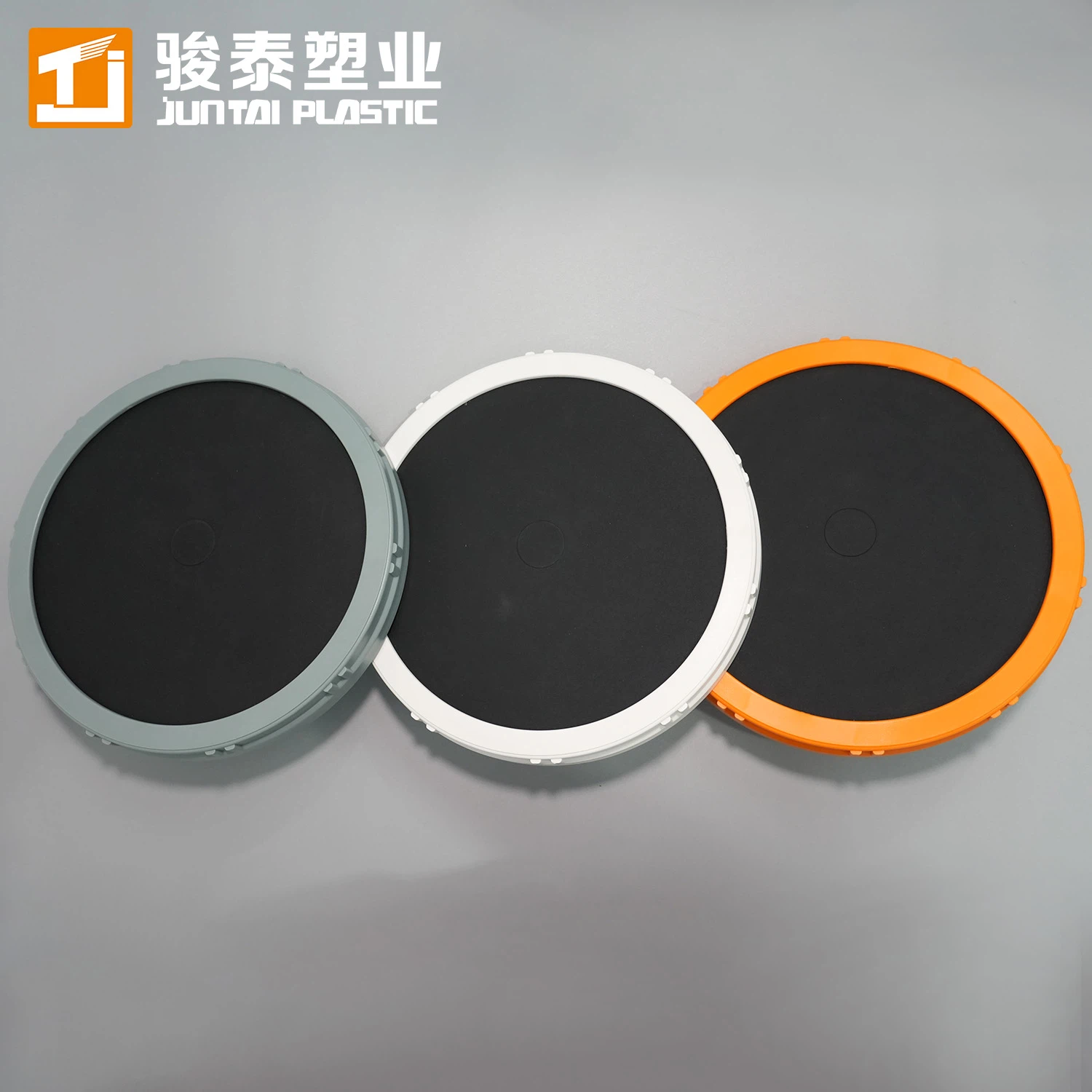
2. How JUNTAI Disc Diffuser Achieves Superior Oxygen Transfer
JUNTAI high oxygen transfer disc diffuser is engineered specifically for the demands of intensive aquaculture, leveraging innovative design and premium materials to deliver unmatched aeration performance:
2.1 Core Design for Maximum Oxygen Efficiency
- Microbubble Technology: The diffuser's EPDM or silicone membrane features 0.5-1.0mm micro pores that generate tiny, uniform bubbles. Compared to large bubbles from traditional aerators, microbubbles have a larger surface area-to-volume ratio, extending contact time with water and boosting oxygen transfer efficiency (OTE) to 25-35%-far exceeding the industry average of 15-20%.
- Uniform Aeration Coverage: Each disc diffuser covers a 3-5㎡ area, and the modular design allows flexible layout. In RAS tanks, diffusers installed at the bottom create vertical water circulation, eliminating dead zones. In ponds, they can be arranged in rows to ensure every corner receives sufficient oxygen.
- Low Energy Consumption: Operates at a low air pressure of 0.02-0.05MPa, compatible with small air compressors. This reduces energy use by 30-40% compared to paddlewheel or jet aerators, a critical advantage for long-term intensive farming.
2.2 Premium Materials for Aquaculture Durability
- Membrane Options: Food-grade EPDM membrane (resistant to algae, sludge, and aquaculture chemicals) for freshwater ponds; silicone membrane (high temperature and corrosion resistance) for marine RAS or brackish water shrimp farms. Both materials have a lifespan of 5-8 years, minimizing replacement costs.
- Sturdy Base Construction: Made of UV-resistant ABS plastic or stainless steel, the diffuser base withstands harsh aquaculture environments-from pond sediment abrasion to RAS system chemical treatments-without deforming or leaking.
3. Application Scenarios: RAS Systems & High-Density Ponds
3.1 RAS (Recirculating Aquaculture Systems)
RAS systems are the backbone of modern intensive aquaculture, and JUNTAI disc diffuser is tailored to their closed-loop needs:
- Installation: Mounted at the bottom of fish tanks (1-1.5m depth) and biofilter compartments. For a 50m³ RAS tank, 8-10 disc diffusers (φ215mm or φ260mm) ensure uniform DO distribution.
- Key Benefits: Maintains stable DO at 6-7mg/L even with stocking densities up to 50kg/m³ (e.g., salmon or sturgeon). The gentle aeration avoids disturbing fish or damaging delicate biofilms in the filtration system.
- Case Example: A Norwegian salmon RAS farm replaced traditional aerators with JUNTAI disc diffusers, achieving a 28% increase in oxygen transfer efficiency and reducing daily energy costs by $120. Fish growth rate improved by 15%, and mortality dropped from 8% to 2.5%.
3.2 High-Density Ponds
For pond farmers raising shrimp, tilapia, or catfish at high stocking densities (10-15kg/100㎡), JUNTAI disc diffuser solves nighttime DO depletion and uneven aeration:
- Installation: Deployed in floating aeration frames or fixed to the pond bottom (0.8-1.2m depth). Spaced 3-4 meters apart, they create circular water flow that mixes surface oxygen-rich water with bottom water.
- Key Benefits: Prevents DO drops below 5mg/L at night, eliminating "midnight kills" of shrimp or fish. Reduces sludge accumulation by promoting aerobic decomposition of organic waste, improving water clarity.
- Case Example: A Thai Pacific white shrimp farm with 5,000㎡ ponds installed JUNTAI disc diffusers. Stocking density increased from 12 to 18 shrimp/㎡, and harvest yield rose by 40%. The farm also reduced water exchange by 60% due to improved water quality, saving valuable freshwater resources.

4. Performance Comparison: JUNTAI Disc Diffuser vs. Traditional Aerators
| Performance Indicator | JUNTAI High Oxygen Transfer Disc Diffuser | Paddlewheel Aerator | Tube Diffuser |
|---|---|---|---|
| Oxygen Transfer Efficiency (OTE) | 25-35% | 10-15% | 18-22% |
| Energy Consumption (kWh/1000m³ water) | 0.8-1.2 | 2.5-3.0 | 1.5-1.8 |
| DO Uniformity | Excellent (no dead zones) | Poor (surface-only aeration) | Good (limited coverage) |
| Noise Level | Low (<50dB) | High (>70dB) | Medium (60-65dB) |
| Maintenance Frequency | Once every 12-18 months | Once every 3-6 months | Once every 6-9 months |
| Lifespan | 5-8 years | 2-3 years | 3-4 years |
| Suitable for High-Density Farming | Yes (up to 50kg/m³) | No (max 15kg/m³) | Limited (up to 30kg/m³) |
5. Why JUNTAI Disc Diffuser is the Top Choice for Intensive Aquaculture
- Maximize Yield: By maintaining optimal DO levels, it supports higher stocking densities and faster growth, increasing per-unit-area yield by 30-40%.
- Energy & Cost Savings: 30-40% lower energy consumption than traditional aerators, cutting annual operational costs significantly. Durable materials reduce replacement and maintenance expenses.
- Versatile Adaptability: Works seamlessly in freshwater, marine, and brackish water environments, suitable for RAS systems, high-density ponds, and hatcheries.
- Eco-Friendly Operation: Reduces water exchange needs by improving water quality, conserving water resources. Low noise and gentle aeration create a stress-free habitat for aquatic species.
- Easy Installation & Scalability: Lightweight design (1.2-1.8kg per unit) allows manual installation without heavy machinery. Modular layout enables farmers to expand aeration coverage as their operation grows.
As a leading manufacturer of aquaculture and wastewater treatment equipment, JUNTAI's high oxygen transfer disc diffuser is certified to meet international standards (ISO 9001, CE) and trusted by intensive farms worldwide. Whether you're running a large-scale RAS salmon farm or a high-density shrimp pond, our disc diffuser delivers reliable, efficient aeration to boost your bottom line.