

Tube Settler
The evolution of tube settler materials reflects a century-long quest to balance hydraulic efficiency with material durability. Modern sedimentation systems employ engineered polymers and composites optimized through advanced tribology and environmental stress cracking resistance (ESCR) testing. Below we dissect the material genome shaping today's tube settlers.
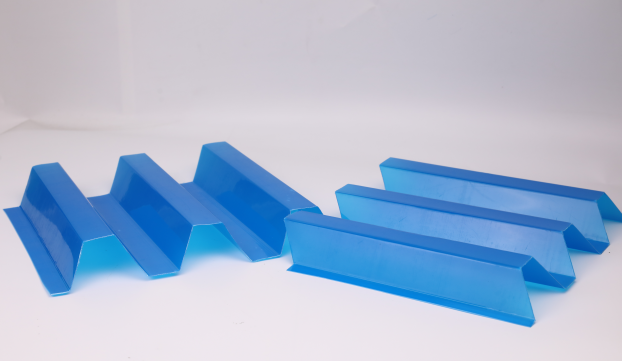
1. Polymer Matrix Selection Criteria
1. Material choice hinges on six performance pillars:
2. Creep resistance under sustained hydraulic load
3. Hydrolytic stability across pH 3-11
4. UV-A/B radiation tolerance (≥10 MJ/m²)
5. Abrasion resistance (ASTM D4060 Taber <50mg loss)
6. Thermal expansion compatibility (α <80×10⁻⁶/°C)
7. Flammability rating (UL94 V-0 minimum)
2. Commercial Polymer Battle Royale
| Material | Advantage Matrix | Operational Limits |
|---|---|---|
| PVC-U | - 0.5% water absorption - 55 MPa tensile - Cost: $2.5/kg |
- Tg=85°C (thermal sag) - Poor chloramine resistance |
| PP-Homo | - 0.3 g/cm³ density - 1,500 h Xenon arc stability - FDA-compliant |
- Notch sensitivity - CTE=110×10⁻⁶/°C |
| HDPE | - ESCR >1,000 h - -40°C impact retention - Chemical inertness |
- 25 MPa flexural modulus - UV stabilization required |
| PVDF | - 140°C continuous service - 1.78 g/cm³ density - 0.03% creep (70°C/10MPa) |
- 8× PVC cost - Difficult thermoforming |
3. Reinforced Composite Frontiers
• Glass-Fiber PP (GF30):
• 80% ↑ flexural strength vs. virgin PP
• 0.6 mm/m shrinkage (mold flow optimized)
• Applications: High-turbidity mining water
• Carbon-Nanotube HDPE:
• 50% ↑ thermal conductivity for ice-prone regions
• EMI shielding for sensor-integrated settlers
• 3D-printable formulations emerging
• Mineral-Filled PVC:
• Wollastonite (CaSiO₃) reinforcement:
• 40% ↑ abrasion resistance
• 0.8 g/cm³ density reduction
• Titanium dioxide UV screening
4. Accelerated Life Testing Protocols
Predicting 20-year performance through:
1. QUV-ASTMD4587: 5,000 h UV/condensation cycling
2. Hydrolytic Aging: 85°C/pH10 immersion (equivalent to 15 years)
3. Ball-on-Flat Wear Testing: 10N load, 1Hz, 100km sliding distance
Case Data: GFPP settlers showed <5% transmittance loss after 8-year field deployment vs. 22% in standard PP.
5. Emerging Bio-Based Alternatives
PLA-PHA Blends:
60% bio-content
7.5 GPa modulus (vs. PVC's 3.5 GPa)
Compostable EOL option
Lignin-Reinforced PETG:
30% ↑ hardness via lignin nanocrystals
200°C HDT for thermal sterilization
Selection Algorithm:
1. Calculate shear rate (γ) = Q/(w·h²)
2. Match γ to polymer melt flow index (MFI)
3. Verify chemical compatibility via HSP (Hansen Solubility Parameters)
4. Optimize for total cost of ownership (TCO)
Why Material Matters:
The ideal tube settler material doesn't exist-it's engineered through compromise between hydraulic efficiency, lifespan, and operational context. Next-gen composites promise 30-year service in aggressive media while enabling smart sedimentation through embedded sensors.