


Indonesia's rapid urbanization and industrial expansion have created an urgent demand for wastewater treatment technologies that are compact, robust, and adaptable to tropical conditions. Moving Bed Biofilm Reactor (MBBR) technology checks all three boxes. With its exceptional tolerance to hydraulic and organic load variations, minimal land footprint, and ability to retrofit into existing tanks, MBBR is uniquely suited to the Indonesian market - where space is at a premium, influent characteristics swing dramatically during the monsoon season, and discharge standards are tightening across both municipal and industrial sectors.
Indonesia's Regulatory Landscape - Why MBBR Adoption Is Accelerating
Regulatory pressure is the primary driver behind MBBR adoption in Indonesia. The regulatory framework has evolved significantly in recent years, and compliance increasingly requires technologies that go beyond conventional activated sludge. Three key regulations shape the current landscape:
PerMenLH/BPLH No. 11/2025 sets the latest municipal wastewater discharge standards for WWTP operators across Indonesia. This regulation, which took effect in 2025, introduced stricter ammonia and total nitrogen limits that many existing extended aeration plants cannot meet without upgrading their biological treatment capacity. Kepmen LH No. 15/2014 governs discharge limits for industrial sectors including palm oil, requiring progressively tighter controls on COD, oil and grease, and nitrogen compounds. Additionally, local governments in Jakarta, Surabaya, and Bandung are offering incentives - including expedited permitting and reduced fees - for plant upgrades that increase treatment capacity without expanding the physical footprint. These incentives directly favor biofilm-based retrofits like MBBR over new construction.
The common thread across all these regulations is the requirement for nitrogen removal - specifically ammonia oxidation and, increasingly, total nitrogen reduction. Conventional activated sludge systems often lack the sludge age and biomass concentration needed to support stable nitrification, especially during wet-weather flow surges. MBBR addresses this by retaining nitrifying biomass on the carrier media, decoupling solids retention time (SRT) from hydraulic retention time (HRT).
Case Study 1 - Jakarta Municipal WWTP Renovation (15,000 m³/d)
The Challenge
This municipal wastewater treatment plant serves a dense residential district in North Jakarta with severely constrained space for expansion - the plant is bordered on three sides by residential buildings and on the fourth by a canal. The original treatment system used an extended aeration activated sludge process that had served adequately for BOD removal but could not meet the new ammonia standard introduced under PerMenLH/BPLH No. 11/2025. With effluent NH₃-N averaging 8.8 mg/L against a new limit of 5 mg/L, the plant was out of compliance. Building additional tankage was not an option due to land constraints.
The MBBR Retrofit Solution
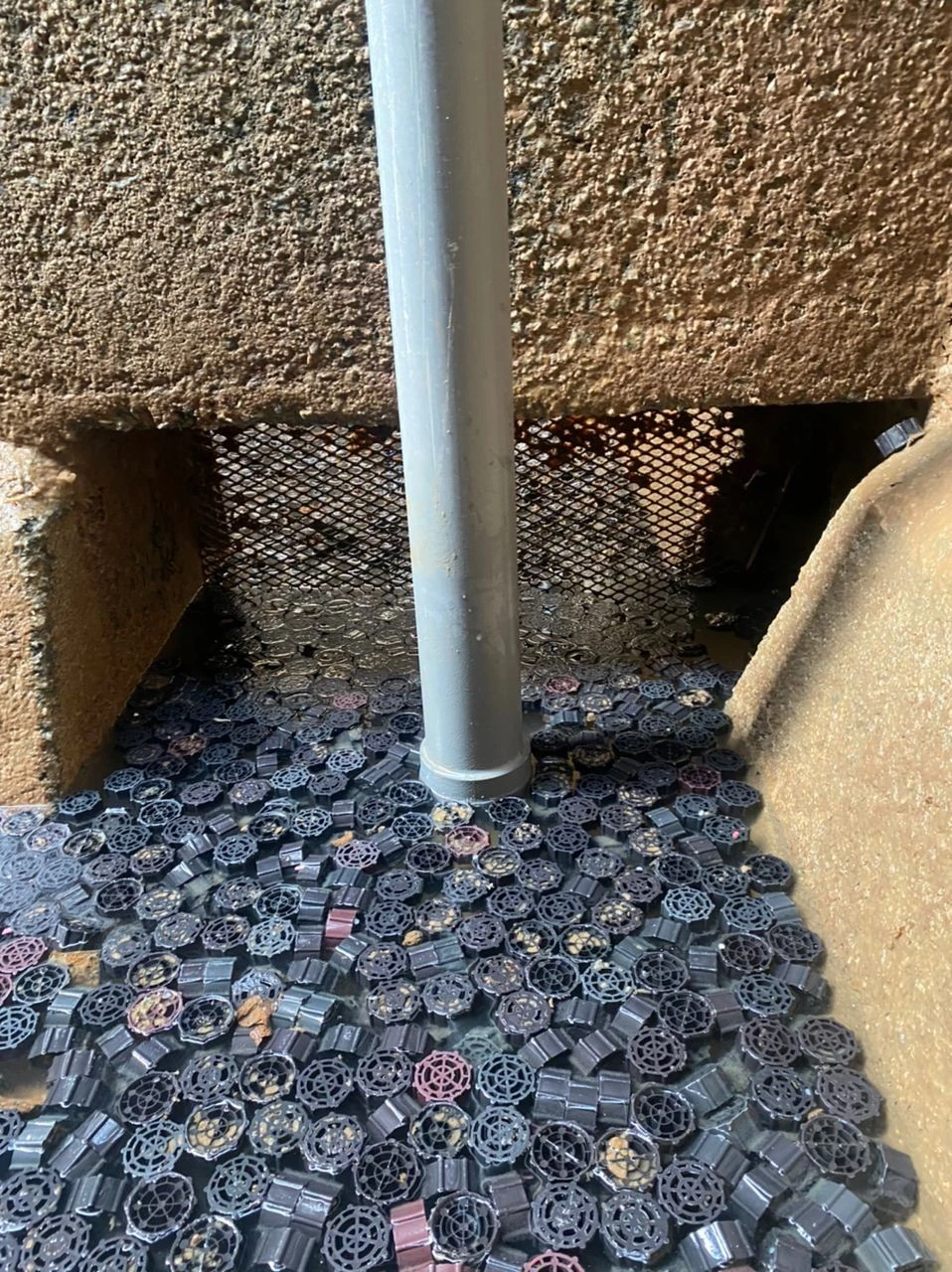
The engineering team proposed retrofitting the existing aeration tanks by partially filling them with HDPE MBBR carriers, each providing a protected surface area of 800 m²/m³ for biofilm attachment. The fill ratio was set at 40% in the aerobic zones, carefully calculated to provide sufficient nitrifying biomass surface area while maintaining adequate mixing energy and carrier mobility. The existing tank volume, blowers, and secondary clarifiers were retained - the retrofit required only carrier media, retention screens, and minor piping modifications.
Results
| Parameter | Before Retrofit | After MBBR Retrofit |
| Effluent NH₃-N | 8.8 mg/L | 2.3 mg/L |
| Treatment capacity | 15,000 m³/d | 15,000 m³/d (maintained) |
| Sludge production | Baseline | 22% reduction |
| Tank volume change | Baseline | No increase |
| Compliance status | Non-compliant (NH₃-N) | Full compliance with PerMenLH No. 11/2025 |
Operational Insights
The tropical climate of Jakarta, with year-round water temperatures of 27 to 32 degrees Celsius, proved to be an operational advantage rather than a challenge for the MBBR process. These temperatures fall squarely within the optimal range for nitrifying bacteria growth (25 to 35 degrees Celsius), meaning the biofilm established rapidly and maintained high nitrification rates year-round without the seasonal slowdowns that plague temperate-climate plants.
A particularly notable operational finding was the biofilm system's superior stability during the rainy season. During monsoon periods, when influent characteristics fluctuate dramatically due to infiltration and inflow (I/I) - diluting BOD concentrations while increasing hydraulic load - the attached-growth biomass remained stable. Suspended-growth systems typically lose biomass under these conditions due to washout, but the MBBR carriers retained the nitrifying biofilm regardless of hydraulic surges. The operators reported that effluent ammonia remained below 3 mg/L even during peak wet-weather events.
Case Study 2 - Surabaya Palm Oil Mill Effluent (POME) Treatment (1,200 m³/d)
The Challenge
The Surabaya palm oil mill faced a triple challenge that made conventional treatment approaches impractical. First, the raw POME carried extremely high organic loading, with COD concentrations ranging from 5,000 to 15,000 mg/L that varied significantly between processing batches. Second, available land for treatment infrastructure was severely limited - the mill was already operating at the boundary of its permitted site. Third, tightening discharge standards under Kepmen LH No. 15/2014 required the mill to achieve COD and oil-and-grease levels that its existing pond system could not reliably meet, particularly during peak production periods.
The MBBR Retrofit Solution
The engineering team designed an anaerobic-aerobic MBBR configuration to handle the dual demands of high-strength organic removal and nitrification. The anaerobic stage, placed upstream, handles the bulk of the organic load through anaerobic digestion while also capturing biogas for boiler use - turning a waste stream into a fuel source. The downstream aerobic MBBR stage polishes the anaerobically treated effluent, removing residual BOD and oxidizing ammonia. The aerobic zone was filled to a 55% carrier fill ratio, higher than the Jakarta municipal plant, to provide sufficient biofilm surface area for the higher organic loading.
Results
| Parameter | Influent | Effluent |
| COD | 5,000-15,000 mg/L | 92% removal |
| Oil and grease | 850 mg/L | 12 mg/L |
| COD spike tolerance | Up to 18,000 mg/L | No biomass loss observed |
| Biogas capture | None (vented) | Captured for boiler fuel |
Operational Insights
The most significant operational finding from the Surabaya POME installation was the MBBR system's exceptional tolerance to COD shock loads. During one monitoring period, the influent COD spiked to 18,000 mg/L - nearly double the typical peak - due to a batch of high-strength palm oil processing waste. A conventional activated sludge system would have experienced biomass loss and required weeks to recover. The MBBR system absorbed the shock with no measurable loss of biofilm or effluent quality degradation. This resilience is critical for POME treatment, where raw effluent characteristics vary substantially between processing batches, harvest seasons, and even individual days depending on the palm fruit quality arriving at the mill.
The biogas capture from the anaerobic stage provided an additional economic benefit. Rather than venting methane - a potent greenhouse gas - the captured biogas was fed to the mill's boiler, reducing overall plant fuel consumption and providing a measurable return on the treatment system investment beyond regulatory compliance alone.

Why MBBR Is the Right Fit for Indonesia
Several converging factors make MBBR the technology of choice for Indonesian wastewater treatment applications. The tropical climate, with consistent water temperatures of 27 to 32 degrees Celsius year-round, accelerates biofilm growth and sustains high nitrification rates without seasonal interruption. In palm oil mill applications, the high wastewater temperatures - which would stress or kill conventional activated sludge biomass - actually benefit attached-growth kinetics by increasing substrate diffusion rates into the biofilm.
The severe land constraints in cities like Jakarta, Surabaya, and Bandung make the compact nature of MBBR retrofits economically decisive. Land costs in Jakarta can approach $300 to $500 per square meter in industrial zones, meaning the land required for a new activated sludge plant (typically 2,000 to 4,000 m² for a 10,000 m³/d facility) can cost more than the treatment equipment itself. MBBR's zero-additional-land requirement for retrofits eliminates this cost entirely.
The monsoon-season resilience of biofilm systems provides another critical advantage. During the November-to-March rainy season, municipal plants experience dramatic hydraulic surges from infiltration and inflow, while industrial plants - particularly palm oil mills - face seasonal peaks in production and wastewater strength. Suspended-growth systems lose biomass during hydraulic surges; attached-growth MBBR systems retain their treatment capacity. As a practical note, regular monitoring of carrier retention screens is required to prevent media loss, but properly designed screens with adequate open area handle this reliably with minimal maintenance.
Cost Comparison - MBBR Retrofit vs. New Activated Sludge Plant
For decision-makers evaluating treatment options, the economic case for MBBR retrofits is compelling. The following comparison is based on a typical 10,000 m³/d municipal plant in Indonesia:
| Comparison Factor | MBBR Retrofit | New Activated Sludge Plant |
| Capital cost (USD) | $0.6-1.0 million | $2.0-3.5 million |
| Construction time | 3-6 months | 12-18 months |
| Additional land required | None | 2,000-4,000 m² |
| Land cost at Jakarta rates ($300-500/m²) | $0 | $0.6-2.0 million |
| Sludge production | Lower (15-25% reduction) | Higher |
| Monsoon resilience | High (biomass retained on carriers) | Moderate (biomass washout risk) |
Conclusion
The Jakarta and Surabaya case studies demonstrate that MBBR media retrofits deliver measurable, verifiable results across both municipal and industrial applications in Indonesia. In Jakarta, a 40% fill ratio achieved full ammonia compliance without expanding the tank - effluent NH₃-N dropped from 8.8 to 2.3 mg/L with 22% less sludge production. In Surabaya, a 55% fill ratio in an anaerobic-aerobic configuration achieved 92% COD removal from POME with influent COD as high as 15,000 mg/L, plus biogas capture for boiler fuel. The economic case is equally strong: at $0.6 to 1.0 million for a typical 10,000 m³/d retrofit versus $2.0 to 3.5 million for new construction - plus $0.6 to 2.0 million in avoided land costs in cities like Jakarta - MBBR is not just the technically superior option, it is the financially rational one.
Upgrade Your WWTP with MBBR Media
Whether you are retrofitting a municipal plant to meet new ammonia limits or treating high-strength industrial effluent, our HDPE MBBR carriers deliver reliable biofilm performance in tropical conditions. Request technical data sheets, fill ratio recommendations, or a project consultation.