


Municipal Wastewater Plant Upgrade with Tube Settlers: Detailed Case Study and Performance Analysis
A municipal WWTP retrofit using tube settlers to increase capacity from 45,000 m³/d to 65,000 m³/d within the existing footprint | June 2026
With the continuous growth of urban populations and stricter environmental discharge standards, municipal wastewater treatment plants are increasingly challenged to expand capacity and improve effluent quality -- often without the land or budget for new tank construction. Secondary clarification, as the final solids-liquid separation step before discharge, frequently becomes the hydraulic bottleneck in overloaded plants.
Introduction
Tube settlers, also known as lamella clarifiers, are widely recognized as an efficient technology to enhance solid-liquid separation by increasing the effective settling area within an existing tank footprint. By installing inclined PVC or PP tubular modules within an existing clarifier, the effective settling area can be increased by 3-8 times, enabling higher overflow rates, better TSS removal, and compliance with tighter discharge limits -- all without expanding the tank structure.
Project Overview
This case study documents a municipal wastewater treatment plant serving a rapidly growing city. The plant was originally designed for 45,000 m³/d (secondary treatment capacity) but was receiving up to 58,000 m³/d due to urban expansion, leading to poor clarifier performance, high effluent TSS (often above 30 mg/L), and frequent permit exceedances.
The retrofit scope involved installing tube settler modules in the two existing circular secondary clarifiers to increase capacity to 65,000 m³/d while maintaining effluent TSS below 15 mg/L -- a 44% capacity increase within the same tank volume.
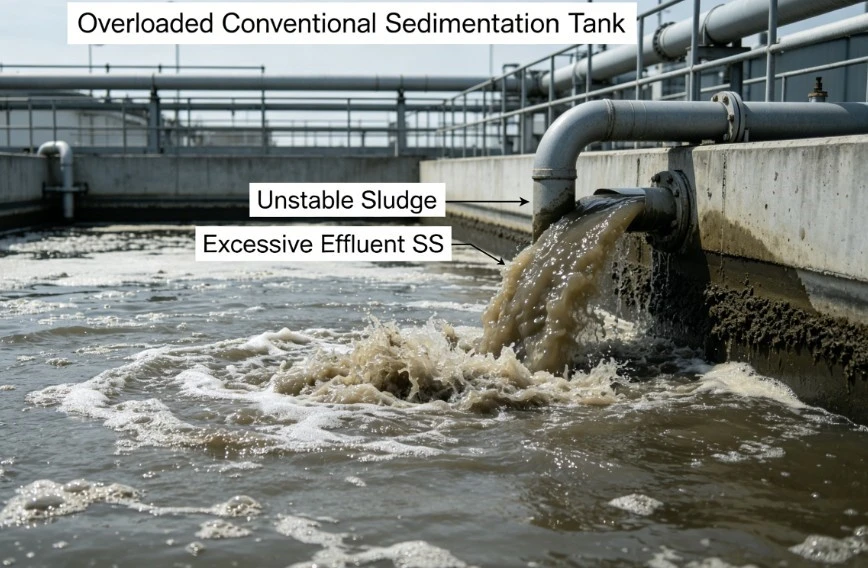
Figure 1: Tube Settler Module Installation in Progress
Key Design Parameters
The original secondary clarifiers had the following characteristics:
Number of clarifiers: 2 (identical circular units)
Diameter: 36 meters per unit
Side water depth: 3.5 meters
Design surface overflow rate (original): 0.56 m³/m²·h at 45,000 m³/d
Actual surface overflow rate (overloaded): 0.72 m³/m²·h at 58,000 m³/d
Tube Settler Specifications
Tube material: PVC (rigid polyvinyl chloride)
Tube cross-section: Hexagonal (honeycomb)
Inscribed circle diameter: 60 mm
Tube length: 1,000 mm
Inclination angle: 60°
Specific surface area: ~11.5 m²/m³ (projected)
Total tube settler volume installed: 210 m³ (105 m³ per clarifier)
The tube settler modules were installed in the outer annular zone of each circular clarifier, covering approximately 65% of the total clarifier surface area. The center zone was left open for influent distribution and flocculation.
Performance Results
After commissioning and stabilization, the upgraded clarifiers showed dramatic improvements:
| Parameter | Before (Overloaded) | After (Tube Settlers) | Change |
| Design Flow (m³/d) | 45,000 | 65,000 | +44% |
| Peak Flow Capacity (m³/d) | 58,000 (overloaded) | 78,000 (with margin) | +34% |
| Surface Overflow Rate (m³/m²·h) | 0.72 | 1.05 (at 65,000 m³/d) | Maintained stability |
| Effluent TSS (mg/L) | 28-45 (avg 35) | 8-14 (avg 11) | -69% |
| Sludge Blanket Height (m) | 1.2-1.8 (frequent bulking) | 0.3-0.5 (stable) | -70% |
| Clarifier Scum Accumulation | Frequent and heavy | Minimal | Significant reduction |
| Effluent BOD₅ (mg/L) | 18-25 | 8-12 | -50% |
| Effluent TP (mg/L) | 1.8-2.5 | 0.8-1.2 | -55% |
Note: TP improvement was partly attributed to reduced particulate phosphorus in effluent due to improved TSS capture.
Cost-Benefit Analysis
The economic justification for tube settler retrofit versus constructing new clarifiers was compelling:
| Item | Tube Settler Retrofit | New Clarifier Construction |
| Capital Cost (USD) | $280,000 | $1,800,000 |
| Construction Period | 3 months | 18-24 months |
| Additional Land Required | 0 m² | 2,500-3,500 m² |
| Operational Disruption | Minimal (one clarifier at a time) | Major (bypass or temporary treatment) |
| Annual Maintenance Cost | $5,000/year | $15,000/year |
| Service Life | 15-20 years | 30-40 years |
The retrofit achieved a payback period of less than 2 years when accounting for avoided penalties (previously approximately $45,000/year in permit violation fines) and deferred capital expenditure.
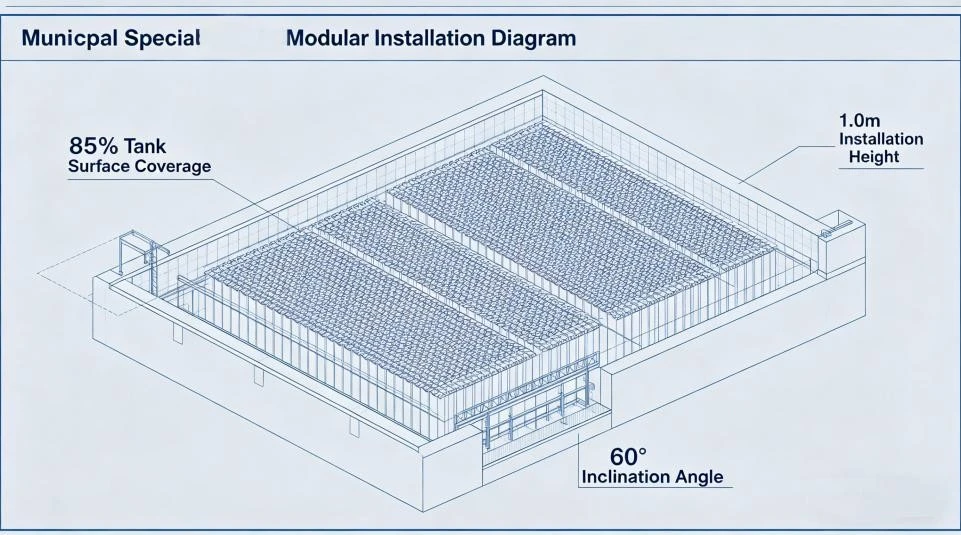
Figure 2: Completed Tube Settler Installation -- Aerial View
Operational Benefits
Beyond the quantitative performance improvements, the plant reported several operational benefits:
Reduced chemical consumption: Better TSS capture in the clarifier reduced the load on downstream tertiary treatment, lowering coagulant and polymer consumption by approximately 20%.
Improved sludge thickening: The higher sludge concentration from the tube settler zone improved downstream sludge handling, reducing dewatering polymer demand.
Less operator intervention: With stable sludge blanket levels, operators spent less time managing clarifier hydraulics and sludge return rates.
Storm resilience: During wet-weather peak flows up to 78,000 m³/d, the tube settler-upgraded clarifiers maintained effluent TSS below 20 mg/L -- previously impossible without the additional settling area.

Tube Settler Honeycomb Module -- 60 mm Hexagonal PVC Structure
Lessons Learned
Tube settler module placement: Install modules in the outer annular zone of circular clarifiers to maximize effective area while maintaining central flocculation space.
Inlet energy dissipation: A well-designed inlet baffle is essential to distribute flow evenly across the tube settler entry zone and prevent short-circuiting.
Sludge collection: Ensure the sludge collection mechanism (scraper + suction header) is sized for the higher solids loading. The existing scraper was adequate; no modification was needed.
Periodic cleaning: Plan for tube settler module cleaning every 3-5 years, depending on wastewater characteristics. Modules with 60 mm tube diameter showed no significant clogging after 3 years of operation.
Conclusion
The tube settler retrofit successfully expanded this municipal WWTP's secondary clarification capacity by 44% while reducing effluent TSS by 69% -- all within the existing clarifier footprint and at approximately 15% of the cost of new construction. For municipal plants facing capacity constraints, tube settlers offer a proven, cost-effective, and rapidly deployable solution.
Expand Your Clarifier Capacity Without New Construction
Juntai Plastic manufactures high-efficiency PVC tube settlers with 60 mm and 80 mm hexagonal channels, ideal for municipal and industrial clarifier upgrades. Achieve 3-8x effective settling area within your existing tank footprint. Contact our engineering team for a site-specific retrofit analysis.