


In factory-based recirculating aquaculture systems, water quality management is the key factor determining the success or failure of the farming. As the first line of defense in water treatment, the microfilter directly affects the health of the cultured organisms and the operational efficiency of the system.
However, many farmers lack sufficient understanding of its function, principle, and common problems, leading to improper equipment selection and inadequate maintenance, which ultimately impacts farming benefits! Today, we will do an in-depth analysis of the microfilter and reveal its true nature!
I. Functions of the Microfilter
Removal of Suspended Solids
The microfilter can effectively remove suspended solids in the water, including leftover feed, fish feces, dead aquatic organisms, sediment, etc., thereby reducing the organic load in the water. Its filtration precision ranges from 100 microns to 30 microns.
II. Working Principle of the Microfilter
The principle of the microfilter is actually very simple, consisting of two core steps:
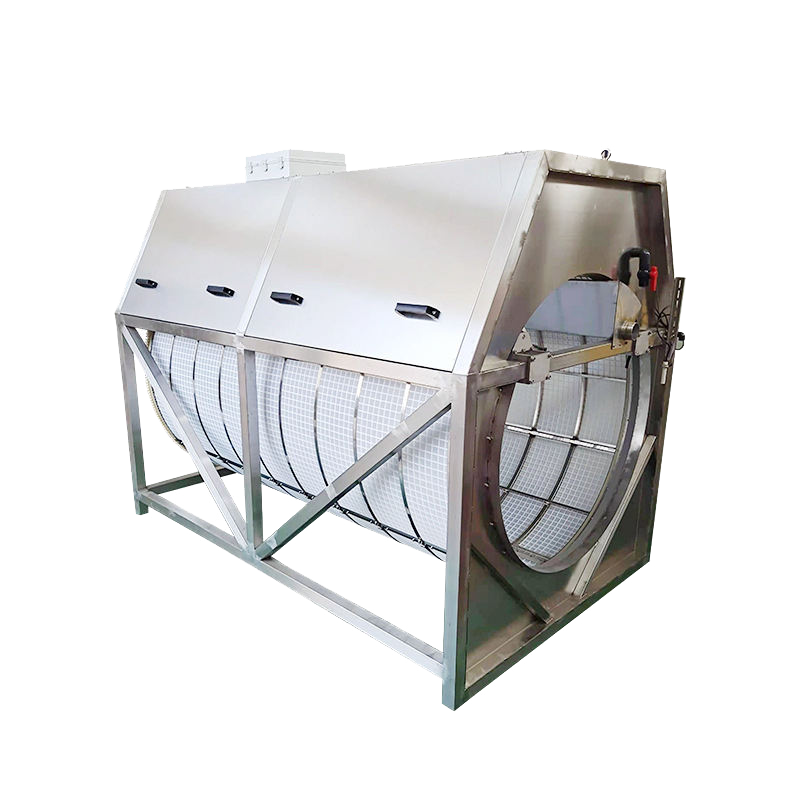
Physical interception: The aquaculture water passes through a drum-type filter screen, where suspended solids are firmly trapped on the inner side of the screen; clean water passes through and returns to the culture tank, achieving "solid-liquid separation."
Automatic backwashing: When the filter screen is clogged, the system automatically initiates high-pressure backwashing; the reverse water flow flushes attached matter into the drainage pipe, restoring the filter screen's permeability without manual intervention throughout the process!
III. Common Pitfalls in Using Microfilters
Pitfall 1: The finer the filter precision, the better?
Mistake: Excessively high precision (e.g., less than 20 microns) easily causes clogging, increasing energy consumption and cleaning frequency.
Correct approach: Choose according to the aquaculture species (e.g., 60-80 microns for shrimp, 40-60 microns for bass).
Pitfall 2: Neglecting maintenance of the backwash system
Consequence: Filter clogging → slowed water flow → deteriorated water quality → death of fish and shrimp!
Solution: Check the backwash nozzles monthly for clogging and regularly clean the drainage pipes.
Pitfall 3: Disconnecting from the biological filter tank
Misconception: Thinking the microfilter can solve all water quality problems.
Reality: It is responsible for removing suspended solids, but ammonia nitrogen and nitrite must be broken down by the biological filter tank; the two must be used together!
Reducing the Load on the Biological Filter Tank
The microfilter mechanically intercepts and removes small particles that the vertical flow sedimentation tank cannot remove, reducing the organic load on the biological filter tank. This provides a more suitable environment for nitrifying bacteria to grow, improving the overall system treatment efficiency.
3. Enhancing Ultraviolet Disinfection Effectiveness
In recirculating aquaculture systems, microfilters and ultraviolet disinfection equipment usually work in synergy. As a pre-treatment device, the microfilter first removes solid suspended matter and larger impurities from the water, enabling the subsequent ultraviolet disinfection to work more effectively. Water filtered by the microfilter has increased transparency and reduced suspended solids, allowing ultraviolet light to penetrate the water better and irradiate microorganisms, thus improving disinfection efficiency.