



In intensive shrimp farming, dissolved oxygen is the difference between a profitable crop and a nighttime die-off. One 1,000 m² × 20-pond shrimp farm in Indonesia learned this the hard way - DO fluctuating between 3.5 and 6.0 mg/L, high mortality after dark, and energy bills that ate into margins. Switching from paddle wheel aerators to a fine bubble disc diffuser system stabilized DO at 5.5–7.5 mg/L, cut daily aeration energy from 320 kWh to 210 kWh (a 34% reduction), and lifted survival rate from 78% to 90% in a single cycle.
Why Dissolved Oxygen Is The Bottleneck
In modern intensive aquaculture systems, maintaining stable dissolved oxygen (DO) levels is essential for animal health, growth rate, and feed efficiency. Oxygen does more than keep shrimp and fish alive - it drives feed conversion, supports the nitrifying bacteria that control ammonia, and prevents the buildup of anoxic bottom zones where harmful hydrogen sulfide can form.
Traditional aeration methods, such as paddle wheel aerators, often result in uneven oxygen distribution and high energy consumption. Paddle wheels agitate the surface, creating oxygen-rich surface water that struggles to reach the pond bottom where shrimp actually live, while their mechanical drag consumes substantial electricity around the clock. This is why more farms are adopting disc diffuser aeration systems.
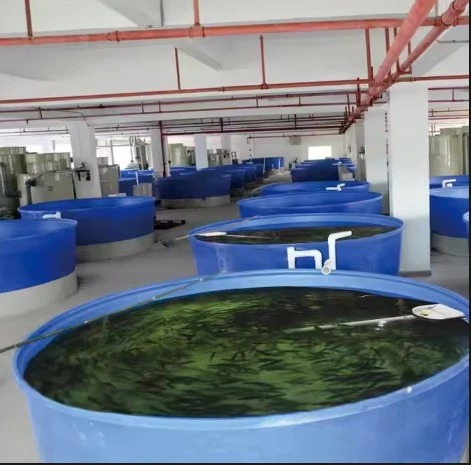
With higher oxygen transfer efficiency and lower energy use, disc diffusers for aquaculture are becoming the preferred solution for shrimp farms, fish ponds, and RAS systems. They place fine bubbles directly at the pond bottom, so oxygen is delivered exactly where it is needed and rising bubbles simultaneously drive gentle, uniform water circulation.
Five Reasons To Switch To Disc Diffusers
1. Higher Oxygen Transfer Efficiency
Fine bubbles create a far larger gas-liquid contact surface area than the coarse bubbles produced by paddle wheels or air stones. Smaller bubbles rise more slowly and spend more time in the water column, so more oxygen dissolves before the bubble reaches the surface. The result is optimal DO levels achieved with less air volume.
2. Energy Saving
Because fine bubble diffusers transfer oxygen more efficiently, the blower can deliver the same DO at lower airflow. Farms typically reduce electricity consumption by 30–50% compared with paddle aerators - in the Indonesia case study below, that meant 320 kWh/day dropping to 210 kWh/day without sacrificing DO.
3. Uniform Oxygen Distribution
A bottom grid layout spreads diffusers evenly across the pond, eliminating low-oxygen zones - especially at the bottom, where shrimp gather and where paddle wheels can never deliver oxygen effectively. This uniformity is what prevents the classic nighttime DO crash.
4. Improved Water Circulation
Rising fine bubbles create a gentle vertical lift that keeps the water column mixed without the violent surface agitation of paddle wheels. This continuous circulation reduces sludge accumulation on the pond floor and helps maintain stable water quality parameters.
5. Suitable For Various Aquaculture Systems
Disc diffuser aeration adapts to a wide range of operations, including shrimp ponds, fish farming, RAS (recirculating aquaculture systems), and high-density aquaculture. The modular layout can be designed to fit any pond geometry, from small hatchery tanks to large grow-out ponds.
Case Study: Indonesia Shrimp Farm Aeration Upgrade
Project Overview
The project site is a commercial shrimp farm in Indonesia operating 20 ponds, each 1,000 m², at a stocking density of 250–300 shrimp/m² - a high-intensity operation where aeration failure has an immediate and severe financial impact.
Challenges Before The Upgrade
Before the retrofit, the farm struggled with four interconnected problems:
• DO fluctuation between 3.5 and 6.0 mg/L, dipping toward stress and mortality thresholds at night;
• High mortality at night, when photosynthesis stops and oxygen demand exceeds supply;
• High energy cost from paddle wheel aerators running continuously;
• Uneven oxygen distribution that left dead zones on the pond bottom.
Disc Diffuser System Design
The farm installed a fine bubble disc diffuser system with the following configuration:
• Diameter: 215 mm
• Material: Silicone membrane
• Layout: Bottom grid installation
• Air supply: Roots blower
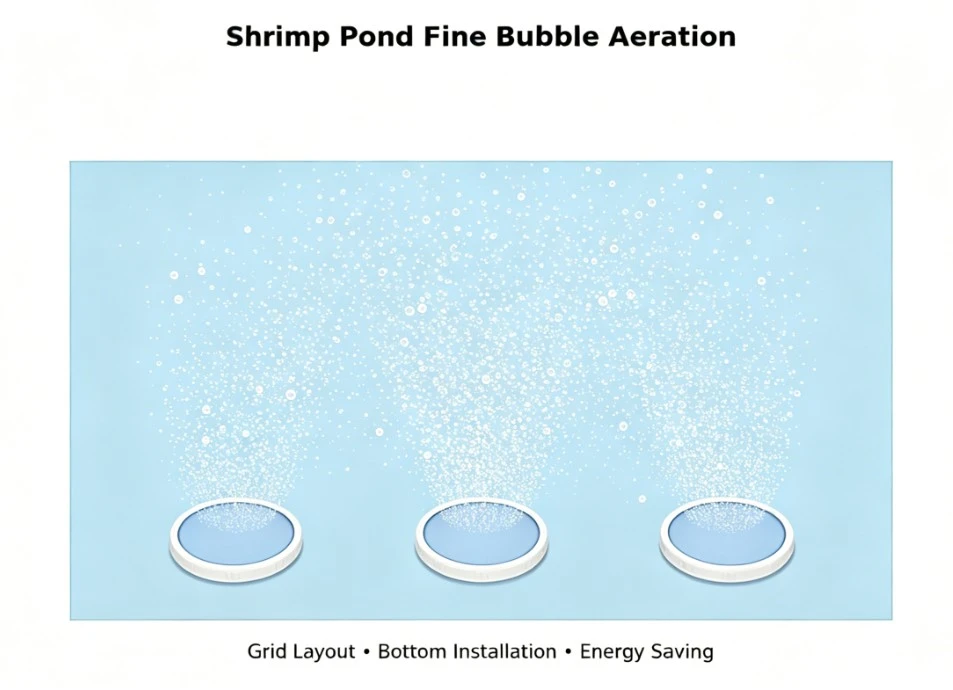
The 215 mm silicone membrane diffusers were laid out on a bottom grid across each pond and fed by a centrally located Roots blower. Silicone was chosen for its elasticity and fouling resistance - the membrane opens fine pores under pressure and flexes to shed scale and biofilm during blower cycling, keeping oxygen transfer efficiency high over many production cycles.
Performance Comparison: Before Vs After
The following table summarizes the measurable improvements after one production cycle. Every indicator moved in the right direction, and the two most important - energy consumption and survival rate - improved by double-digit percentages.
| Indicator | Before | After | Improvement |
| DO Level | 3.5–6.0 mg/L | 5.5–7.5 mg/L | Stable |
| Energy Consumption | 320 kWh/day | 210 kWh/day | -34% |
| Survival Rate | 78% | 90% | +12% |
| FCR (Feed Conversion Ratio) | 1.6 | 1.4 | Improved |
Results And Benefits
After one full production cycle, the farm achieved a compound set of benefits. Higher survival rate means more marketable shrimp per pond; better feed conversion efficiency means the same biomass was grown with less feed; electricity cost dropped by over 30%; and improved water quality and stability reduced disease pressure and labor for emergency interventions. Together these translate directly into higher margin per pond per cycle.
Best Practices For Aquaculture Aeration
To get results like these, the system must be designed and operated correctly. The following best practices make the difference between a good aeration system and a great one:
• Design the proper diffuser layout. Use a grid or circular arrangement that covers the full pond footprint, keeping diffusers off the pond walls and spaced evenly to avoid dead zones.
• Match blower capacity with pond size. An undersized blower starves the system of air; an oversized blower wastes energy. Correct sizing requires knowing pond volume, target DO, and diffuser depth.
• Clean diffusers regularly. Even silicone membranes accumulate biofilm over time; routine cleaning restores pore efficiency and maintains oxygen transfer rates.
• Increase aeration during high temperature or feeding. Warm water holds less dissolved oxygen and feeding spikes biological oxygen demand - scheduling extra aeration at these peaks prevents DO dips.
Conclusion
A disc diffuser for aquaculture is a powerful tool for improving oxygen efficiency, reducing costs, and increasing production output. The Indonesia case study shows what is achievable in practice: stable DO, 34% lower energy bills, and a survival rate that climbed from 78% to 90%. For farms aiming at intensive and sustainable aquaculture, upgrading to a fine bubble aeration system is a smart, fast-payback investment.
Need a customized aquaculture aeration solution? Contact us today for customized aeration solutions and technical support. WhatsApp: +86 137 9555 6548 | Email: [email protected]
Lift Shrimp Survival to 90% With Fine Bubbles
Fine bubble disc diffusers stabilized DO, cut energy 34%, and raised shrimp survival from 78% to 90%. Juntai aquaculture diffusers fit shrimp ponds, fish farms, and RAS.