


A water treatment plant was draining and cleaning its sedimentation tanks once every week - two dedicated staff, 15,360 m³ of water per wash, and an annual water bill approaching 900,000 RMB - all because flocculent sludge kept smothering the inclined tube settlers. This engineering case study shows how systematic root-cause analysis and targeted hydraulic retrofits cut cleaning frequency by more than half and saved over 200,000 RMB per year.
Inclined tube (lamella) settlers are among the most cost-effective high-rate clarification technologies in water treatment, multiplying the effective settling area within a compact footprint. But their performance depends on hydraulics that operators rarely see. When the flow pattern is wrong, the tubes become a trap for light, sticky flocs instead of a slide for settled sludge. This article documents a real-world failure, the seven contributing causes uncovered during the investigation, and the modifications that restored reliable, low-maintenance operation.
Problem Overview: Weekly Tank Shutdowns
Within the first year of operation, severe flocculent sludge accumulation appeared on the upper surface of the inclined tubes. After only 3–5 days of operation, the entire tube surface was covered by a thick sludge layer. The worst accumulation occurred in the front 10-meter section of the sedimentation basin, where the sludge followed a steep gradient: more than 1.0 m thick at the front, tapering to 30–50 cm at the rear.
Critically, the accumulated sludge remained suspended rather than settling - the exact opposite of what a settler is designed to do. The plant was forced to shut down and clean the tanks at least once per week, with two dedicated staff members assigned to this task alone. Beyond the labor cost, every cleaning cycle consumed 15,360 m³ of water at 0.78 RMB/m³, an expense and an environmental concern that compounded week after week.
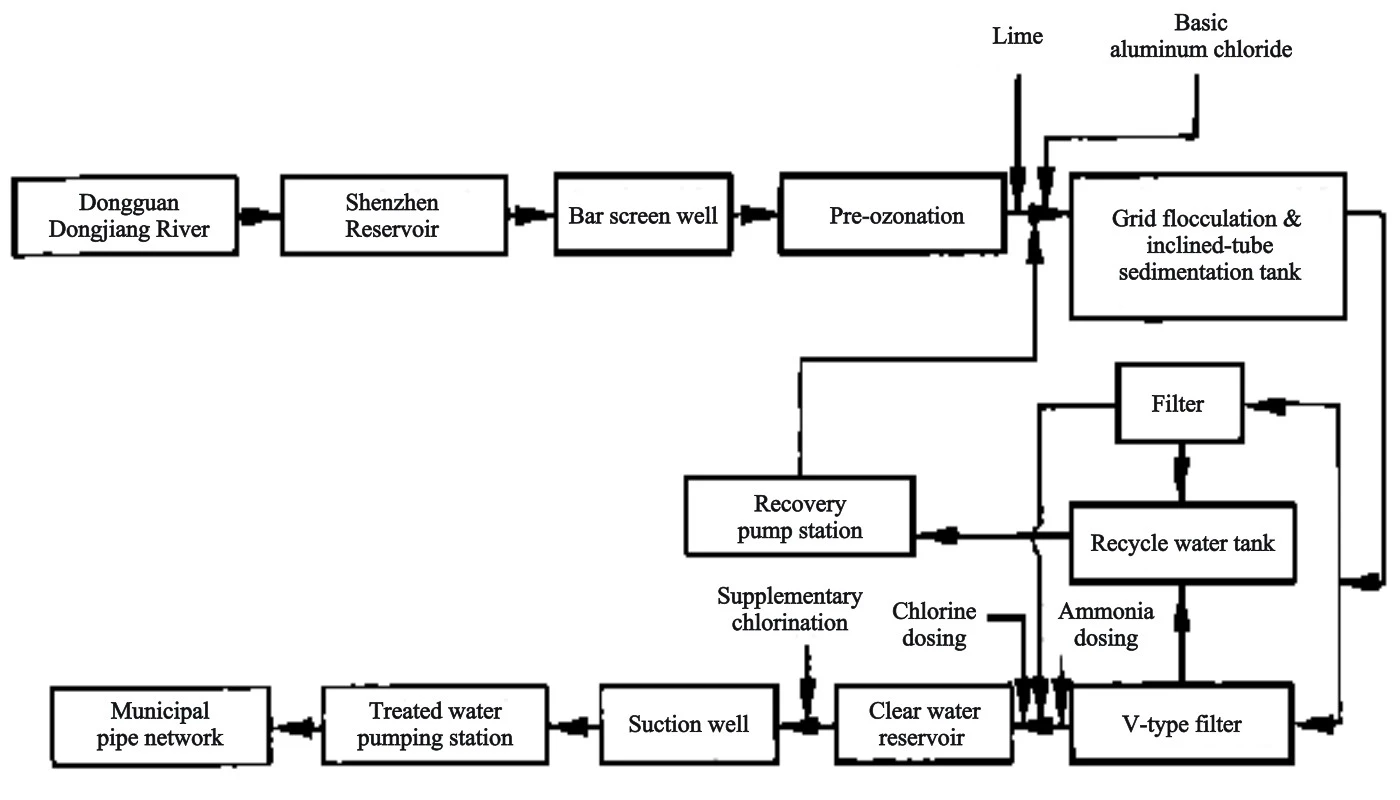
Seven Root Causes of Sludge Accumulation
A comprehensive investigation identified seven contributing factors. They fall into three families: upstream water quality that produces difficult-to-settle flocs, hydraulic design flaws that distort flow and break up flocs, and a sludge discharge system that cannot keep pace. Understanding each mechanism is essential, because the solution for one cause can be useless - or harmful - if applied to another.
| No. | Root Cause | Mechanism and Impact |
| 1 | Raw water characteristics | Low turbidity, high algae, high organic matter, low particle concentration → small, loose, light flocs that stick to tube surfaces instead of sliding down |
| 2 | Inlet distribution design | 33.9 m × 9.8 m basin with water distributed along the width → uneven flow, reduced sedimentation efficiency |
| 3 | Lack of flow stabilization at inlet | Distribution height only 1.4 m vs. 1.5 m standard, with no rectification → non-uniform flow, compromised sedimentation |
| 4 | Cross-flow between adjacent basins | No partition walls → turbulence in the intermediate zone; shear forces break up flocs that had reached settleable size |
| 5 | Excessive collection orifices in launder | Orifice count exceeds theoretical requirement by 38.3% → distorts uniform upward flow velocity, lowers efficiency |
| 6 | I-beam support obstruction | 12 cm I-beams block ~12% of tube inlet openings → upward velocity rises from 1.5 to 1.78 mm/s, impairing separation and sludge sliding |
| 7 | Inadequate sludge discharge | Perforated pipe fails to clear distal ends; despite 4-hour discharge cycles, residual sludge persists |
Raw Water Characteristics
The source water is characterized by low turbidity, high algae content, high organic matter, and low particle concentration. These conditions produce poor flocculation: floc particles are small, loose, and light, with insufficient density to settle effectively. As a result, flocs tend to accumulate on the inclined tube surfaces rather than sliding down, progressively clogging the tube channels that should remain clear for upward flow.
Inlet Distribution and Flow Stabilization
The sedimentation basin is 33.9 m long and 9.8 m wide, with water distributed along the width of the basin - a non-ideal pattern that produces uneven flow and reduces sedimentation efficiency. Standard design requires a distribution zone height of at least 1.5 m to ensure uniform flow distribution and to accommodate installation and maintenance access. The actual distribution height was only 1.4 m, with no inlet rectification at all, significantly compromising sedimentation performance from the first day of operation.
Cross-Flow, Launder Orifices, and Support Obstruction
The absence of partition walls between the two sedimentation basins creates turbulence in the intermediate zone. Flocs that have grown to settleable size are prone to breakup under the shear forces of this cross-flow, undoing the work of the flocculation stage. Downstream, the number of collection orifices in the effluent launder exceeds the theoretical requirement by 38.3%, which negatively affects the uniform upward flow velocity. In the tube support structure, 12 cm wide I-beams block approximately 12% of the tube inlet openings, increasing the actual upward flow velocity from the design value of 1.5 mm/s to 1.78 mm/s - above the recommended range for stable solids separation and sludge sliding within the tubes.
Inadequate Sludge Discharge
Finally, the perforated pipe sludge discharge system fails to remove sludge completely, particularly at the distal ends where sludge accumulates heavily. Despite discharge cycles every 4 hours, residual sludge persists and continues to affect sedimentation performance, creating a self-reinforcing cycle of buildup.
Targeted Technical Modifications
Rather than replacing the settlers, the engineering team implemented five targeted modifications that directly addressed the identified root causes. The guiding principle was simple: fix the hydraulics first, then optimize chemistry, and only then consider mechanical intervention.
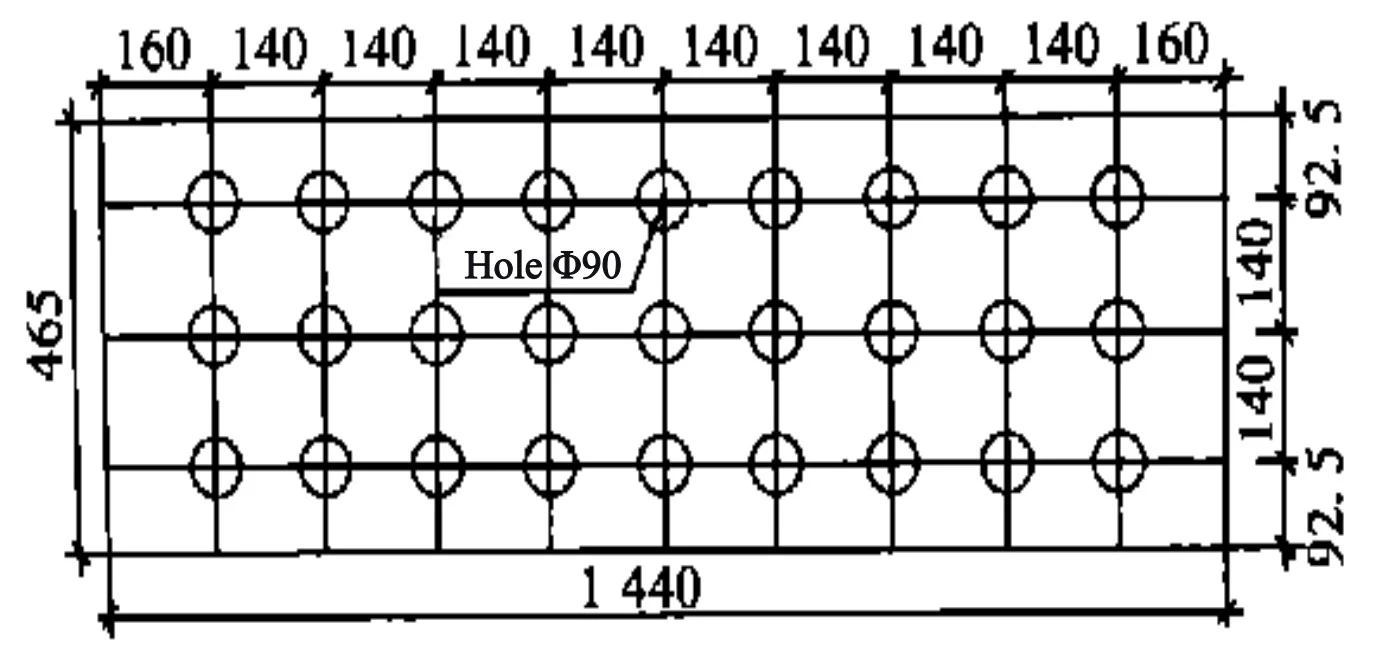
- Buffer rectification distribution plates installed at the inlet transition zone of the inclined tube settler. Each plate is 10 cm thick, sized to spread incoming flow evenly across the basin width and eliminate the short-circuiting that was dumping flocs directly onto the tube surface.
- Full-height partition walls (from basin floor to top) added between the two individual sedimentation basins to eliminate cross-flow turbulence and protect settleable flocs from shear breakup.
- Inclined plates at the inlet bottom, with triangular sections filled using concrete, to smooth the transition of flow entering the tube zone.
- Removal of the first-compartment sludge hopper, which was creating dead zones and interfering with the new flow pattern.
- Removal of the first-compartment perforated sludge pipe, eliminating the localized draw-off that pulled water unevenly through the basin.

Operational Results After Modification
The modifications produced dramatic improvements in flow behavior. The flow pattern at the inlet zone became remarkably stable, and the phenomenon of large-scale sludge flotation was eliminated. Sludge accumulation on the inclined tubes now requires 15–26 days to become noticeable - a dramatic improvement from the previous 3–5 days. The accumulated sludge layer is significantly thinner and uniformly distributed, eliminating the front-to-back gradient that had plagued the basin.
Cleaning frequency was reduced by more than 50%, from once per week to once every 15–26 days. The economic benefit is summarized in Table 2.
| Item | Before Modification | After Modification |
| Cleaning cycle (d) | 5–7 | 15–26 |
| Water usage per clean (m³) | 15,360 | 15,360 |
| Water cost (RMB/m³) | 0.78 | 0.78 |
| Water cost (RMB/clean) | 11,981 | 11,981 |
| Cleaning frequency (times/month) | 6–4 | 2–1 |
| Annual water cost (×10,000 RMB/a) | 86.26–57.50 | 14.38–7.19 |
| Annual savings (×10,000 RMB/a) | - | ≥ 20 |
Table 2: Economic benefit analysis. Before modification the plant cleaned once per week (4–6 times/month); after modification it cleaned once every 15–26 days (1–2 times/month). Annual water cost savings are at least 200,000 RMB.
There was also a meaningful environmental and workplace improvement. The accumulated sludge, rich in algae content, previously turned black and emitted strong odors during cleaning. The drastic reduction in cleaning frequency significantly improved the working environment for plant operators and reduced the volume of high-strength cleaning wastewater requiring disposal.
Further Optimization Attempts
To push the performance envelope further, two additional approaches were explored. First, after installing the buffer rectification plates, the plant added XS-III composite coagulant aid (10 mg/L) and PAM (0.1 mg/L). This extended the time required for floc coverage across the inclined tube surface from 7 days (Tank 3) to 19 days (Tank 4), demonstrating a significant improvement in sludge accumulation control through enhanced floc density and settleability.
Second, a custom-built mechanical sludge scraping bridge was installed on the inclined tube surface, fitted with rubber blades to prevent tube damage. Daily scraping - increased to 2–3 times per day during poor water quality - virtually eliminated the need for tank cleaning. The key caution: the scraped sludge must be prevented from floating upward and entering the filters, which requires careful control of the scraping cycle and basin hydraulics.
Conclusions and Recommendations
This engineering case study offers four transferable lessons for inclined tube settler design and operation:
- Inlet flow stabilization is critical. Installing buffer rectification distribution plates effectively improves the inlet flow pattern, significantly delaying sludge accumulation and reducing cleaning frequency by more than 50%, with substantial economic benefits.
- Chemical optimization provides additional benefits. The addition of XS-III composite coagulant aid and PAM can further extend the interval between cleaning cycles and improve effluent quality.
- Mechanical scraping is an effective palliative measure. A mechanical scraping bridge effectively removes accumulated sludge, but it treats the symptom rather than the root cause and adds moving parts to maintain.
- Holistic design review prevents operational issues. Many of the identified root causes - insufficient distribution height, I-beam obstruction, excessive launder orifices, inadequate sludge discharge - stem from design oversights that could have been avoided through comprehensive hydraulic and structural review during the design phase.
For water treatment plants and engineering firms dealing with inclined tube settler performance issues, this case provides a proven methodology for diagnosing sludge accumulation problems and implementing cost-effective solutions. The sequence matters: stabilize hydraulics first, optimize coagulation chemistry second, and reserve mechanical scraping as a safety net.
Stop Tube Settler Sludge Build-Up at the Source
Seven root causes and targeted retrofits cut cleaning frequency from every 5-7 days to 15-26 days, saving 200,000 RMB a year. Get Juntai tube settler design support for your clarifier.