


Overview
The high-end industrialized RAS represents the future of aquaculture technology, characterized by advanced facilities, high automation, and elevated energy consumption. While large-scale systems still face energy efficiency challenges, some compact RAS operations in China have achieved significant energy savings and emission reductions-a model for future development. The system comprises three core components:
1. Aquaculture production units
2. Water treatment systems
3. Water quality monitoring & ORP predictive control
*(See Figure 1-1 for system schematic)*
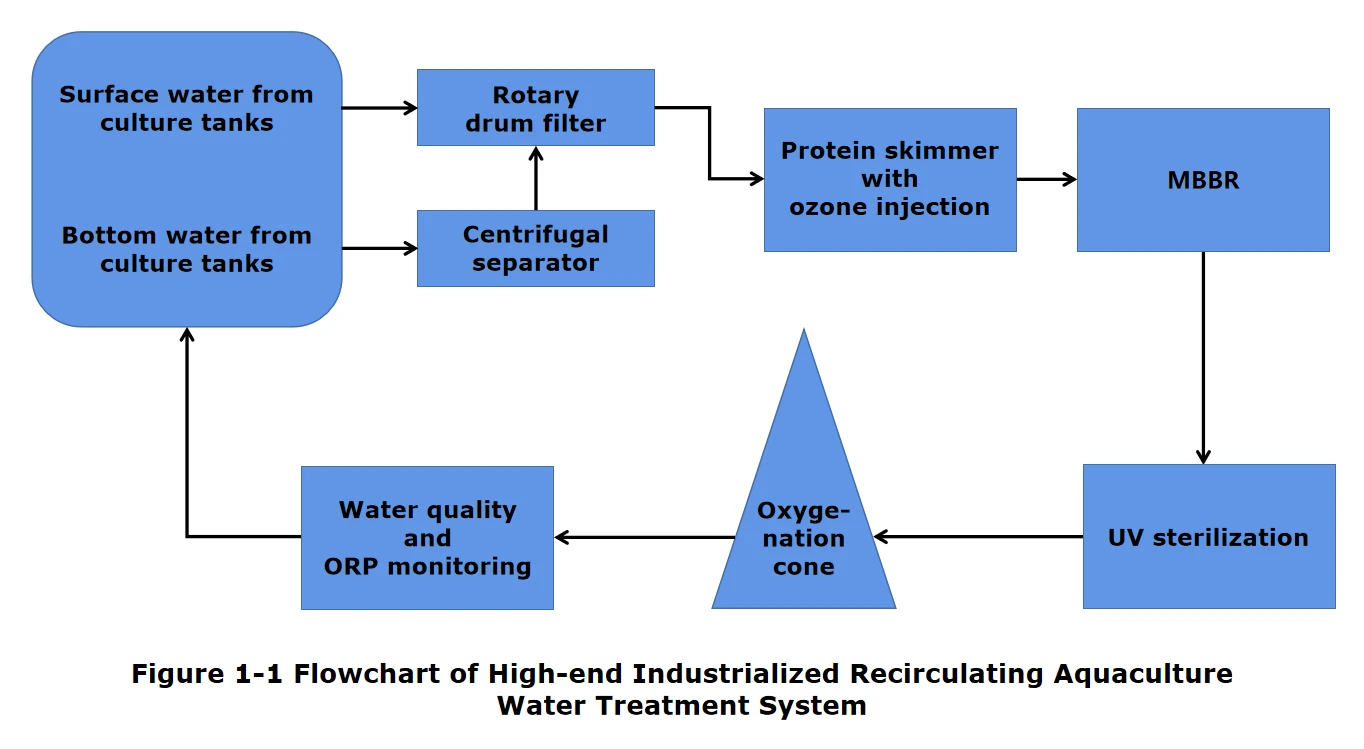
Water Treatment Process
1. Facility Layout
- Space allocation: Production area : Water treatment area : Operations area = 25:10:1
- Modular design: Multi-unit workshops reduce costs, with each unit featuring mirrored RAS setups.
- Tank specifications:
- 5–6 m diameter circular tanks with rounded corners and conical bottoms
- Dual-drain design (surface + bottom)
- FDA-approved aquaculture coatings
2. Solid Waste Removal
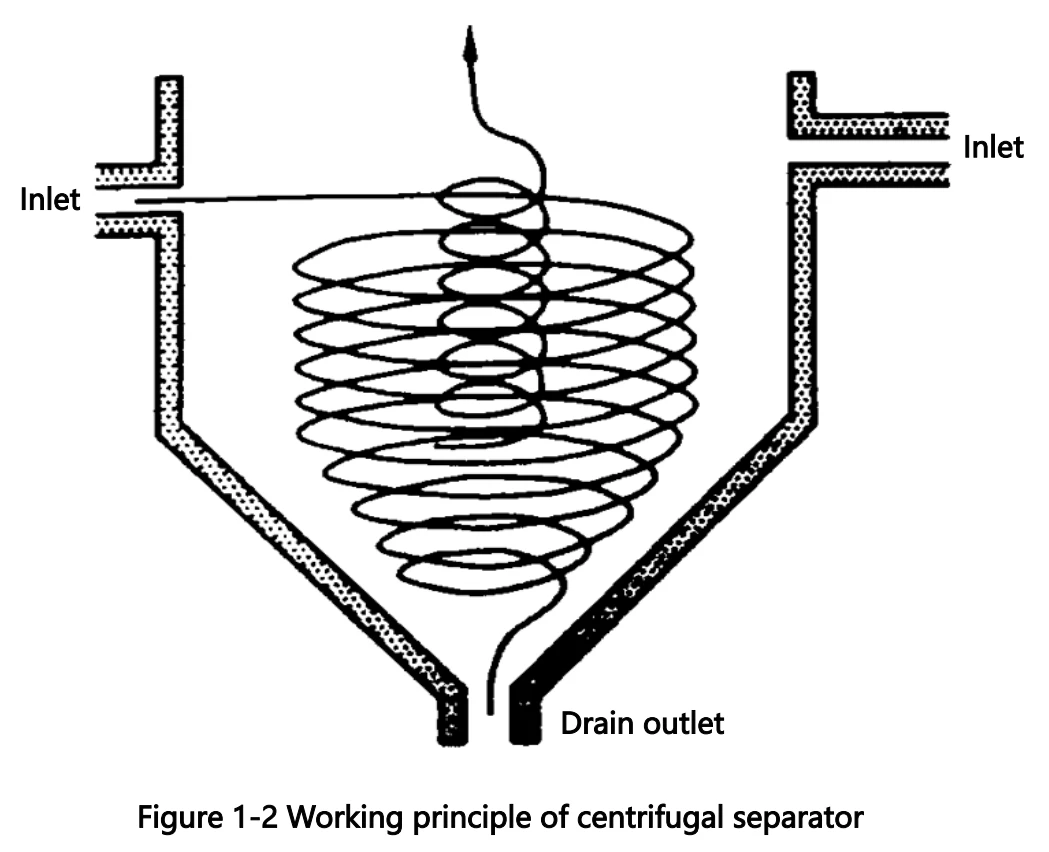
- Primary treatment (Centrifugal separation):
- Tangential inflow creates vortex, removing >50 μm particles (feces/uneaten feed) via centrifugal force.
- Bottom sludge discharge vs. clarified water overflow (Figure 1-2).
- Secondary treatment (Rotary drum filters):
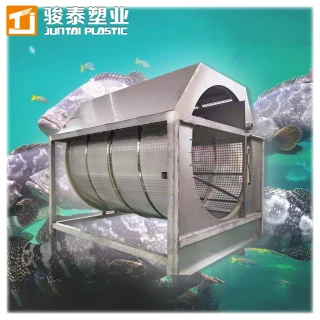
Figure 1-3 Rotary drum filters
- 200-mesh screens achieve 54.9% TSS removal.
- Pre-centrifugation extends filter life by reducing particle shattering.
- Requires periodic cleaning to prevent biofilm clogging .
3. Protein & Gas Management
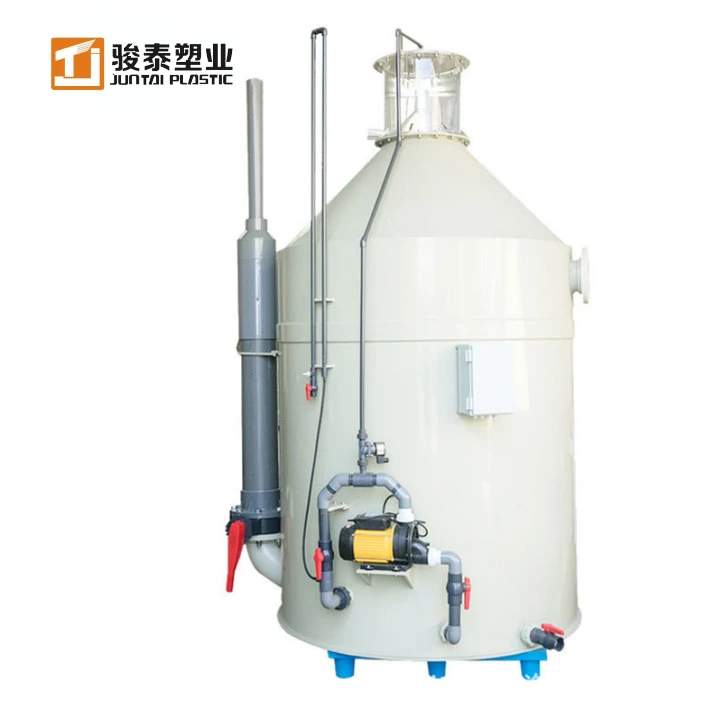
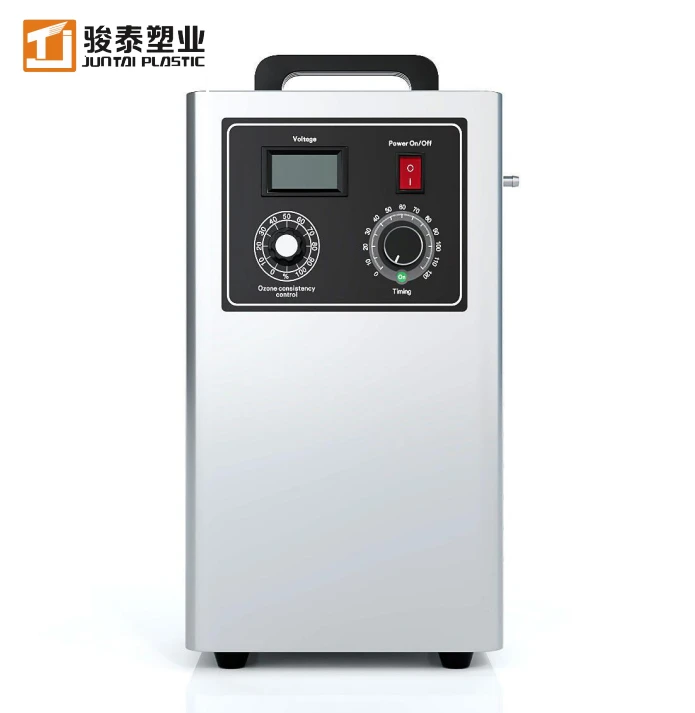
Figure 1-4 Figure 1-5
- Protein skimmers:
- Microbubble adsorption removes <30 μm particles and dissolved organics.
- Ozone integration (0.1–0.2 mg/L residual) enhances:
- Ammonia/NO₂ oxidation
- Pathogen inactivation (via DNA/protein oxidation)
- CO₂ stripping.
4. Biological Filtration (MBBR)
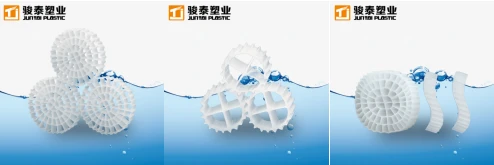
Figure 1-6 MBBR04(K1)/64(K5)/78-S
- Moving Bed Biofilm Reactor advantages:
- No backwashing | High specific surface area (800+ m²/m³)
- 0.6–1.0 kg NH₄⁺/m³/day removal at 25°C
- Optional aerobic/anaerobic series configuration for nitrification-denitrification
5. Disinfection & Oxygenation
- UV sterilization:
- 254 nm wavelength for 99.9% pathogen kill.
- Oxygenation cone (Redesigned):
- Countercurrent water/O₂ flow achieves 25–35 mg/L DO.
- Key parameters:
- Downward velocity > bubble buoyancy
- Turbulent mixing zone at cone base.
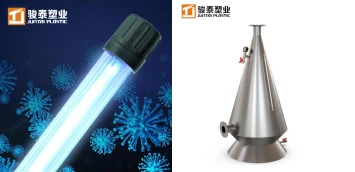
Figure 1-7 Figure 1-8
Water Quality Monitoring
Advanced sensors track:
- Standard parameters: DO, pH, TAN, NO₂⁻, NO₃⁻
- Advanced metrics: CO₂, ORP (Oxidation-Reduction Potential)
- Data visualization: Real-time trends with 60-minute historical curves.
ORP serves as a composite indicator of system redox balance, reflecting cumulative oxidative stress from dissolved species.
Conclusion
High-end RAS technologies address the limitations of traditional systems through:
- Enhanced filtration efficiency
- Predictive water quality control
- Energy-optimized designs
This paradigm shift promises sustainable, high-density aquaculture with improved ROI.