


Current Status and Future Projections: Wastewater Treatment in Indonesia's Aquaculture Industry
Indonesia's Aquaculture Wastewater Management: Present Challenges and Realities
Indonesia's aquaculture sector represents a crucial component of the nation's economy and food security, ranking as the world's second-largest producer of aquaculture products. However, the rapid expansion of this industry has created significant environmental challenges, particularly regarding wastewater management. As a wastewater treatment specialist with extensive experience in aquaculture applications, I have observed that the current situation presents a complex interplay between regulatory frameworks, technological adoption, and economic realities. Most Indonesian aquaculture operations, particularly small to medium-scale enterprises, continue to employ traditional treatment methods that prove insufficient for meeting increasingly stringent environmental standards.
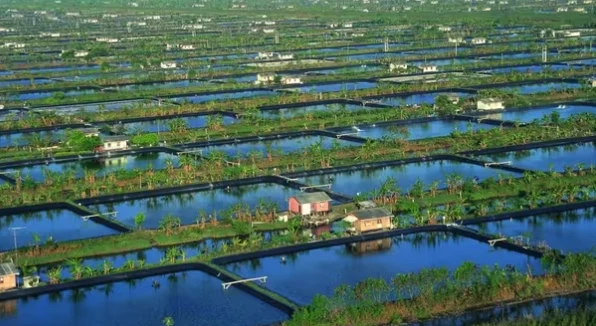
The predominant approach to wastewater management in Indonesian aquaculture involves simple sedimentation ponds followed by direct discharge into receiving waters. This method, while cost-effective initially, fails to address key contaminants including nitrogenous compounds, phosphorus, organic matter, and suspended solids. The environmental impact of these practices has become increasingly evident through the degradation of water quality in coastal areas and inland water bodies, particularly in major production regions like Sumatra, Java, and Sulawesi. Regulatory enforcement remains inconsistent, with larger operations facing greater scrutiny while smaller farms often operate with minimal oversight, creating an uneven playing field and perpetuating unsustainable practices.
The technological landscape in Indonesian aquaculture wastewater treatment reflects a significant divide between advanced international operations and traditional local practices. While major corporations and export-oriented farms have implemented sophisticated treatment systems, the majority of producers continue using basic methods due to financial constraints, technical knowledge gaps, and limited access to appropriate technology. This technological disparity presents both a challenge and an opportunity for introducing cost-effective, efficient treatment solutions tailored to the specific economic and operational realities of Indonesian aquaculture.
Table: Current Wastewater Treatment Methods in Indonesian Aquaculture
| Treatment Method | Prevalence Rate | Effectiveness | Limitations | Common User Profile |
|---|---|---|---|---|
| Sedimentation Ponds | 65% | Low to Moderate | Limited nutrient removal | Small-scale traditional farms |
| Flow-Through Systems | 20% | Very Low | High water consumption | Medium-scale operations |
| Basic Biofiltration | 8% | Moderate | Requires technical knowledge | Export-oriented farms |
| Advanced Integrated Systems | 5% | High | High capital investment | Large corporations |
| No Formal Treatment | 2% | None | Regulatory non-compliance | Informal sector |
Emerging Sustainable Technologies for Indonesian Aquaculture
Modular Biological Treatment Solutions
The future of wastewater management in Indonesian aquaculture lies in the adoption of modular biological treatment systems that offer scalability, cost-effectiveness, and operational simplicity. Moving-bed biofilm reactors (MBBR) and fixed-bed biofilters represent particularly promising technologies for the Indonesian context due to their robustness, minimal energy requirements, and adaptability to various farm sizes. These systems leverage naturally occurring microbial processes to convert toxic nitrogen compounds into harmless nitrogen gas while simultaneously reducing organic loading. The implementation flexibility of these technologies allows for gradual system expansion as operations grow, reducing initial capital outlay and aligning with the financial realities of most Indonesian aquaculture enterprises.
The integration of locally sourced media in biological treatment systems presents a significant opportunity for cost reduction and community engagement. Agricultural by-products such as coconut husk fragments, rice hull biochar, and specially formulated bio-blocks can serve as effective biofilm carriers while providing additional income streams for rural communities. These natural media often demonstrate comparable performance to imported synthetic alternatives at a fraction of the cost, potentially reducing media expenses by 40-60%. Furthermore, the utilization of agricultural waste supports circular economy principles while addressing the practical economic constraints facing Indonesian aquaculture operators seeking to improve their environmental performance.

Advanced Solids Management Approaches
Efficient solids separation represents a critical component of cost-effective wastewater treatment in aquaculture, directly influencing subsequent treatment stages and overall system performance. Drum filters and tube settlers offer significant advantages for Indonesian operations due to their compact footprint, mechanical simplicity, and proven effectiveness in removing particulate matter. The implementation of appropriately sized drum filters as primary treatment can capture 60-80% of total suspended solids before biological treatment, substantially reducing the organic load and enhancing the efficiency of downstream processes. This pre-treatment approach not only improves final effluent quality but also reduces system sizing requirements and associated costs for biological treatment components.
The integration of automated backwashing systems and energy-efficient designs addresses common operational challenges in the Indonesian context, including technical expertise limitations and electricity cost concerns. Modern drum filters equipped with intelligent control systems can optimize backwashing cycles based on effluent quality parameters, minimizing water consumption while maintaining consistent performance. Similarly, tube settlers configured for specific aquacultural applications achieve excellent solids separation with minimal energy input, relying on gravitational forces rather than mechanical energy. These technologies align with the dual objectives of enhanced treatment performance and operational economy that define the path forward for Indonesian aquaculture wastewater management.
Cost-Optimized Treatment Trajectory: 2024-2027 Outlook
Immediate Implementation Priorities (2024-2025)
The initial phase of wastewater management improvement should focus on high-impact, low-cost interventions that deliver measurable environmental benefits without requiring substantial capital investment. The widespread adoption of simple settling devices combined with basic biofiltration represents the most feasible starting point for the majority of Indonesian aquaculture operations. Specifically, the integration of tube settlers as preliminary treatment followed by fixed-bed biofilters using locally available media can achieve 60-70% nutrient removal at approximately 30-40% of the cost of conventional advanced systems. This approach addresses the most significant contaminants while establishing a treatment foundation that can be progressively enhanced as economic circumstances permit.
The strategic implementation of treatment wetlands represents another promising near-term opportunity for cost-effective wastewater management in Indonesian aquaculture. Constructed wetlands utilizing native plant species can provide tertiary treatment while creating additional value through biomass production and habitat restoration. These natural systems demonstrate particular effectiveness in polishing effluent from primary and secondary treatment processes, removing residual nutrients and fine suspended solids with minimal operational requirements. The relatively low implementation cost (typically 20-30% of conventional mechanical systems) and cultural familiarity with pond-based systems facilitate acceptance among Indonesian aquaculture operators while delivering tangible environmental improvements.
Intermediate Advancement Pathways (2025-2026)
The second phase of wastewater management evolution should incorporate enhanced process integration and automation to improve treatment efficiency while optimizing operational expenditures. The combination of drum filters for primary treatment, MBBR systems for biological oxidation, and tube settlers for final clarification represents a robust treatment train specifically suited to Indonesian aquaculture requirements. This configuration achieves consistent effluent quality meeting international standards while maintaining energy consumption below 0.8 kWh per kilogram of feed, addressing both environmental and economic sustainability objectives. The modular nature of this approach allows implementation across various farm scales, from small family operations to large commercial enterprises.
The strategic application of intelligent monitoring and control systems during this period will enable significant operational optimization through data-driven decision making. Basic sensor technology measuring parameters such as dissolved oxygen, temperature, pH, and turbidity can inform treatment process adjustments that enhance efficiency and reduce resource consumption. Cloud-based monitoring platforms specifically designed for Indonesian aquaculture conditions can provide remote oversight capabilities, reducing the need for on-site technical expertise while ensuring consistent system performance. These technological enhancements typically demonstrate return on investment within 12-18 months through reduced energy consumption, improved treatment reliability, and minimized chemical usage.
Advanced Implementation Framework (2026-2027)
The third phase of development should focus on resource recovery initiatives that transform wastewater management from a cost center to a value-generating activity. The integration of sludge dewatering systems enables the concentration of solid wastes for conversion into agricultural fertilizers or biogas production, creating additional revenue streams while eliminating discharge liabilities. Modern sludge dewatering equipment designed for aquaculture applications can achieve 70-80% volume reduction, significantly lowering transportation and disposal costs while producing a stabilized product suitable for agricultural use. This alignment with circular economy principles represents the future of sustainable aquaculture wastewater management in Indonesia and similar developing economies.
The adoption of integrated multi-trophic aquaculture (IMTA) approaches completes the evolution toward truly sustainable wastewater management by transforming effluent streams into inputs for complementary production. The strategic combination of finfish culture with extractive species such as seaweed and filter-feeding mollusks creates balanced systems that significantly reduce net environmental impact while diversifying production and revenue sources. This approach demonstrates particular promise for Indonesian coastal aquaculture operations, where spatial constraints and water quality concerns increasingly limit expansion opportunities. IMTA systems typically reduce nutrient discharge by 40-60% compared to conventional monoculture while enhancing overall economic resilience through product diversification.
Strategic Implementation Considerations for the Indonesian Market
Technology Adaptation and Localization
The successful introduction of advanced wastewater treatment technologies in Indonesian aquaculture requires thoughtful adaptation to local conditions rather than direct technology transfer from developed markets. Equipment must be designed for operation in high-temperature, high-humidity environments with limited technical support infrastructure. Simplicity of operation and maintenance emerges as a critical factor influencing technology adoption, with systems requiring minimal daily attention and basic cleaning procedures proving most suitable for the Indonesian context. Additionally, corrosion resistance becomes paramount in coastal installations where saltwater exposure accelerates equipment degradation, necessitating specialized materials and protective coatings.
The development of local technical capacity represents an essential enabler for sustainable wastewater management improvement in Indonesian aquaculture. Training programs focused on operation and maintenance of treatment equipment, coupled with established technical support networks, ensure long-term system performance and user confidence. Partnerships between technology providers, educational institutions, and producer associations can create sustainable knowledge transfer mechanisms that address the technical skills gap while building local expertise. These initiatives not only support technology implementation but also create employment opportunities and enhance the overall professionalization of the Indonesian aquaculture sector.
Economic Models and Financing Mechanisms
The financial aspects of wastewater treatment implementation require innovative approaches that acknowledge the capital constraints facing most Indonesian aquaculture operations. Equipment leasing arrangements, cooperative ownership models, and output-based financing structures can overcome initial investment barriers while aligning payment obligations with production cycles and cash flow patterns. Collaborative treatment systems serving multiple farms in geographic proximity offer additional economies of scale, reducing per-unit treatment costs while addressing the fragmentation challenge inherent in Indonesian aquaculture. These cooperative approaches also enhance regulatory compliance by extending improved environmental performance across numerous operations rather than isolated enterprises.
The emerging carbon credit marketplace presents a promising opportunity to improve the economic viability of wastewater treatment investments in Indonesian aquaculture. Methane capture from anaerobic digestion processes and nutrient discharge reduction both represent potential carbon offset activities that could generate additional revenue streams for aquaculture operations. While these mechanisms remain underutilized in Indonesian aquaculture specifically and the global aquaculture sector generally, their development aligns with increasing international focus on climate-positive food production. The integration of carbon finance into wastewater treatment business models could potentially offset 15-25% of system costs over a typical project lifespan, significantly enhancing economic attractiveness.