


MBBR Technology Breakthrough: Transforming Industrial VOCs Treatment with Biofilm Innovation
From Water to Air: MBBR's Revolutionary Cross-Domain Application
While traditionally associated with MBBR wastewater treatment, the fundamental principles of moving bed biofilm reactor technology are now pioneering new frontiers in industrial air pollution control. The same biological mechanisms that power MBBR in wastewater treatment demonstrate remarkable efficiency in degrading volatile organic compounds (VOCs) when adapted for air treatment applications. This cross-disciplinary innovation represents a significant advancement in environmental technology.
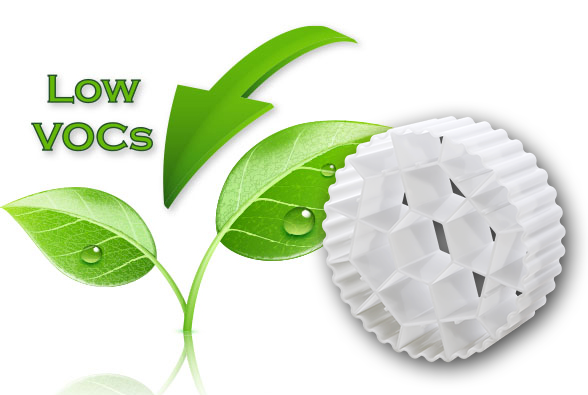
The core MBBR process utilizes specially designed MBBR biofilm carriers that provide immense surface area for microbial colonization. In traditional MBBR water treatment, these microorganisms break down organic pollutants in wastewater. When applied to air treatment, the same principle enables microorganisms to metabolize VOCs into harmless byproducts like carbon dioxide and water. The MBBR system thus becomes a versatile bioscrubber for industrial exhaust streams.
The Science Behind MBBR for VOCs Elimination
The adaptation of MBBR technology in wastewater treatment for air purification leverages the exceptionally high biomass density and metabolic activity of biofilms. In conventional MBBR wastewater treatment process, microorganisms attached to MBBR carrier media efficiently decompose organic matter. Similarly, when industrial exhaust containing VOCs passes through a specially designed MBBR bioreactor, the compounds are absorbed into the biofilm and broken down by specialized microorganisms.
The moving bed biofilm reactor process ensures continuous renewal of active biomass, preventing the accumulation of inert materials that plague conventional biofilters. The constant motion of MBBR filter media maintains optimal oxygen transfer and contact between pollutants and microorganisms. This dynamic environment proves particularly effective for treating variable VOC concentrations common in industrial settings, outperforming traditional air treatment technologies.
Engineering MBBR Systems for Industrial Exhaust Treatment
Implementing MBBR system for wastewater treatment principles in air pollution control requires specific modifications. While standard MBBR tanks serve water treatment needs, VOC treatment systems incorporate specialized containment structures that facilitate gas-liquid contact. The MBBR technology maintains its core advantage – the enormous surface area provided by MBBR biofilm carriers – but applies it to capturing and degrading airborne contaminants.
The innovation lies in creating optimal conditions for VOC-degrading microorganisms to thrive on the moving bed biofilm. Through careful selection of microbial consortia and carrier materials, systems can target specific industrial exhaust components. The robust nature of MBBR treatment translates well to air applications, handling fluctuating loads and complex contaminant mixtures with reliability that chemical scrubbers struggle to match.
Table: Comparative Analysis of MBBR Applications Across Different Media
| Application Domain | Target Contaminants | Carrier Modifications | Treatment Efficiency |
|---|---|---|---|
| Wastewater Treatment | BOD, Ammonia, Nitrogen | Standard MBBR carriers | 85-95% BOD removal |
| Industrial VOCs Treatment | Benzene, Toluene, Xylene | Hydrophobic surface coatings | 75-90% VOC destruction |
| Odor Control | Hydrogen Sulfide, Mercaptans | Sulfur-oxidizing bacteria enrichment | 90-98% odor removal |
| Biogas Purification | Siloxanes, H₂S | Anaerobic MBBR configuration | 80-95% contaminant removal |
Practical Implementation and Economic Advantages
The transition from MBBR in STP applications to industrial air treatment offers compelling economic benefits. While the initial MBBR price for air systems may exceed conventional solutions, the operational savings prove substantial. Biological treatment avoids chemical consumption and hazardous waste generation associated with alternative methods. The MBBR system maintains lower energy requirements compared to thermal oxidizers or advanced oxidation processes.
Industries including chemical manufacturing, painting operations, and food processing have successfully implemented biofilm reactors for wastewater treatment principles in their air compliance strategies. The technology demonstrates particular effectiveness for moderate-concentration VOC streams where traditional methods face economic or technical challenges. The scalability of MBBR technology allows customization from small vent streams to entire facility air handling systems.
Future Directions: Expanding MBBR's Cross-Industry Potential
The successful adaptation of moving bed biological reactor technology from water to air treatment opens possibilities for further innovation. Research continues into optimizing MBBR carrier media for specific gas-phase compounds and exploring hybrid systems that combine biological and physical treatment mechanisms. The fundamental advantages of the MBBR process – resilience to shock loads, high treatment capacity, and operational simplicity – translate across numerous environmental applications.
As environmental regulations tighten worldwide, the flexibility of MBBR technology positions it as a cornerstone of sustainable industrial operations. The cross-pollination between MBBR wastewater treatment and air pollution control exemplifies how fundamental biological principles can address diverse environmental challenges through innovative engineering and application.