


Practical Applications of MBBR Media in Municipal and Industrial Wastewater Treatment
Introduction
MBBR (Moving Bed Biofilm Reactor) media has been widely used in municipal and industrial wastewater treatment projects worldwide due to its mature treatment performance and good adaptability. In the field of municipal wastewater treatment, this technology is often used for the upgrading and renovation of existing treatment plants to meet more stringent discharge standards; while in industrial scenarios, it can effectively cope with the characteristics of complex pollutant composition and large load fluctuations of industrial wastewater. This article will explore the practical application cases of MBBR media and the treatment effects achieved in different scenarios, focusing on the background of wastewater treatment in Malaysia and engineering examples to demonstrate the practicality and economy of this technology.
Overview of the Background of Malaysia's Wastewater Treatment Industry
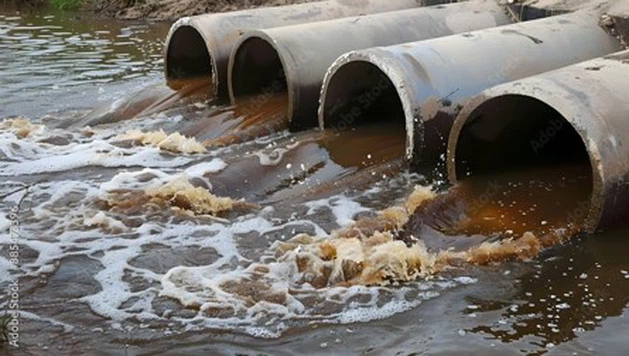
As a Southeast Asian country, Malaysia is endowed with abundant water resources, and some regions even export fresh water to neighboring countries for a long time. However, in recent years, affected by multiple factors such as urban population growth, rapid industrial development and improved environmental awareness, wastewater treatment in Malaysia is facing severe challenges and urgent needs. From the perspective of industry status, some regions in Malaysia have problems such as direct sewage discharge, outdated treatment facilities and insufficient treatment efficiency. Among them, many places such as Johor and Sarawak have seen intensified river pollution due to illegal discharge from coastal factories and unregulated discharge of domestic sewage by residents, and even frequent water supply crises. Only in Johor, the daily waste of drinking water reaches as high as 1.173 billion liters, which further exacerbates the contradiction between water supply and demand.
To improve the water environment quality, the Malaysian government has continuously improved environmental protection laws and regulations. Among them, the Environmental Quality (Sewage) Regulations 2009 formulated strict sewage discharge standards (Standard A: BOD₅ ≤ 20 mg/L, COD ≤ 50 mg/L, Suspended Solids ≤ 50 mg/L), putting forward higher requirements for the treatment efficiency of existing wastewater treatment plants. At the same time, Malaysia has gradually increased investment in the construction and renovation of wastewater treatment facilities. On the one hand, it promotes the construction of centralized sewage discharge systems. For example, Kuching has invested heavily in the construction of a central sewage discharge system, which treats sewage centrally in phases before discharging it into rivers, gradually improving the river pollution situation. On the other hand, it actively introduces efficient wastewater treatment technologies. With the advantages of small floor space, short renovation cycle, high treatment efficiency and controllable operation cost, MBBR technology has become the preferred technology for the upgrading and renovation of municipal wastewater treatment plants in Malaysia, and is widely used in various regional wastewater treatment projects. In addition, Malaysia has also been promoting the treatment of solid waste and plastic pollution in recent years to reduce pollutant emissions at the source, lighten the burden of wastewater treatment, and form a comprehensive environmental protection governance system of "source control + end-of-pipe treatment".
Application Cases of MBBR Media in Municipal Wastewater Treatment
(1) Renovation Case of a Municipal Wastewater Treatment Plant in Europe
In municipal wastewater treatment, a common application scenario of MBBR media is the upgrading and renovation of activated sludge treatment plants. Many old treatment plants are facing the challenges brought by increasingly stringent nitrogen and phosphorus removal requirements. By adding MBBR media to existing aeration tanks, the biomass retention can be increased without expanding the reactor volume. For example, a municipal wastewater treatment plant in Europe with a designed treatment capacity of 50,000 Population Equivalents (PE) adopted MBBR media for nitrification enhancement renovation. Before the renovation, the ammonia nitrogen removal rate of the plant was only 75%, which failed to meet the discharge standard of 5 mg/L; after installing MBBR media with a specific surface area of 800 m²/m³, the ammonia nitrogen removal rate increased to more than 95%, and the effluent ammonia nitrogen concentration was stably controlled below 3 mg/L. The renovation project had a short construction downtime, and the operation cost only increased by 10%, which fully reflects the economy of MBBR media in the upgrading and renovation of municipal wastewater treatment plants.
(2) Renovation Case of Kuala Sawah Regional Sewage Treatment Plant in Malaysia
With the growth of urban population and increasingly stringent environmental protection regulations in Malaysia, MBBR technology has also been gradually adopted for the upgrading of municipal wastewater treatment plants. The Kuala Sawah Regional Sewage Treatment Plant (RSTP) in Negeri Sembilan, operated by Indah Water Konsortium (IWK), urgently needs to improve its treatment efficiency to meet the strict discharge standards in Malaysia's Environmental Quality (Sewage) Regulations 2009. The plant originally adopted an oxidation ditch process, treating 59,000 m³ of sewage and 260 m³ of fecal sludge per day, serving a population of 320,000 PE. However, its nitrogen removal effect was unstable, and the effluent indicators often failed to meet the standards during peak load periods, which was inconsistent with the urgent demand for water environment governance in the local area.
To solve the above problems without expanding the existing floor space (a key constraint in urban areas), the plant carried out MBBR media renovation project in 2023. MBBR 37 media with a specific surface area of 800 m²/m³ accounting for 25% of the reactor volume was added to the aerobic zone of the oxidation ditch. The renovation project was implemented in phases, with each phase completed within 10 days, minimizing the impact on operation. The MBBR system significantly improved the biomass retention capacity, especially the enrichment of nitrifying bacteria (Nitrospira spp.), enhanced the plant's ability to cope with fluctuations in organic load and nitrogen load, and effectively solved the pain point of unstable nitrogen removal of the original process.
(3) Comparison of Treatment Performance Before and After Renovation
Table 1 below summarizes the treatment performance of Kuala Sawah RSTP before and after MBBR renovation, compared with Malaysia's Standard A discharge limits for reference.
|
Parameter |
Unit |
Influent Concentration |
Effluent Concentration (Before Renovation) |
Effluent Concentration (After Renovation) |
Removal Efficiency (After Renovation) |
Malaysia Standard A Limit |
|
Biochemical Oxygen Demand (BOD₅) |
mg/L |
220 |
28-35 |
12-15 |
93.2%-94.5% |
≤20 |
|
Chemical Oxygen Demand (COD) |
mg/L |
450 |
60-75 |
38-42 |
90.7%-91.6% |
≤50 |
|
Ammonia Nitrogen |
mg/L |
40 |
8-12 |
1.8-2.5 |
93.8%-95.5% |
≤5 |
|
Suspended Solids |
mg/L |
270 |
45-55 |
18-22 |
91.9%-93.3% |
≤50 |
It can be seen from Table 1 that the MBBR renovation significantly improved the treatment efficiency of the plant. All key indicators stably meet and exceed Malaysia's Standard A discharge standards, among which the ammonia nitrogen removal rate increased by more than 20 percentage points, completely solving the problem of substandard effluent during peak load periods. In addition, the MBBR system reduced the excess sludge production by 28%, reducing the monthly sludge disposal cost by approximately 25,000 Malaysian Ringgit (RM). Thanks to the energy-saving design of the MBBR system, the operation cost only increased by 8%, making it an economical and efficient solution for the plant's upgrading and renovation, and also providing a feasible reference for the renovation of other old wastewater treatment plants in Malaysia.
Application Cases of MBBR Media in Industrial Wastewater Treatment
(1) Wastewater Treatment Case of a North American Dairy Processing Plant
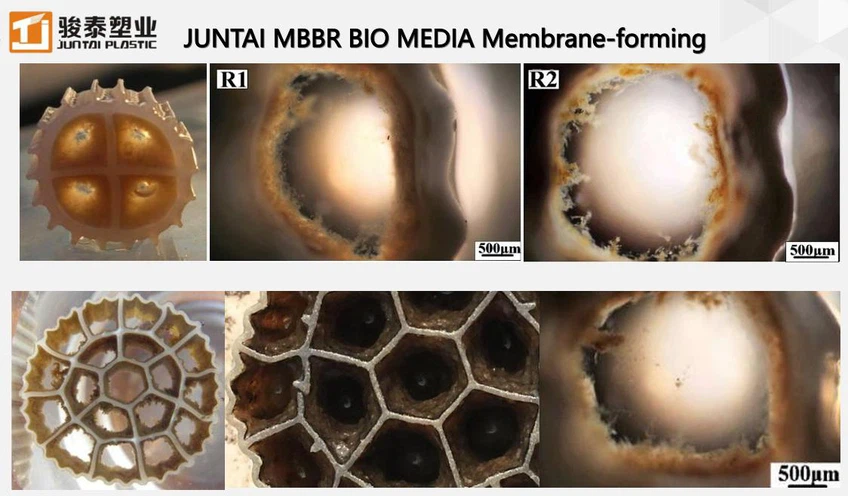
In the industrial field, MBBR media has been successfully applied in the treatment of various types of industrial wastewater. For example, food processing wastewater usually contains high concentrations of organic matter (COD up to 10,000 mg/L) and fats, which are difficult to treat efficiently with traditional processes. A North American dairy processing plant adopted an MBBR system to treat its production wastewater. The reactor was filled with 30% volume of cylindrical MBBR media, and the hydraulic retention time was controlled at 8 hours. The operation results showed that the COD removal rate reached 92% and the BOD₅ removal rate reached 94%, which was significantly better than the performance of the original activated sludge process (COD removal rate of 78%); at the same time, the excess sludge production was reduced by 30%, effectively reducing the sludge disposal cost and balancing treatment effect and economy.
(2) Wastewater Treatment Case of an Asian Pharmaceutical Plant
Another typical application scenario is pharmaceutical wastewater treatment. Such wastewater contains toxic and refractory organic compounds, which are difficult to treat. An Asian pharmaceutical plant adopted a combined system of MBBR media and Advanced Oxidation Processes (AOPs) to treat wastewater. MBBR was used as a pre-treatment unit to remove biodegradable organic matter, reducing the treatment load of the subsequent AOPs and avoiding the impact of toxic substances on the subsequent processes. The MBBR reactor achieved a COD removal rate of 65% for the pharmaceutical wastewater. After treatment by the combined process, the final effluent COD concentration was below 50 mg/L, meeting the local discharge standards. The application of MBBR media also improved the stability of the treatment system, weakened the impact of toxic substances on the treatment process, and ensured the long-term stable operation of the treatment system.
Comparison of MBBR System Performance in Different Application Scenarios
Table 2 below compares the performance of MBBR systems in different application scenarios described in this article, highlighting the versatility and adaptability of this technology, and providing reference for the technical selection of different types of wastewater treatment projects.
|
Application Scenario |
Key Target Pollutants |
MBBR Media Dosing Parameters |
Key Treatment Efficiency |
Key Advantages |
|
Municipal Wastewater Treatment Plant in Europe (Renovation) |
Ammonia Nitrogen |
Specific Surface Area: 800 m²/m³ |
Ammonia Nitrogen Removal Rate: >95% |
Short Downtime, Operation Cost Increased by Only 10% |
|
Kuala Sawah Regional Sewage Treatment Plant in Malaysia (Renovation) |
BOD₅, COD, Ammonia Nitrogen |
25% of Reactor Volume, Specific Surface Area: 780 m²/m³ |
BOD₅: 93.2%-94.5%, COD: 90.7%-91.6% |
Complies with Standard A, Sludge Production Reduced by 28% |
|
North American Dairy Processing Plant |
High-concentration COD, Fats |
30% of Reactor Volume (Cylindrical Media) |
COD: 92%, BOD₅: 94% |
Better Than Activated Sludge Process, Reduces Sludge Disposal Cost |
|
Asian Pharmaceutical Plant |
Toxic and Refractory Organic Compounds |
Dosed as Pre-treatment Unit |
Preliminary COD Removal Rate: 65%, Final Effluent COD <50 mg/L |
Stabilizes System Operation, Reduces AOPs Load |
Conclusion
The above practical application cases show that MBBR media is a universal and efficient technology suitable for both municipal and industrial wastewater treatment. It has the advantages of bearing high organic load, strong shock load resistance, and being able to cooperate and integrate with other treatment processes, making it the preferred solution for solving complex wastewater treatment problems. Especially in Malaysia, combined with the local background needs of wastewater treatment-there is an urgency to upgrade old facilities, strict discharge standard constraints, and the need to balance floor space and operation cost-the application of MBBR technology has effectively solved the pain points of local wastewater treatment, provided efficient and economical technical support for water environment governance in Malaysia, and also provided valuable practical experience for wastewater treatment projects in similar regions.

Feel free to contact Rachel to discuss more!
WhatsApp:+86 137 9555 6548
Email:[email protected]