


The Expansive Applications of Screw Press Dewatering Machines: A Wastewater Specialist's Comprehensive Guide
With over 15 years of experience in wastewater treatment engineering and sludge management, I've witnessed firsthand how screw press dewatering machines have revolutionized sludge handling across diverse industries. Their versatility, efficiency, and adaptability make them indispensable for modern sludge dewatering challenges. These machines excel in transforming viscous, high-moisture sludge into manageable, semi-solid cakes, significantly reducing volume, weight, and subsequent disposal costs. From municipal plants to specialized industrial settings, screw presses deliver consistent performance where other technologies often falter.
Understanding Screw Press Dewatering Technology: A Brief Overview
Screw press dewatering machines utilize a continuous mechanical dewatering process. They employ a rotating screw within a cylindrical screen or filter to gradually apply pressure to sludge, squeezing out water through the screen while conveying the solid material toward a discharge outlet. This method is particularly effective for a wide range of sludges due to its gentle yet persistent pressing action, low energy consumption (often consuming less than half the energy of centrifugal dewaterers according to verified data from numerous installations including those in demanding environments like Tibet), and minimal requirement for operator intervention. Their design, often incorporating a gradually tightening pitch and increasing pressure along the screw's length, ensures efficient dewatering without being overly aggressive, which helps preserve the equipment and handle delicate flocs.
I. Municipal Wastewater Treatment: The Backbone of Urban Sanitation
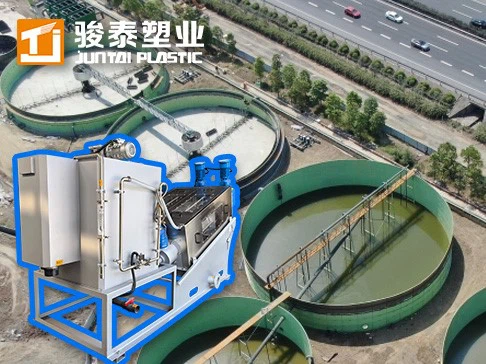
Municipal wastewater treatment plants (WWTPs) represent the most common and critical application for screw press dewatering machines. They are tasked with handling large volumes of sludge generated from the biological treatment of domestic sewage. This sludge, primarily composed of waste activated sludge (WAS) and primary sludge, is often characterized by its high organic content and variable rheology.
Screw presses excel in this environment for several reasons. Their ability to handle fluctuations in sludge composition and feed rates makes them robust against the diurnal and seasonal variations typical of municipal sewage. Furthermore, their closed-system design contains odors and minimizes aerosol formation, a crucial advantage for plants located near residential areas. The low operational noise (typically below 75 dB, as noted in technical specifications) further enhances their suitability for such settings.
A significant trend involves using screw presses to retrofit older plants struggling with outdated dewatering technology like inefficient belt presses or centrifuges. The compact footprint of modern screw presses (often requiring up to 60% less space than traditional belt filter presses) allows them to be installed in constrained spaces without major structural modifications. Data from a retrofit project in Chongqing, China, highlights this benefit: replacing older dewatering equipment with a modern screw press (specifically a high-solid type) reduced sludge cake moisture content from 83-85% to around 70%, achieving a volume reduction exceeding 40% and drastically cutting transportation and disposal costs.
| Municipal Application Sludge Type | Typical Feed Solid Concentration | Achievable Cake Solids (After Screw Press) | Key Process Considerations |
|---|---|---|---|
| Waste Activated Sludge (WAS) | 0.8% - 1.5% | 16% - 22% | Requires optimal polymer dosing for flocculation. |
| Primary Sludge | 2% - 5% | 25% - 35% | Generally easier to dewater; lower polymer demand. |
| Mixed Sludge (Primary + WAS) | 1.5% - 3% | 18% - 28% | Most common scenario; balance of polymer needed. |
| Anaerobically Digested Sludge | 2% - 4% | 20% - 30% | Stable sludge, consistent dewatering performance. |
The economic impact is profound. By reducing cake moisture content, screw presses directly lower the tonnage of sludge requiring trucking to landfills or incineration facilities. This translates to fewer vehicle trips, lower fuel consumption, reduced greenhouse gas emissions, and significantly lower disposal invoices. Their relatively low energy demand compared to centrifuges further contributes to operational cost savings and a reduced carbon footprint for the treatment plant.
II. Industrial Wastewater Treatment: Conquering Diverse and Challenging Streams
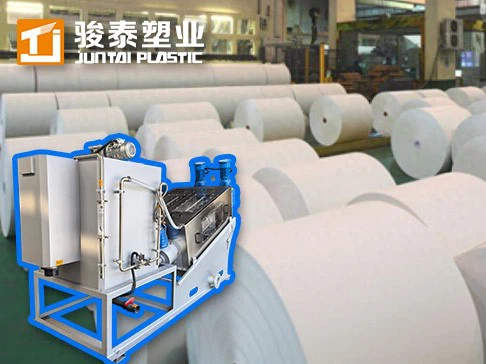
The true mettle of screw press dewatering machines is tested in the demanding arena of industrial wastewater treatment. Industrial sludges are often more complex, containing higher concentrations of fats, oils, grease (FOG), fibers, minerals, and sometimes even hazardous materials. Screw presses, particularly those constructed with corrosion-resistant materials and designed for easy cleaning and maintenance, are adept at handling these challenges.
1. Food and Beverage Industry
This sector generates vast amounts of organic-rich sludge from processing activities. Screw presses are extensively used in:
- Dairies and Cheese Plants: Effectively dewater sludge high in fats and proteins. Projects demonstrate capability in handling sludge with varying solid concentrations (0.8-2.5% for surplus activated sludge, 4.3-6.9% for flotation sludge) and achieving cake solids up to 30%.
- Slaughterhouses and Meat Packing Plants: Manage sludge laden with fats, blood, and organic solids. Their robust design helps handle the challenging nature of this waste stream.
- Breweries and Distilleries: Deal with yeast-laden and organic sludges. The low energy consumption of screw presses is a significant advantage for these high-volume operations.
- Starch and Alcohol Production: A distillery wastewater project in Sichuan, China, showed that replacing another dewatering technology with a high-solids dewaterer reduced cake moisture from 85-90% to ~70%, yielding a mass reduction over 45%.
2. Chemical and Petrochemical Industry
While some chemical sludges can be hazardous, screw presses play a role in dewatering certain non-hazardous or pre-treated streams, such as those from cooling water treatment or specific process operations. For example, in a Zhejiang, China ABS (Acrylonitrile Butadiene Styrene) sludge project within the petrochemical sector, a specialized screw press configuration successfully handled lightweight, fibrous sludge, achieving cake solids between 22-25% from a 2-4% feed and demonstrating over 90% solids recovery rate while reportedly reducing chemical consumption and overall treatment costs. Material compatibility is paramount here.
3. Pulp and Paper Industry
This industry produces sludge with very high fiber content, which can be challenging for some dewatering equipment. Screw presses, however, are well-suited to handle these fibrous masses. The fibers can actually aid in the formation of a permeable cake, allowing for efficient water release. The dewatered cake, with its high fiber content, can sometimes be utilized as a fuel source for boilers within the mill, adding a resource recovery aspect.
| Industrial Application | Example Sludge Characteristics | Notable Challenge | Screw Press Advantage |
|---|---|---|---|
| Food Processing (Dairy) | High fat, protein content (FOG) | Tendency to smear, clog | Robust construction, often requires specific wash cycles. |
| Pulp & Paper | High fiber content | Rapid wear on equipment | Handles fibers well; cake may have calorific value. |
| Petrochemical (e.g., ABS) | Lightweight, fibrous solids 2 | Flotation, handling | Specialized designs capable of high recovery rates (>90%). |
| Textile Dyeing | Often contains dyes, chemicals | Potential for chemical corrosion | Corrosion-resistant materials (e.g., SS 316). |
The adaptability of screw press technology is highlighted by its use in extreme conditions, from cold climates to demanding industrial settings, with some models proven to operate effectively in temperatures as low as -30°C and as high as 50°C.
III. Agricultural and Livestock Waste Management: Closing the Nutrient Loop
The concentration of animals in modern farming operations creates significant waste management challenges, primarily in the form of manure slurries. Screw press dewatering machines offer an efficient solution for separating solid and liquid fractions from raw manure.
- Manure Separation: Dewatering raw pig slurry, chicken litter, or cattle manure using a screw press separates nutrients. The solid fraction, rich in organic matter and phosphorus, becomes easier to compost for use as a soil amendment or even for energy generation (e.g., biogas production, though often pre- or post-treatment is involved). The liquid fraction, with higher concentrations of soluble nitrogen and potassium, can be more efficiently stored and later used for land application as fertilizer, reducing the overall volume of lagoon storage required.
- Biogas Plant Digester Effluent: Following anaerobic digestion of manure or energy crops in a biogas plant, the nutrient-rich digestate must be managed. Screw presses are perfectly suited for separating digestate into nutrient-rich liquor and fibrous solids. This practice, often called the "separation of digestate," is crucial for reducing the costs associated with transporting and spreading the final fertilizer products on agricultural land.
The economic driver here is potent. By reducing volume and weight, screw presses drastically cut transportation costs for nutrient management. Furthermore, they enable farms to transform a waste product into a potential revenue stream through the sale of compost or soil conditioners, supporting sustainable, circular economy practices within agriculture.
IV. Niche and Emerging Applications: Demonstrating Remarkable Versatility
The applicability of screw press dewatering extends beyond traditional water and waste sectors into some specialized fields, showcasing its fundamental effectiveness in solid-liquid separation.
- Marine and Aquaculture: Screw presses can be used to dewater sludge from fish farm operations or muds from harbor dredging activities, reducing the volume of material that needs to be handled and disposed of on land.
- Landscaping and Soil Remediation: They can process slurries from hydro-seeding or dewatered sludges from soil washing operations in remediation projects, facilitating material handling and reducing project costs.
- Emergency and Mobile Deployment: Perhaps one of the most innovative applications is the use of mobile, trailer-mounted screw press units. These units, as part of integrated solutions, can be rapidly deployed for emergency dewatering operations, such as after floods for sediment handling, or for temporary processing needs during plant upgrades or at remote sites without permanent infrastructure. This concept aligns with the practical advantages of mobility and rapid deployment seen in modern sludge management strategies.
V. Key Selection Criteria for Optimal Application Across Sectors
Choosing the right screw press for a specific application is not a one-size-fits-all endeavor. Based on my engineering experience, these are the critical factors to consider:
- Sludge Characteristics: This is paramount. Analyze the pH, abrasive nature, fiber content, oil/grease content, and volatile solids percentage of the feed sludge. These properties dictate material choices for the screw and screen (e.g., stainless steel grades, wear-resistant coatings) and influence the required design pressure.
- Feed Rate and Consistency: The unit must be sized to handle the maximum anticipated flow rate and solid load. Furthermore, its design should tolerate reasonable fluctuations in feed consistency without significant loss in performance or requiring constant operator adjustment.
- Desired Cake Dryness: The target moisture content dictates the required compression force and retention time within the press. Higher dryness often requires more powerful drives and a more robust design, potentially increasing cost.
- Polymer Consumption: Different sludges and different screw press designs have varying optimal polymer types and dosages. Selecting a press known for efficient mixing and low polymer consumption can significantly impact operational expenses.
- Operational Philosophy: Consider the level of automation and remote monitoring required. Modern screw presses often come with PLC controls and IoT capabilities for data tracking and predictive maintenance, which is valuable for unmanned or remotely managed facilities.
- Space Constraints and Mobility: The compact nature of screw presses is a major advantage. For tight spaces or mobile applications, their small footprint is often a deciding factor over bulkier technologies like belt presses or plate and frame filter presses.
By carefully evaluating these factors against the specific needs of the application-whether it's a municipal plant, a food factory, or a large-scale farm-engineers can select and configure a screw press dewatering machine that will deliver reliable, efficient, and cost-effective service for years to come.
Conclusion: An Indispensable Tool for Modern Sludge Management
The screw press dewatering machine has evolved from a simple mechanical device into a sophisticated, highly adaptable solution for solid-liquid separation across a breathtakingly wide spectrum of industries. Its unique combination of mechanical efficiency, low energy consumption, operational simplicity, and versatility makes it a preferred choice for engineers and plant managers tackling the perpetual challenge of sludge dewatering.
From ensuring the smooth operation of municipal wastewater treatment plants that protect public health and the environment, to enabling resource recovery and cost savings in diverse industrial and agricultural settings, the screw press proves its value daily. As technologies advance, incorporating smarter controls and even more durable materials, the range and efficiency of applications for this workhorse equipment are only set to expand further. For any professional considering sludge management strategies, the screw press dewatering machine deserves serious consideration as a robust, economical, and effective solution.