


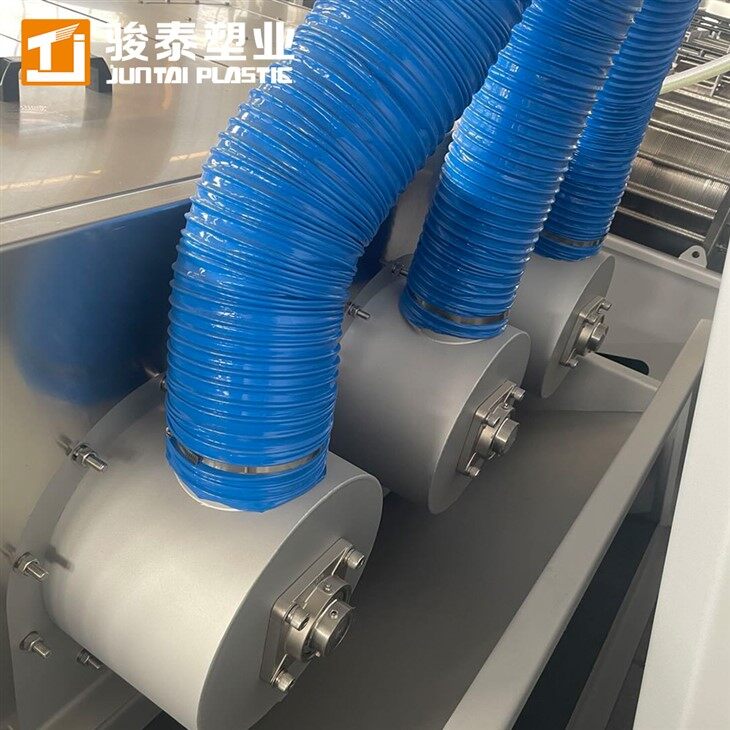
Volute Press Sludge Dewatering Machine | Multi-Disc Screw Press for Continuous Automatic Sludge Treatment
No Thickener. No Filter Cloth. No Operator. Just Dry Sludge Cake - Around the Clock.
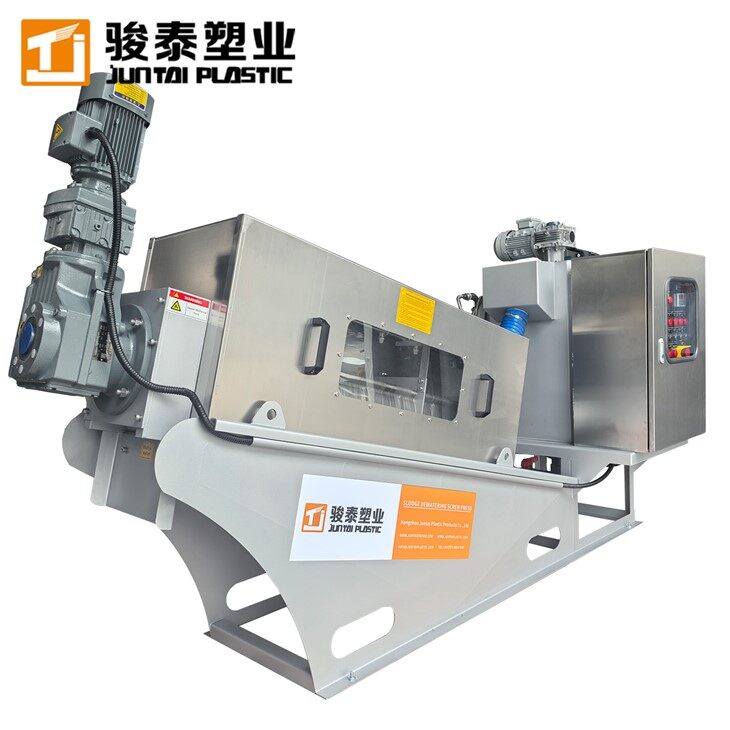
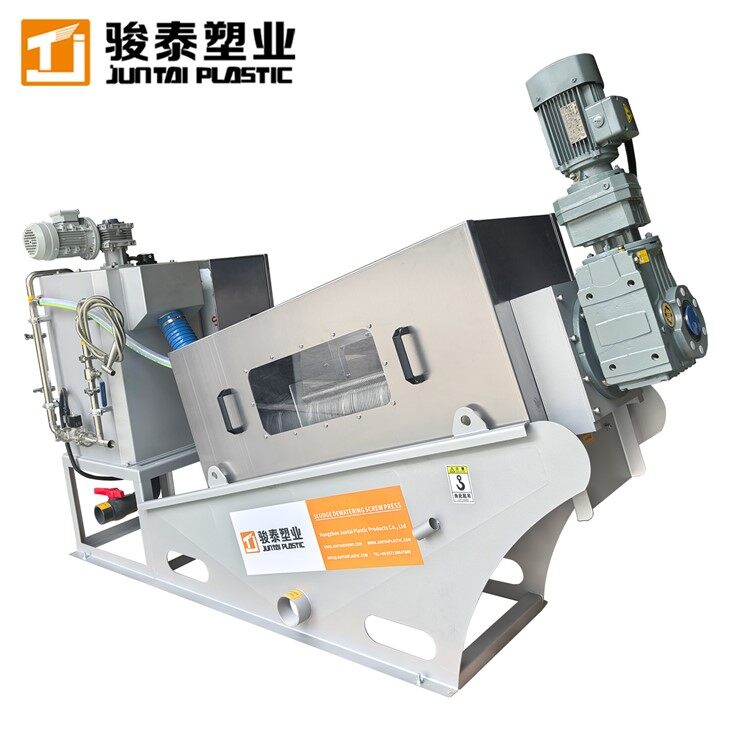
Juntai's volute press sludge dewatering machine is a multi-disc screw press that combines conditioning, thickening, and dewatering into a single compact unit. Unlike filter presses, belt presses, or centrifuges, it operates continuously and automatically on low-concentration sludge - eliminating the need for a separate thickening tank and dramatically reducing footprint, labor, energy, and running costs compared to conventional dewatering equipment.
How the Volute Press Works
The volute press operates on a fundamentally different principle from filter presses or centrifuges. There are no filter cloths, no high-speed rotation, and no hydraulic pressure systems. Instead, solid-liquid separation is achieved through three sequential zones within a single cylindrical body:
Zone 1 - Flocculation & Conditioning
Incoming sludge is dosed with polymer flocculant in the conditioning tank, where gentle mixing causes fine suspended solids to aggregate into larger flocs. The conditioned sludge then enters the concentration zone of the press at its original low concentration - no pre-thickening required, even for sludge as dilute as 2,000–3,000 mg/L MLSS.
Zone 2 - Gravity Concentration
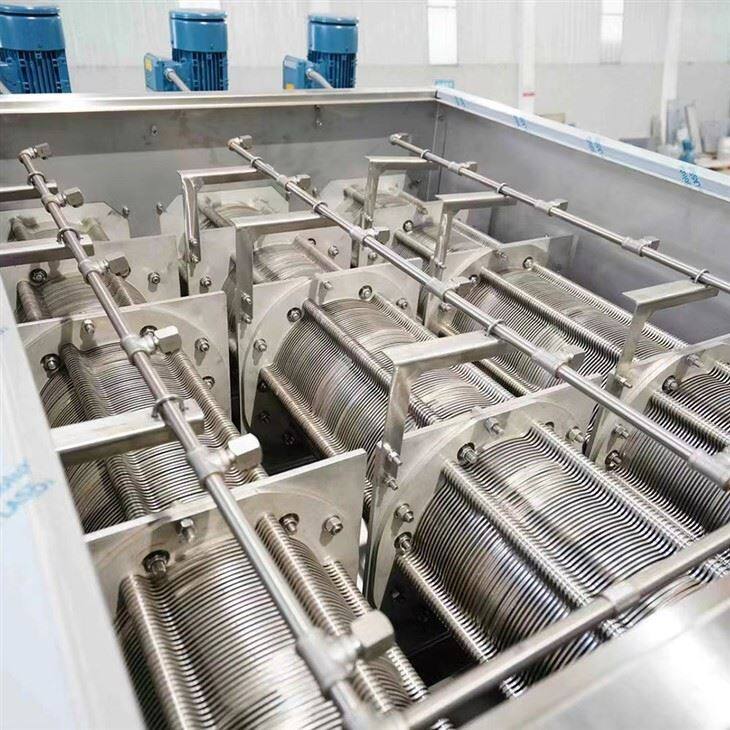
In the front section of the press body, free water drains by gravity through the gaps between the fixed and moving rings. The sludge concentration increases progressively as it advances along the screw shaft, without any applied pressure. This gravity thickening stage replaces the separate thickening tank that filter presses and belt presses require.
Zone 3 - Screw Extrusion Dewatering
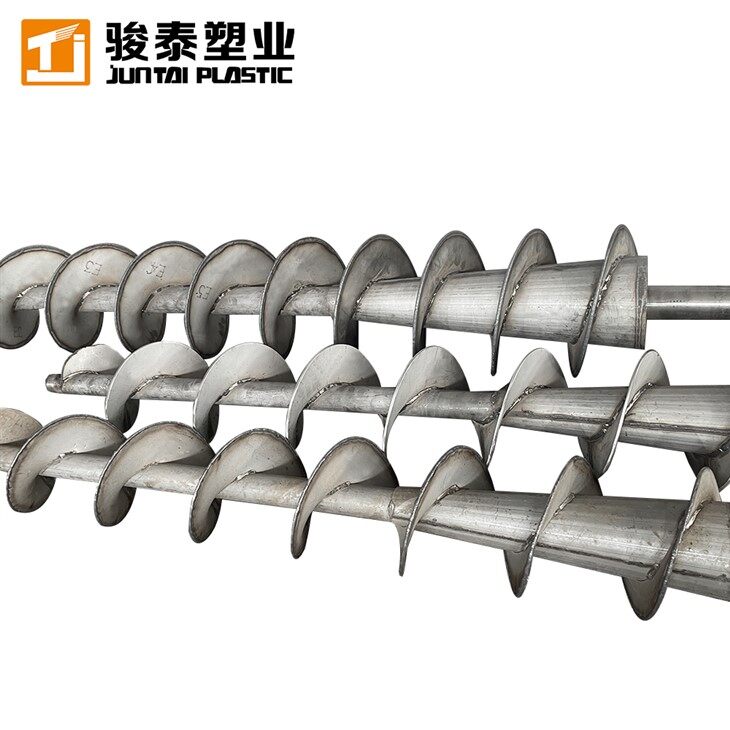
As the screw pitch decreases and the back-pressure cone restricts discharge, the sludge is subjected to progressively increasing mechanical pressure. The filtrate is squeezed through the ring gaps and collected in the filtrate trough below. The self-cleaning movement of the moving rings against the fixed rings continuously prevents gap clogging - no washdown cycles, no operator intervention, no interruptions. Sludge cake exits at 75–85% moisture content (15–25% dry solids), ready for direct disposal or further treatment.
Volute Press vs. Competing Dewatering Equipment
The table below compares the multi-disc screw press against the three most common alternative dewatering technologies. ▲ = low/small (better); ▲▲▲▲ = high/large (worse).
| Parameter | Multi-Disc Screw Press (Volute) | Frame Filter Press | Belt Press | Centrifuge |
| Handles low-concentration sludge directly | ✔ Yes | ✘ No | ✘ No | ✘ No |
| No thickener required | ✔ Yes | ✘ No | ✘ No | ✘ No |
| 24-hour fully automatic operation | ✔ Yes | ✘ No | ✘ No | ✘ No |
| Occupied space | ▲ Smallest | ▲▲▲ Large | ▲▲ Medium | ▲▲ Medium |
| Energy consumption | ▲ Lowest | ▲▲ Medium | ▲▲▲ High | ▲▲▲▲ Highest |
| Labor intensity | ▲ Lowest | ▲▲▲ High | ▲▲ Medium | ▲ Low |
| Noise level | ▲ Lowest | ▲▲ Medium | ▲▲▲ High | ▲▲▲ High |
| Maintenance requirement | ▲ Lowest | ▲▲▲ High | ▲▲ Medium | ▲▲▲ High |
| Running cost | ▲ Lowest | ▲▲▲ High | ▲▲ Medium | ▲▲▲ High |
Technical Specifications
| Parameter | Specification |
| Working principle | Multi-disc screw extrusion (fixed ring + moving ring + helical shaft) |
| Inlet sludge concentration | 2,000–50,000 mg/L (no pre-thickening required) |
| Sludge cake moisture content | 75–85% (15–25% dry solids) |
| Screw rotation speed | 2–5 rpm (ultra-low speed) |
| Ring material | SS304 / SS316L stainless steel |
| Operation mode | Fully automatic, continuous 24-hour operation |
| Control system | PLC automatic control cabinet with remote monitoring capability |
| Filter cloth required | No |
| Thickener tank required | No |
| Noise level | < 45 dB (ultra-low speed operation) |
| Available models | [●] - contact us for capacity-based model selection |
| Applicable sludge types | Municipal activated sludge, industrial wastewater sludge, food processing, aquaculture, paper mill, oily sludge, livestock manure |
Key Advantages in Detail
Processes Low-Concentration Sludge Directly - No Thickener Needed
Most sludge dewatering machines require inlet sludge at 3–5% TS (30,000–50,000 mg/L). Achieving this from typical activated sludge at 3,000–8,000 mg/L requires a separate gravity thickener or dissolved air flotation (DAF) unit - adding capital cost, footprint, and a maintenance burden. The volute press handles sludge from as low as 2,000 mg/L directly, eliminating the thickening stage entirely. For small and medium plants, this can save hundreds of thousands of dollars in civil and equipment costs.
Fully Automatic 24-Hour Operation
The PLC control system manages polymer dosing, sludge feed rate, screw speed, and back-pressure automatically. Once commissioned, the machine requires no operator attendance during normal operation. Frame filter presses require manual plate-opening and cloth-cleaning cycles; belt presses require constant monitoring and belt washing. The volute press eliminates both, making it the only dewatering technology suitable for unmanned overnight or weekend operation.
Self-Cleaning Ring Design - No Clogging
The alternating fixed and moving rings form the filtration gaps through which water is expelled. As the moving rings rotate relative to the fixed rings, any solids that begin to bridge the gap are immediately sheared away. This continuous self-cleaning action prevents the gap clogging that requires regular washdowns on belt presses and filter cloth replacement on frame presses. It is particularly effective with oily sludge, fibrous sludge, and high-viscosity sludge types that consistently clog conventional dewatering equipment.
Ultra-Low Energy Consumption
The screw rotates at 2–5 rpm, driven by a small gear motor. Power consumption per unit of dry solids processed is a fraction of centrifuge operation - centrifuges typically operate at 2,000–4,000 rpm and consume 10–20× more electricity per kg of dry solids dewatered. For plants processing large sludge volumes, this energy difference represents a significant reduction in annual operating costs.
Minimal Footprint
Because the volute press integrates conditioning, thickening, and dewatering into one unit - and eliminates the separate thickener tank - the total system footprint is typically 40–60% smaller than an equivalent-capacity filter press or belt press installation. This is particularly valuable for retrofit projects where space in the sludge handling building is constrained.
Low Noise - Indoor Installation Friendly
Operating below 45 dB, the volute press can be installed in enclosed treatment buildings, basement plant rooms, or urban facilities without noise compliance issues. Centrifuges (high-speed rotation) and belt presses (belt drive, tensioning systems) generate significantly higher noise levels that require acoustic enclosures or restrict installation locations.
Application Scenarios
Municipal Sewage Treatment Plants
The most common application. Municipal activated sludge at 3,000–8,000 mg/L is fed directly to the volute press without thickening. Polymer-conditioned sludge is dewatered to 80–85% moisture content, reducing volume by 4–6× compared to liquid sludge and enabling direct transport to landfill or composting without intermediate storage.
Food & Beverage Processing
Food processing wastewater sludge (dairy, brewery, slaughterhouse, vegetable processing) is high in organic content and often fibrous. The self-cleaning ring design handles fibrous and sticky sludge without clogging - a chronic problem for filter cloth-based systems. The low operating speed also avoids the emulsification of fats that can occur in high-speed centrifuge processing.
Industrial Wastewater Treatment
For pharmaceutical, chemical, textile, and paper mill sludge, the volute press handles variable sludge composition and concentration without requiring constant operator adjustment. The PLC system automatically compensates for changes in inlet concentration and sludge rheology, maintaining consistent cake dryness.
Aquaculture & Livestock
Aquaculture sludge and livestock manure are high-volume, low-value streams where minimizing equipment cost and labor is critical. The volute press's low capital cost, minimal maintenance, and zero filter cloth consumption make it the most economical dewatering option for agricultural waste streams destined for land application or biogas digestion.
Leachate Treatment Sludge
Landfill leachate treatment generates chemically complex sludge with variable composition. The stainless steel construction (SS304/SS316L) and wide operating range of the volute press handle corrosive leachate sludge without material degradation, providing long service life in this demanding application.
System Components
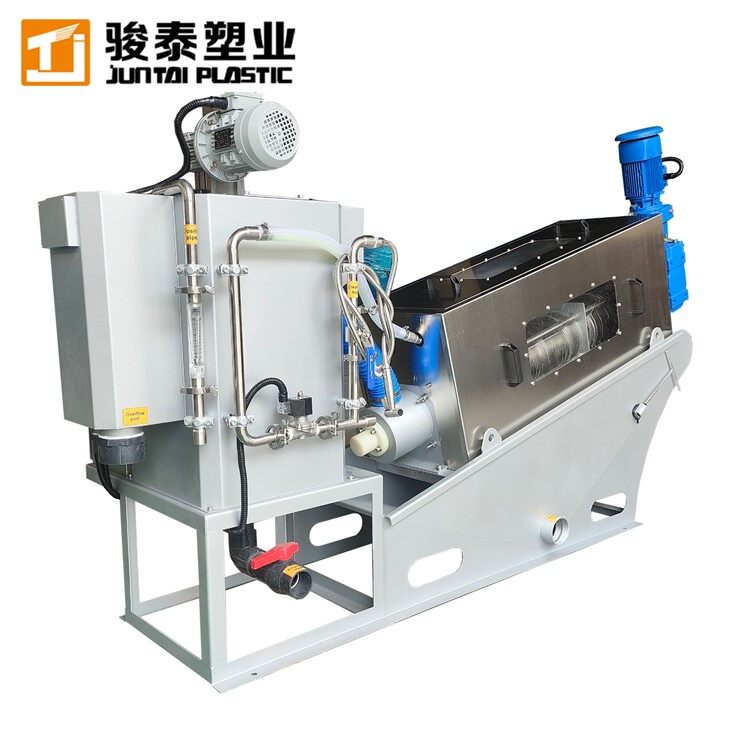
A complete Juntai volute press sludge dewatering system includes:
Flocculation conditioning tank - Gentle mixing of incoming sludge with polymer flocculant to aggregate fine particles before pressing.
Multi-disc screw press body - Fixed rings, moving rings, and helical shaft forming the concentration and dewatering zones. All wetted parts in SS304 or SS316L stainless steel.
Polymer dosing system - Automatic dosing pump with flow control, ensuring consistent flocculation at variable sludge feed rates.
Filtrate collection trough - Collects press filtrate (reject water) for return to the headworks or secondary treatment inlet.
Sludge cake conveyor - Optional screw or belt conveyor to transfer dewatered sludge cake to collection container or bagging system.
PLC control panel - Centralized automatic control of all system components; remote monitoring and fault alarm capability.
Frequently Asked Questions
What sludge concentration can the volute press handle?
The volute press accepts inlet sludge from approximately 2,000 mg/L (0.2% TS) up to 50,000 mg/L (5% TS) without pre-thickening. This covers the full range of activated sludge from aeration tanks (3,000–8,000 mg/L) through return activated sludge (8,000–12,000 mg/L) to thickened sludge. No separate thickening tank is required for any of these concentrations.
How dry is the sludge cake output?
Depending on sludge type, polymer dosage, and back-pressure setting, output cake moisture content is typically 75–85% (15–25% dry solids). Municipal activated sludge typically achieves 18–22% DS. Higher dry solids content is possible with extended residence time or higher polymer dosage, which increases operating cost. Our team can advise on the optimal settings for your sludge type.
How much maintenance does the volute press require?
Routine maintenance is minimal: monthly inspection of the gear motor oil level, quarterly check of the moving ring drive bearings, and periodic inspection of the ring gap for wear. There is no filter cloth to replace, no belt to tension or wash, and no high-speed bearings subject to vibration fatigue. Annual maintenance downtime is typically less than 8 hours.
Can it handle oily or sticky sludge?
Yes. The self-cleaning ring mechanism specifically prevents the gap plugging that causes belt presses and filter cloth systems to fail with oily or sticky sludge. For highly oily sludge (refinery, food processing with high fat content), SS316L rings are recommended for enhanced corrosion resistance.
What is the polymer consumption?
Polymer consumption varies by sludge type and target cake dryness. Typical consumption for municipal activated sludge is 3–8 kg polymer per tonne of dry solids. The automatic dosing system ensures polymer is used at the minimum effective rate, avoiding waste. Contact our team for polymer consumption estimates based on your specific sludge characteristics.
Sludge Feeding : Sludge is fed into the inlet of the machine, entering its treatment system.
Adjusting Sludge Concentration : Flocculants are added to start the solid-liquid separation in the sludge. These cause the tiny particles to clump together into larger flocs, making water separation easier.
Screw Conveying and Compression : Inside the machine, one or more rotating screw shafts convey the sludge forward through their spiral action. As they do so, the gradually decreasing gap between the screw shaft and the machine wall, along with specially designed pressure plates, compress the sludge, forcing water out.
Separation and Discharge of Water : During compression, water is separated through a mesh or other filtration structures and discharged from the water outlet.
Discharge of Dewatered Sludge : After compression, the sludge is much drier. It moves to the discharge end with the screw shaft's rotation and is discharged, completing the dewatering process.
This machine is popular in industries like wastewater treatment plants and food processing due to its simple structure, easy operation, low maintenance cost, and high dewatering efficiency. It effectively reduces sludge treatment and disposal costs and is environmentally friendly.

Technical Parameters
| Type | Discharge height(mm) | Dimension | Weight(kg) | Total power(kw) | Washing waterconsumption (Lh) | |||
| L(mm) | W(mm) | H(mm) | Empty | Operation | ||||
| JTD-131 | 250 | 1860 | 750 | 1080 | 180 | 300 | 0.2 |
24 |
| JTD-132 | 250 | 1960 | 870 | 1080 | 250 | 425 | 0.3 |
48 |
| JTD-133 | 250 | 1960 | 920 | 1080 | 330 | 580 | 0.4 |
72 |
| JTD-201 | 350 | 2510 | 900 | 1300 | 320 | 470 | 1.1 |
32 |
| JTD-202 | 350 | 2560 | 1050 | 1300 | 470 | 730 | 1.65 |
64 |
| JTD-203 | 350 | 2610 | 1285 | 1300 | 650 | 1100 | 2.2 |
96 |
| JTD-301 | 495 | 3330 | 1005 | 1760 | 850 | 1320 | 1.3 | 40 |
| JTD-302 | 495 | 3530 | 1290 | 1760 | 1300 | 2130 | 2.05 | 80 |
| JTD-303 | 495 | 3680 | 1 620 | 1760 | 1750 | 2880 | 2.8 | 120 |
| JTD-304 | 495 | 3830 | 2010 | 1760 | 2300 | 3850 | 3.55 | 160 |
| JTD-351 | 585 | 4005 | 1100 | 2130 | 1100 | 1900 | 1 .3 | 72 |
| JTD-352 | 585 | 4390 | 1650 | 2130 | 1900 | 3200 | 2.05 | 144 |
| JTD-353 | 585 | 4520 | 1980 | 2130 | 2550 | 4600 | 2.8 | 216 |
| JTD-354 | 585 | 4750 | 2715 | 2130 | 3200 | 6100 | 3.55 | 288 |
| JTD-401 | 759 | 4680 | 1110 | 2100 | 1600 | 3400 | 1 .65 | 80 |
| JTD-402 | 759 | 4960 | 1760 | 2100 | 2450 | 5200 | 2.75 | 160 |
| JTD-403 | 759 | 5010 | 2585 | 2100 | 3350 | 7050 | 3.85 | 240 |
| JTD-404 | 759 | 5160 | 3160 | 2100 | 4350 | 9660 | 4.95 | 320 |


