


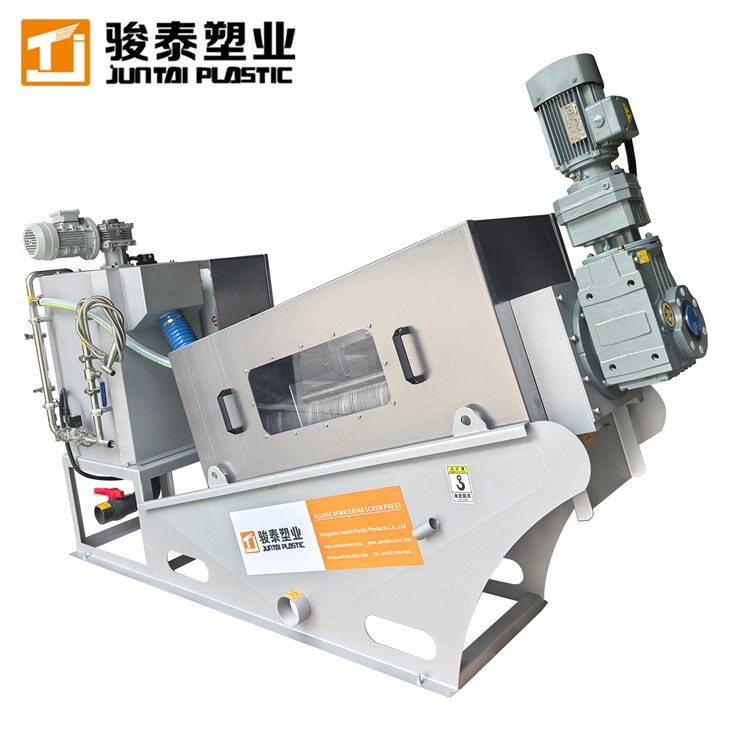
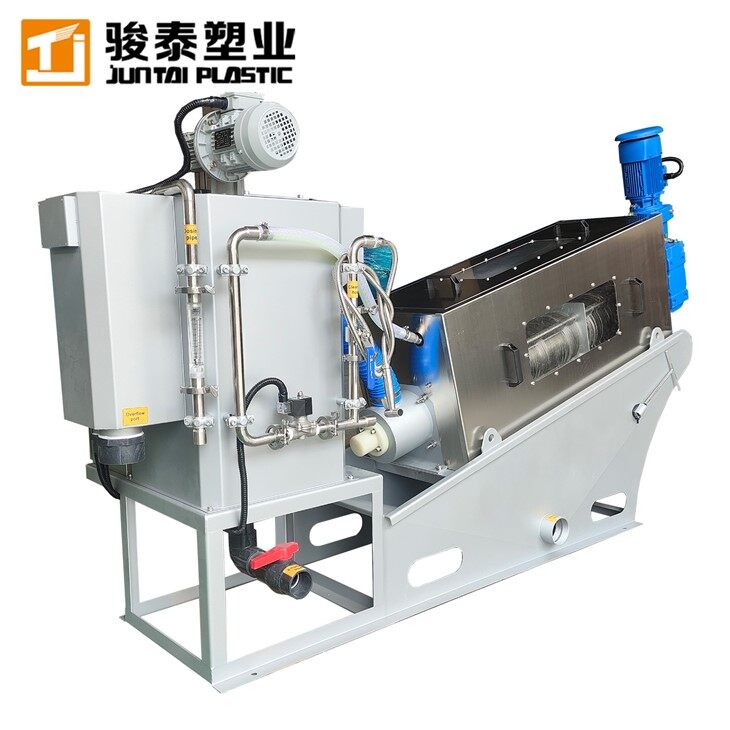
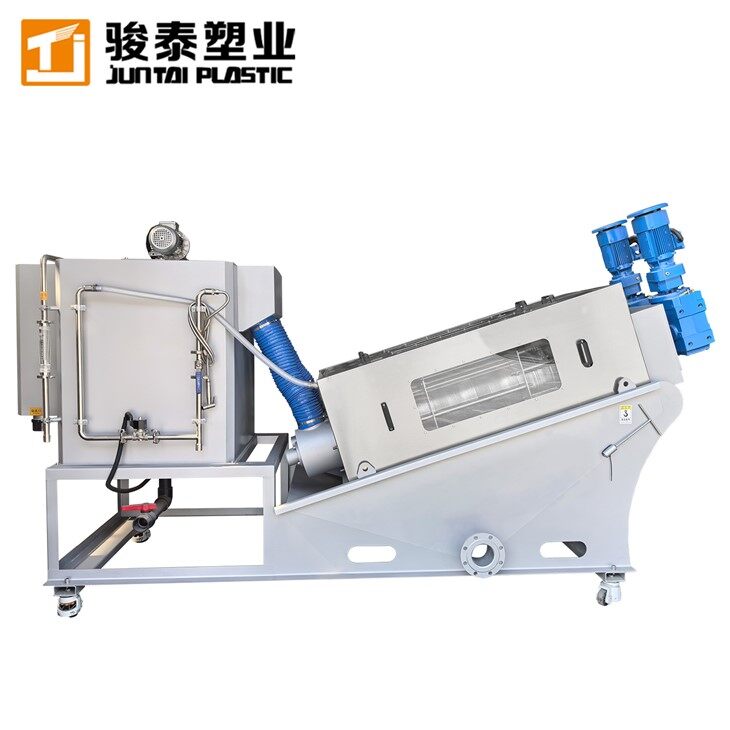

▬ Main product view
01 Why Plants Move to the JT Series
Traditional dewatering means two machines, two energy bills and endless cloth cleaning. The JT Series changes that: a patented dual-process screw press thickens and dewaters in one pass, so fibrous, oily and high-viscosity sludge leaves as a dry, stackable cake - with no filter cloth and no pressurized operation.
|
2,000–50,000
mg/L Broad Compatibility
Processes sludge from 2,000 to 50,000 mg/L without pretreatment - food, petrochemical, municipal and pulp/paper feeds run on the same machine.
|
40%
Lower Energy Draw
Consumes about 40% less power than a centrifugal decanter while achieving 18–25% DS cake dryness against global sustainability benchmarks.
|
24/7
Smart PLC Automation
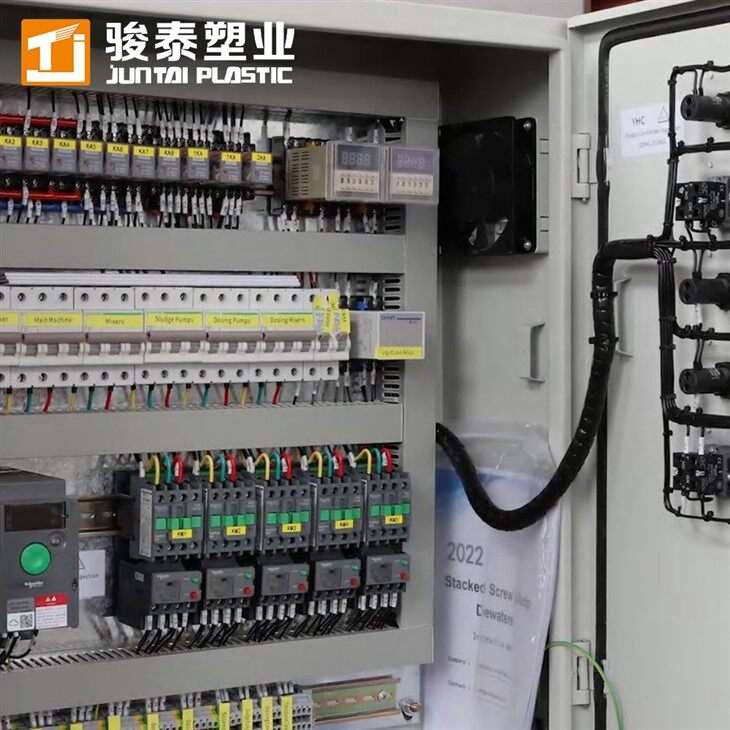
Self-cleaning operation with PLC-controlled adjustment runs unattended around the clock - ideal for remote sites and labor-sensitive projects.
|
30%
Space & Infrastructure Saving
Modular, space-optimized construction installs in confined areas and can cut infrastructure cost by up to 30% versus conventional systems.
|
02 JT Series Technical Highlights
|
▬ Cross-section & grid layout |

03 JT Screw Press vs Conventional Dewatering
Compare how dewatering methods perform on the metrics that decide plant OpEx - energy, cake dryness, labor and uptime. The JT Series integrates two processes in one machine and runs unattended, which is why operators are switching from filter cloth and centrifugal systems.
|
Dewatering method
|
Cake dryness
|
Automation & labor
|
Energy
|
Best suited for
|
|
JT screw press (dual-process)
|
15–28% DS adjustable
|
PLC, 24/7 unattended
|
Low - 40% less than centrifuge
|
Municipal & industrial, 2k–50k mg/L
|
|
Centrifugal decanter
|
18–25% DS
|
High energy, operator attention
|
High
|
Large continuous-flow plants
|
|
Filter belt / cloth press
|
Batch, variable
|
Frequent cloth washing
|
Medium
|
Small batch plants
|
04 JT Series Configuration & Deployment
The JT Series is built around a single dual-process screw press. Size the throughput, screw and drive to your feed - each unit runs on PLC control and commissions within 48 hours.
05 Application Scenarios
|
Municipal Wastewater Plants
Round-the-clock dewatering of primary and secondary sludge at 2,000–50,000 mg/L, with PLC control that keeps effluent quality stable through load swings.
Food Processing Effluent
Handles high-viscosity, high-BOD food and beverage sludge without clogging, delivering a stackable cake for low-cost offsite disposal.
Petrochemical Oily Sludge
The specialized screw design processes oily and fibrous waste streams that blind filter cloth and foul centrifuges.
Pulp & Paper Mill By-products
Dewaters pulp and paper sludge in confined plant areas, cutting haulage volume and supporting energy-from-waste recovery.
|
▬ Typical field application |

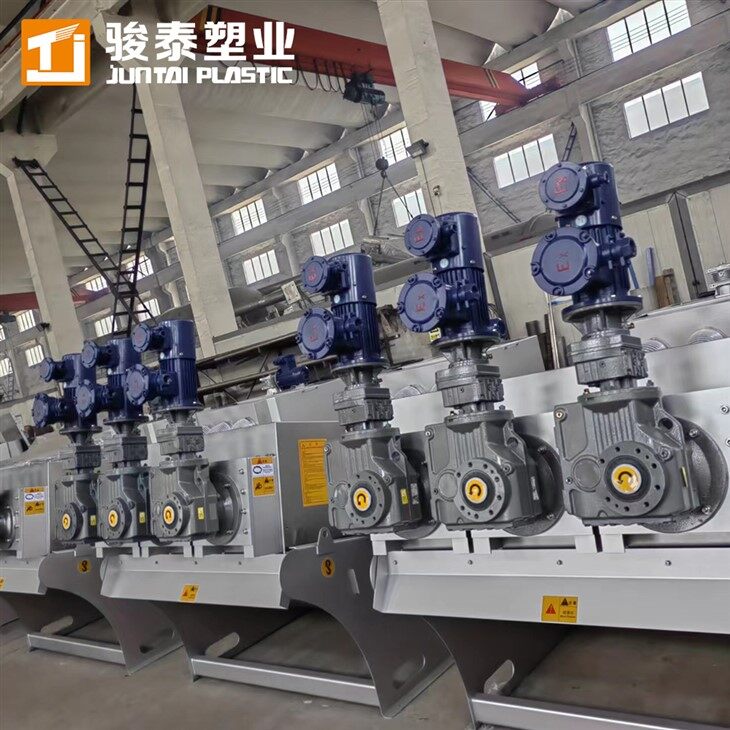
06 From Our Factory

▬ Production line


