



Why Material Choice Makes or Breaks a Tube Settler Installation
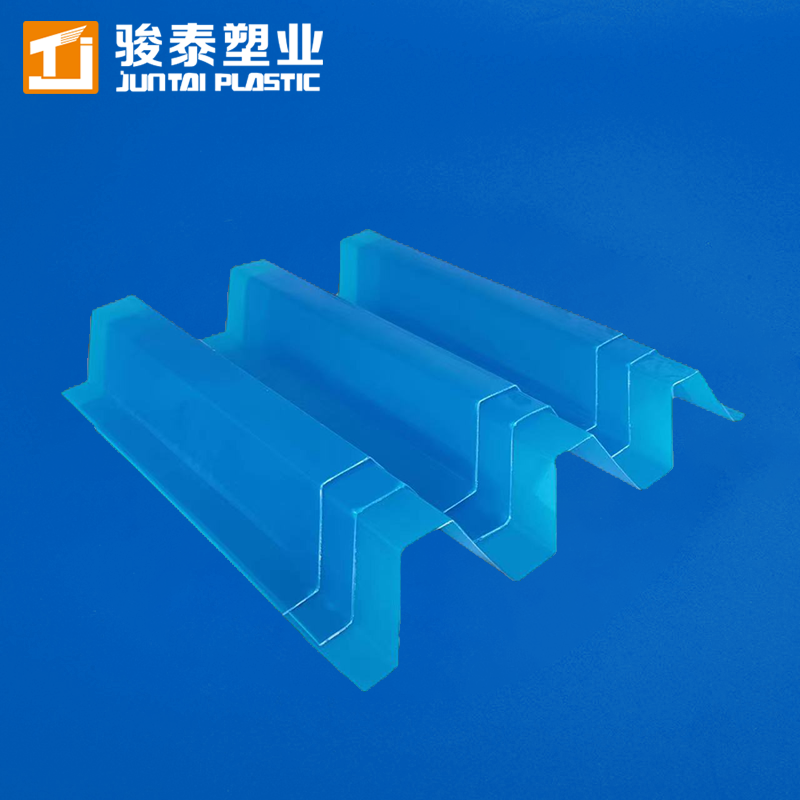
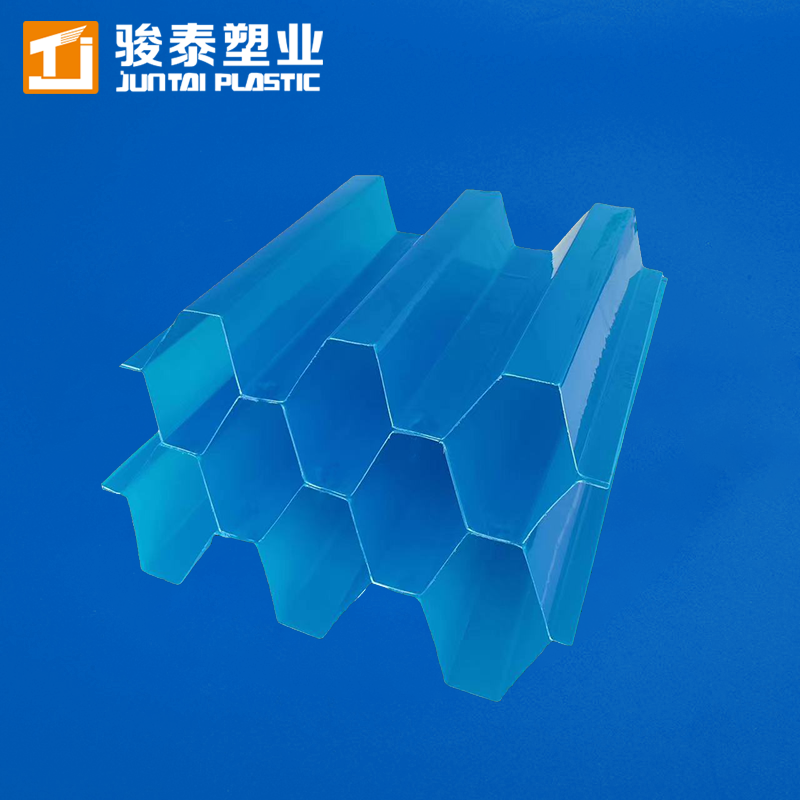
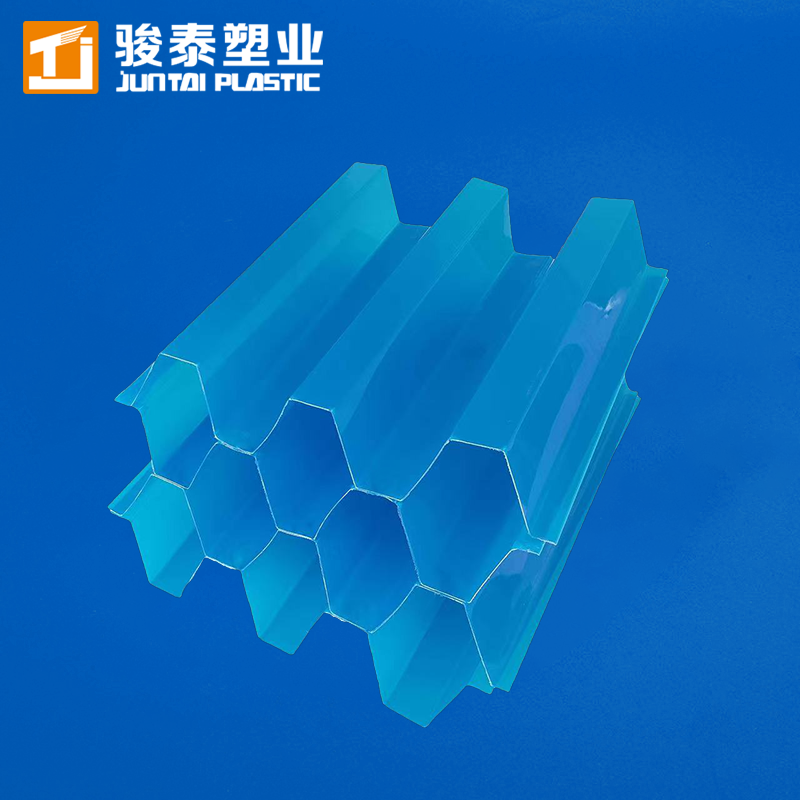
Most tube settler media looks similar at first glance - hexagonal channels, 60° incline, modular panels. The difference that determines whether your system lasts 5 years or 20 is the material. PVC and PP are the two dominant polymers used in lamella clarification, but they perform very differently when exposed to real-world wastewater conditions.
PP (polypropylene) works well in mild municipal applications - neutral pH, ambient temperature, covered basins. But when the water carries oxidising disinfectants, swings between strong acids and caustic cleaning chemicals, runs hot from industrial processes, or sits under equatorial UV exposure in an open tank, PVC is the engineering answer. PVC's intrinsic chlorine content (56.8% by weight) gives it natural chemical resistance and fire retardancy that PP can only approximate with additive coatings - coatings that degrade, leach, and fail over time.
The choice is not about which polymer is "better" in the abstract. It is about matching the material to the mission. This page is for the applications where PVC is unambiguously the right call.
PVC vs PP: Head-to-Head Material Comparison
| Property | PVC Tube Settler | PP Tube Settler |
| Chemical Tolerance (pH) | pH 1–13 - full-range acid-to-caustic stability | pH 2–12 - narrower window, degraded by strong oxidisers |
| Tensile Strength (ASTM D638) | ≥ 45 MPa - superior structural rigidity, less deflection under load | ~30 MPa - more flexible, may require thicker sheets for equivalent stiffness |
| Max. Continuous Temperature | 60°C (140°F) - handles hot CIP washdown, textile effluent, food processing | 40–50°C (104–122°F) - softens and deforms above this range |
| Heat Distortion Temperature | 65°C (149°F) | 110°C (230°F) - PP wins here for truly hot processes |
| UV Resistance Mechanism | Intrinsic TiO₂ stabilisers compounded into resin - never wears off | Carbon-black surface coating - erodes over 8–10 years, then base polymer degrades |
| Outdoor Service Life | 15+ years - proven in tropical, desert, and coastal installations | 8–10 years outdoors - after which UV embrittlement begins |
| Oxidising Agent Resistance | Excellent - handles Cl₂, H₂O₂, O₃ at typical treatment doses without degradation | Poor - oxidative chain scission causes embrittlement within 2–3 years |
| Oil & Hydrocarbon Resistance | Good - minimal swelling in oily wastewater, refinery effluent | Moderate - absorbs hydrocarbons, swells, loses mechanical strength |
| Fire Rating | UL 94 V-0 - self-extinguishing, intrinsic chlorine acts as flame retardant | UL 94 HB - combustible, burns with dripping |
| Density | 1.38–1.42 g/cm³ - heavier panels, more rigid, stays put in turbulent flow | 0.90–0.91 g/cm³ - lighter, easier handling during installation |
| Potable Water Certification | WRAS, NSF/ANSI 61 - full drinking water contact approval | NSF/ANSI 51 (food equipment) - not specifically for potable water contact |
| Surface Smoothness (Ra) | 0.4–0.6 μm - smoother surface, better sludge sliding, less biofilm adhesion | 0.8–1.2 μm - rougher surface, more frequent cleaning needed |
PVC Chemical Resistance: What It Handles That PP Cannot
PVC's molecular structure - with chlorine atoms bonded to the polymer backbone at 56.8% by weight - gives it inherent resistance to chemicals that attack PP's pure hydrocarbon chain. Here is what that means in practice across seven common water treatment chemical environments:
| Chemical / Environment | PVC Performance | PP Performance | Recommended Material |
| Chlorine (Cl₂) Municipal disinfection residual, ≤ 10 mg/L |
Excellent No degradation at typical dosing |
Poor Embrittlement within 2–3 years |
PVC |
| Sulfuric Acid (H₂SO₄) Mining, steel pickling, pH adjustment |
Excellent Up to 80% conc. at 60°C |
Limited Not recommended above 50% conc. |
PVC |
| Hydrochloric Acid (HCl) Chemical processing, resin regeneration |
Excellent All concentrations at 60°C |
Limited Fuming HCl attacks PP surface |
PVC |
| Hydrogen Peroxide (H₂O₂) Advanced oxidation processes, Fenton treatment |
Good Up to 30% at 40°C |
Poor Rapid oxidative chain scission |
PVC |
| Sodium Hydroxide (NaOH) CIP cleaning, pH neutralisation |
Excellent Up to 50% at 60°C |
Excellent Similar performance |
Either |
| Ozone (O₃) Tertiary treatment, micropollutant removal |
Good Resistant to dissolved O₃ at typical dosing |
Poor Severe cracking within months |
PVC |
| Seawater / Brine Desalination pre-treatment, coastal plants |
Excellent No effect at any salinity |
Excellent Similar performance |
Either |
Technical Specifications
| Parameter | Specification |
| Material Grade | Rigid uPVC (unplasticised), UV-stabilised with TiO₂ |
| Channel Geometry | Hexagonal (honeycomb), counter-current flow, 60° inclination |
| Available Channel Diameters | φ25 mm / φ35 mm / φ50 mm / φ80 mm |
| Specific Surface Area | ~139 / ~109 / ~87 / ~50 m²/m³ (φ25/35/50/80 mm respectively) |
| Module Dimensions (L × W × H) | 1,000 × 1,000 × 866 mm (standard); custom sizes available on request |
| Sheet Thickness | 0.5–0.8 mm (±0.05 mm tolerance) |
| Inclination Angle | 60° - optimal balance of settling area projection and solids sliding |
| TSS Removal Efficiency | ≥ 92% (influent ≤ 1,500 mg/L TSS) |
| Hydraulic Retention Time | 15–30 minutes (vs 1–4 hours for conventional sedimentation) |
| Surface Loading Rate (Municipal) | 0.8–2.5 m³/h·m² |
| Surface Loading Rate (Industrial) | 1.5–6.0 m³/h·m² |
| Continuous Operating Temperature | 60 °C (140 °F); short-term peak 70 °C (158 °F) |
| Chemical Tolerance | pH 1–13; resistant to most mineral acids, alkalis, oxidising agents, and salt solutions |
| Density | 1.38–1.42 g/cm³ |
| Tensile Strength (ASTM D638) | ≥ 45 MPa |
| Service Life | 15+ years outdoor; 20+ years in covered basins |
| Certifications | WRAS (BS 6920), NSF/ANSI 61, ISO 9001:2015, CE Marked |
| Flow Regime | Laminar (Reynolds number < 500) - zero turbulent re-entrainment |
| Assembly Method | Tongue-and-groove interlocking; solvent-cement welding or silicone gasket seal |
| Support Frame | 304/316L stainless steel or FRP beam system - included with media supply |
| Colour | White (standard); custom colours available on request |
Application Scenarios: When PVC Is the Right Choice
PP tube settlers are adequate for mild municipal duty. But if any of these six conditions describe your project, specify PVC:
| Industry | Typical Configuration | Why PVC Is the Right Material Here |
| Chemical & Petrochemical | φ50–80 mm, PVC, heavy-gauge 0.8 mm sheet | Acidic effluent neutralisation, solvent-contaminated wastewater, refinery API separator effluent. PVC handles HCl, H₂SO₄, and hydrocarbon mixtures that degrade PP within 3–5 years. |
| Mining & Mineral Processing | φ50–80 mm, PVC, 0.8–1.0 mm sheet | Acid mine drainage (pH as low as 2.0), tailings pond overflow with 15% solids, copper/gold leaching circuit effluent. PVC's 45 MPa tensile strength withstands abrasive slurry when PP would erode. |
| Desalination Pre-Treatment | φ25–35 mm, PVC, WRAS-certified | RO feed water clarification, brine concentrator pre-settling. PVC's chlorine resistance is essential when the seawater intake carries residual disinfectant. WRAS/NSF 61 certified for potable water contact. |
| Food & Beverage Processing | φ35–50 mm, PVC, 0.6–0.8 mm sheet | CIP washdown effluent at 60°C, brewery wastewater with pH swings from 3 to 11, dairy processing with fats and oils. PVC maintains structural integrity at CIP cleaning temperatures where PP softens. |
| Tropical & Coastal Outdoor Plants | φ35–50 mm, PVC, 316L SS frame | Open clarifier basins in Southeast Asia, Middle East, Africa, Latin America. PVC's intrinsic TiO₂ UV stabilisers never wear off - unlike PP's carbon-black surface coating that fades within 8 years under equatorial sun. Specify 316L stainless steel support frames for coastal salt spray. |
| Municipal Drinking Water | φ25–35 mm, PVC, NSF 61-listed | Surface water treatment plants using chlorine, ozone, or chlorine dioxide disinfection. PVC is the gold-standard material for potable water contact with full WRAS and NSF/ANSI 61 certification. No phthalates, no BPA, no leaching. Compatible with all common disinfectants. |
Key Advantages of Juntai PVC Tube Settlers
|
♦
Intrinsic UV Protection - Not a Coating
TiO₂ stabilisers are compounded into the PVC resin itself during extrusion, not applied as a surface coating. Result: 15+ years of outdoor service with zero degradation of UV protection. Compare to PP's carbon-black coating that erodes from the surface within 8–10 years, exposing raw polymer to UV embrittlement.
|
♦
pH 1–13 Chemical Tolerance
From concentrated sulfuric acid to hot caustic soda, PVC maintains structural integrity across the full pH spectrum. No other commodity polymer used in tube settlers matches this chemical window. Essential for industrial wastewater where influent composition changes daily.
|
♦
60°C Continuous Duty Rating
PVC tube settlers handle hot CIP washdown from food plants, textile dyeing effluent at 55°C, and chemical process discharge at up to 60°C continuous - operating conditions where PP softens and deforms. Short-term tolerance extends to 70°C for process upsets.
|
♦
Smoother Surface, Less Fouling
PVC's Ra 0.4–0.6 μm surface finish is 2–3× smoother than PP (Ra 0.8–1.2 μm). Smoother channels mean better sludge sliding at the 60° incline, less biofilm adhesion, and longer intervals between cleaning cycles. Every 0.1 μm of smoothness translates to measurable maintenance savings over 15 years.
|
Installation & Engineering Support
|
1
Engineering Review
Send us your basin dimensions, design flow, and water chemistry data. Our engineers return a sized PVC tube settler recommendation - diameter, module count, support frame layout - within 24 hours. Free of charge. Chemical compatibility verification included.
|
2
Factory Assembly & QC
PVC modules are pre-assembled and inspected at our Anhui factory. Each batch is tested for channel geometry (±0.5 mm), bond integrity, TiO₂ dispersion (spectrophotometer verification), and dimensional tolerance before palletising for export.
|
3
On-Site Installation
Tongue-and-groove PVC panels lock together without special tools. Standard retrofit: 2–5 days from crate to commissioning. Installation drawings, supervisor support, and remote video guidance available. Local Bahasa/English technical support for ASEAN projects.
|
4
Commissioning & Warranty
48-hour monitored startup verifies flow distribution, sludge discharge, and effluent TSS. 15+ year design life backed by material warranty. Replacement PVC panels available individually - no full system swap. 18-month recommended maintenance cycle.
|
Frequently Asked Questions
Q: Why choose PVC tube settlers over PP?
PVC offers superior chemical resistance (pH 1–13 vs PP's pH 2–12), higher tensile strength (≥45 MPa vs ~30 MPa), and 15+ year intrinsic UV stability without surface coatings that can wear off. PVC is the clear choice for aggressive chemical environments, high-temperature applications up to 60°C, and outdoor installations with intense sun exposure. PP remains a cost-effective option for mild municipal applications only - covered basins, neutral pH, ambient temperature.
Q: What chemicals can PVC tube settlers handle that PP cannot?
PVC handles strong oxidising agents - chlorine, hydrogen peroxide, and ozone - that cause rapid embrittlement and chain scission in PP. It also withstands concentrated mineral acids (sulfuric, hydrochloric, nitric) at higher temperatures and concentrations than PP can tolerate. PVC is more resistant to oils, greases, and hydrocarbon solvents commonly found in industrial wastewater. The chlorine atoms in PVC's molecular backbone (56.8% by weight) provide this resistance intrinsically - not through additives that leach out.
Q: How long do PVC tube settlers last outdoors?
Juntai PVC tube settlers are rated for 15+ years of continuous outdoor service. The TiO₂ UV stabilisers are compounded into the PVC resin itself - not applied as a surface coating - so UV protection never degrades or washes off. This contrasts with PP media, where the carbon-black surface coating typically erodes after 8–10 years, exposing the underlying polymer to UV embrittlement that causes cracking within another 1–2 years. In covered basins, PVC tube settlers last 20+ years.
Q: Are PVC tube settlers safe for drinking water?
Yes. Juntai PVC tube settler media is certified to WRAS (BS 6920) and NSF/ANSI 61 standards for contact with potable water. Our rigid uPVC formulation contains no plasticisers, no phthalates, no BPA, and no heavy-metal stabilisers. The material meets the requirements of the EU Drinking Water Directive 2020/2184 and is approved for use in municipal water treatment plants worldwide. PVC is fully compatible with chlorine, chloramine, ozone, and chlorine dioxide disinfection.
Q: Can PVC tube settlers handle high-temperature wastewater?
Yes. Juntai PVC tube settlers operate continuously at 60°C (140°F) with short-term tolerance up to 70°C (158°F). This makes PVC the recommended material for textile dyeing effluent (typically 45–55°C), food processing CIP wastewater (up to 60°C), and chemical manufacturing discharge - applications where effluent temperatures routinely exceed 40°C and PP media would soften, deform, and lose structural integrity.
Q: What is the price of PVC tube settlers in Southeast Asia?
PVC tube settler pricing starts at approximately $19.8/m² FOB for standard 50 mm channel modules (MOQ 100 m²), with delivery to major ASEAN ports including Jakarta, Surabaya, Manila, and Bangkok. Volume pricing applies for orders above 500 m². Shipping is via humidity-controlled containers to prevent any moisture-related issues during transit. Contact Juntai for a project-specific quotation including freight to your destination port - our Bahasa/English sales team responds within 24 hours.
Tell us your flow rate, basin dimensions, and water quality data. Our engineers verify chemical compatibility, recommend the right channel diameter, and provide a complete quotation. Free of charge. No obligation. 500+ installations in 40+ countries.
| Email Your Specs | WhatsApp: +86 13600513715 | Online Inquiry Form |


