


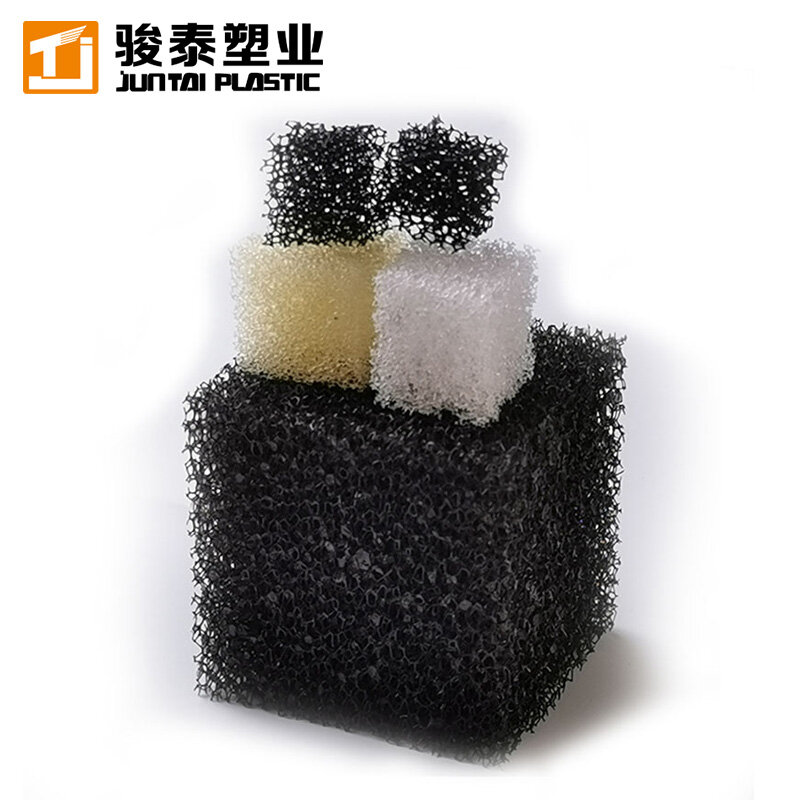
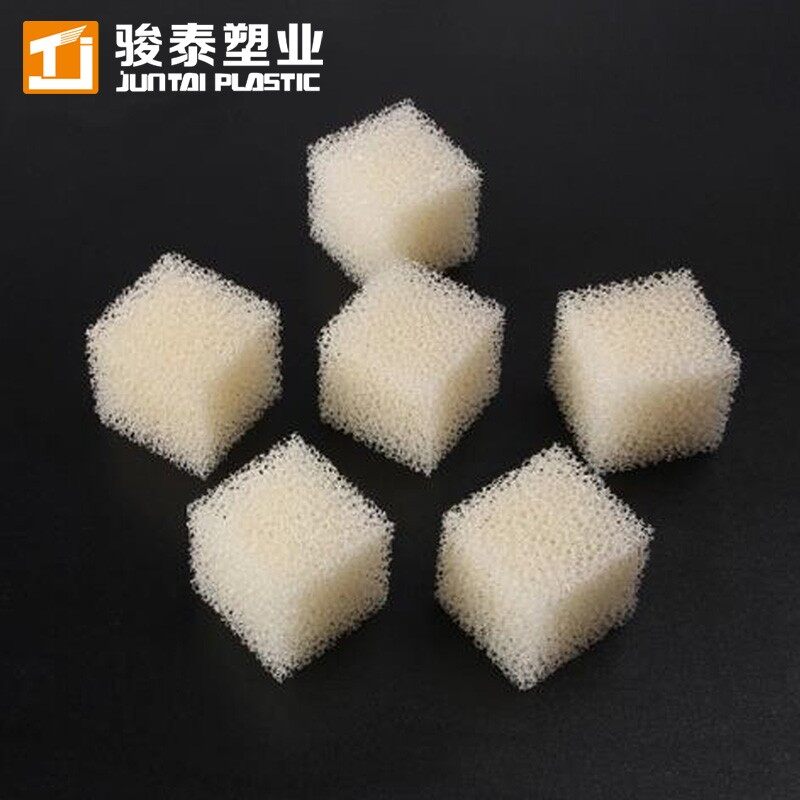
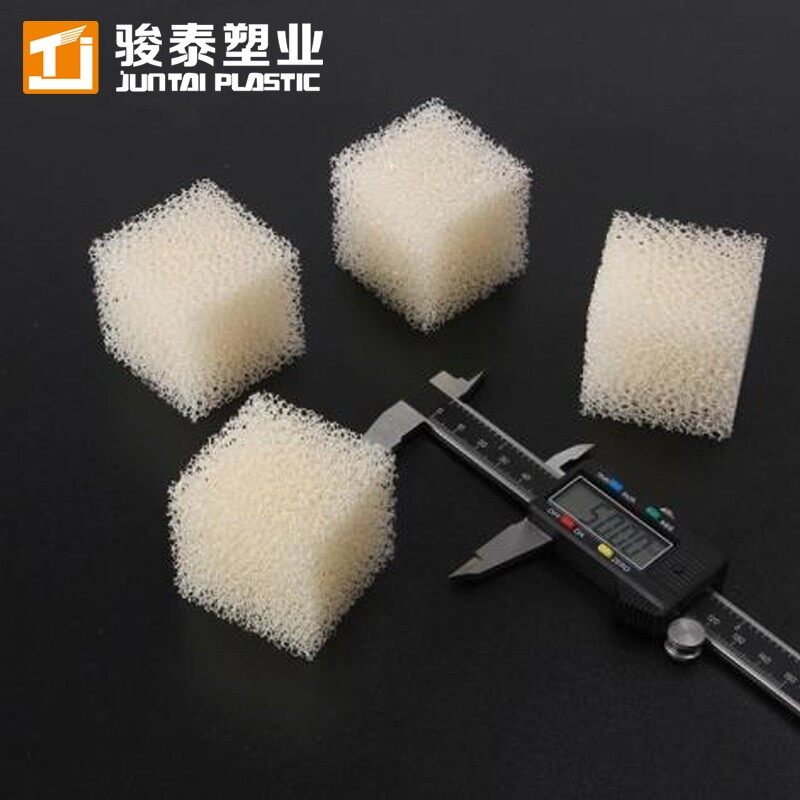
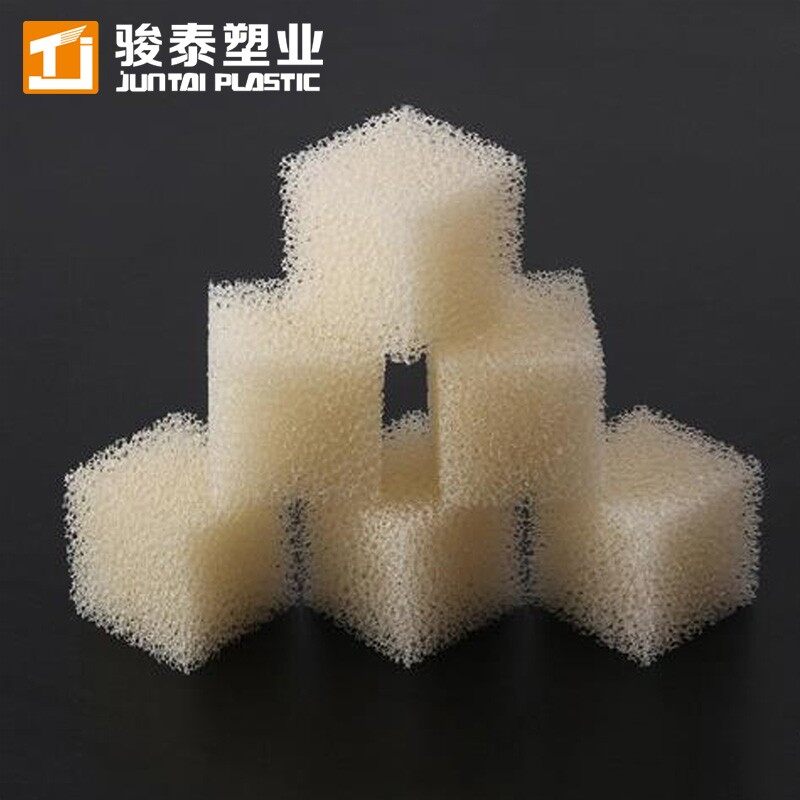
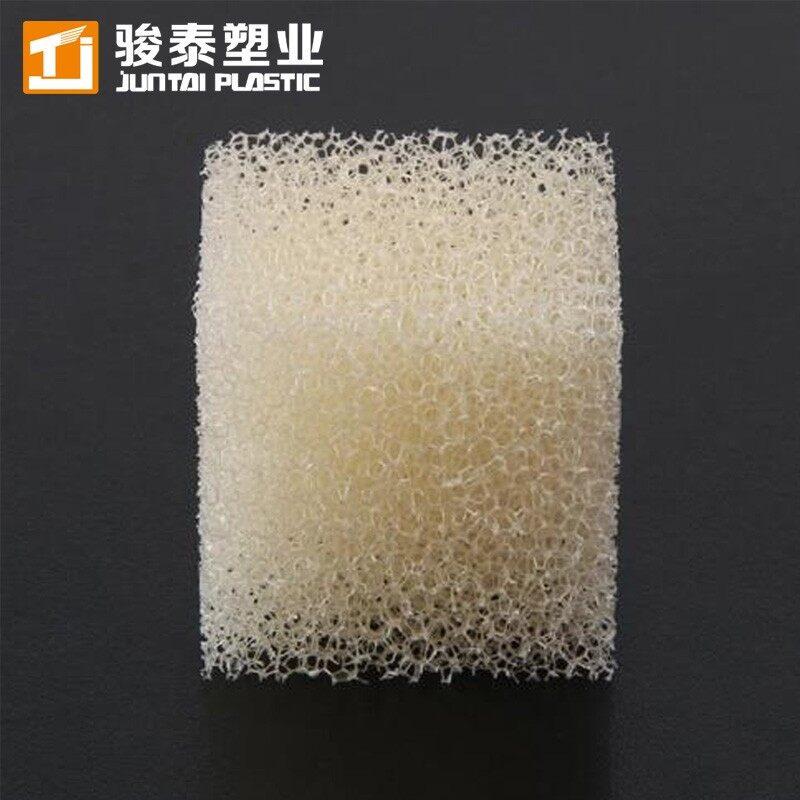
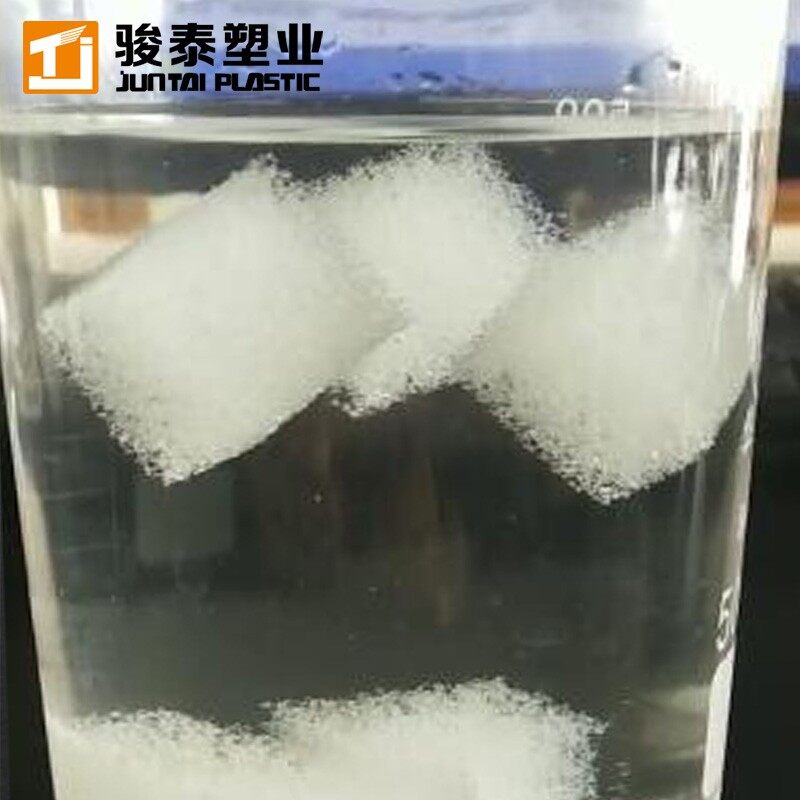

▬ Main product view
01 Why Operators Switch to HPU & PU Bio-Fillers
Conventional plastic MBBR carriers only give biofilm a thin outer surface to cling to - biomass washes out under load, oxygen transfer drops and operators end up running extra aeration to compensate. Juntai HPU & PU bio-fillers break that cycle: their open-cell polyurethane matrix physically entraps microorganisms, shears air bubbles into finer sizes and sustains a dense, active biofilm even under shock loads.
|
1.7x
Rapid Water Absorption
HPU media expands to about 1.7 times its dry volume when wetted and sinks within minutes - fast, reliable startup with no pre-soaking and no floating media.
|
>3,400
m2/m3 Surface Area
Macropores keep gas-liquid-solid contact stable while micropores trap biomass, maximizing space utilization and eliminating biofilm dead zones.
|
600–1300
gNH3-N/m3.d Load
Hydrophilic amino, carboxyl and epoxy groups accelerate colonization, supporting high volumetric nitrogen loading and greater treatment capacity per cubic meter.
|
96%
Porosity & Efficiency
Moving HPU media shears air bubbles finer under three-phase flow, raising oxygen transfer efficiency and lowering aeration energy demand.
|
02 Technical Specifications
|
▬ Cross-section & grid layout |

03 HPU Bio-Filler vs Conventional Carriers
The table below compares HPU sponge media with conventional plastic MBBR carriers on the factors that decide biological treatment performance and operating cost. HPU entraps biomass inside its foam matrix instead of relying on exposed channel surfaces.
|
Carrier
|
Surface area
|
Biofilm retention
|
Startup
|
Best for
|
|
HPU sponge bio-filler
|
>3,400 m²/m³
|
Entrapped in open pores
|
5–30 days biofilm
|
High-strength WW, SND, river remediation
|
|
HDPE plastic carrier
|
Lower than sponge
|
Attached to channel surface
|
Slower colonization
|
Municipal STP, BOD removal
|
|
Standard PU foam (hydrophobic)
|
High but poorly wetted
|
Weak - water repelled
|
Slow, unreliable
|
Limited biofilm applications
|
04 HPU Bio-Filler Application Guidance
HPU bio-filler is supplied as 30×30×30 mm polyurethane cubes with one proven chemistry - how you deploy it depends on whether the tank is aerobic or anaerobic.
05 Application Scenarios
|
Municipal Wastewater Treatment
Aerobic MBBR basins and biological treatment trains where high surface area and rapid biofilm startup lift BOD and COD removal.
High-Load Industrial Effluent
Food, dairy, chemical and pharmaceutical wastewater with variable organic loads that overwhelm conventional carriers.
Anaerobic & Bio-Ball Hybrid
Anaerobic tanks where HPU media is combined with bio balls and vesuvianite to keep the media submerged and working.
Aquaculture & RAS
Moving-bed biofilters for fish farms - high NH3-N removal with gentle media that will not injure stock.
|
▬ Typical field application |

06 From Our Factory

▬ Production line


