

Juntai MBBR + Aeration + Drum Filter: Efficient Vannamei Shrimp Intensive Culture
Vannamei Shrimp is the most widely cultivated shrimp species in the world. With the advantages of fast growth, high feed conversion rate and excellent meat quality, it has become the core species of intensive aquaculture in China. However, under high-density culture, water quality problems such as accumulation of residual feed and feces, excessive ammonia nitrogen and nitrite, and insufficient dissolved oxygen occur frequently, which are likely to cause shrimp stress and disease, affecting breeding benefits.

To solve this pain point, the "golden combination" of microfilter + MBBR (Moving Bed Biofilm Reactor) + high-efficiency aeration system can realize integrated regulation of physical filtration, biological purification and full-process aeration, comprehensively protect water quality stability, and help farmers improve quality and efficiency.
In Vannamei Shrimp culture, the microfilter is the "first line of defense" for water quality regulation. Vannamei Shrimp has low oxygen tolerance and is sensitive to water quality, and the body surface of juvenile shrimp is fragile and vulnerable to scratches and infections by impurities. With a customizable filter mesh of 30-80μm, the microfilter can efficiently intercept large-particle impurities such as shrimp feces, residual feed and molting debris, with an interception efficiency of more than 90%. Pure physical filtration has no secondary pollution, which can not only reduce turbidity and keep water transparent, promote the growth of beneficial algae to provide natural bait, but also reduce the production of toxic substances from the source, avoid risks such as shrimp stress and vibriosis, and improve the survival rate of fry and the quality of adult shrimp.

A single Drum filter cannot remove soluble pollutants such as ammonia nitrogen and nitrite, while the MBBR process can form a dual guarantee of "physical interception + biological degradation" to achieve in-depth purification.

The MBBR reactor receives the water filtered by the microfilter, with multiple models available for adaptation. Its porous suspended filler (specific surface area ≥ 1200m²/m³) can provide an attachment carrier for beneficial microorganisms to form a biofilm, efficiently degrade toxic substances, and stabilize water quality indicators within the suitable range for shrimp (ammonia nitrogen ≤ 0.5mg/L, nitrite ≤ 0.1mg/L). At the same time, the pre-filtration of the microfilter can avoid clogging of MBBR filler by impurities, reduce operational load, and extend the service life of the filler.
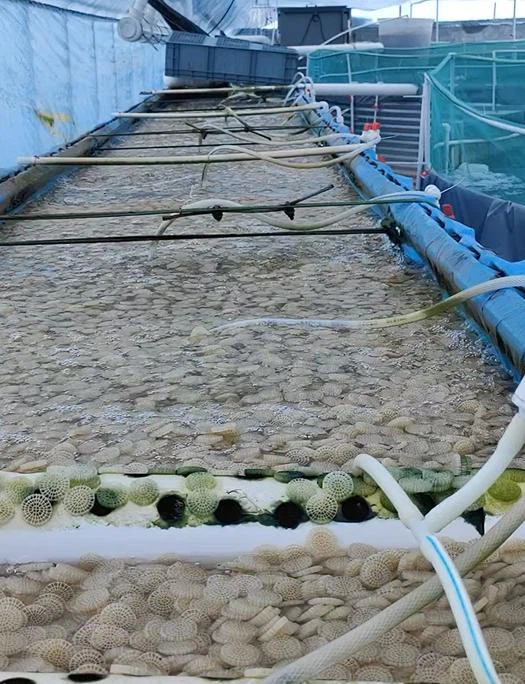
The high-efficiency aeration system is the "power core" of the entire system and the "oxygen supply guarantee" for shrimp, which works synergistically with the previous two to achieve an effect of 1+1+1>3. Vannamei Shrimp has high demand for dissolved oxygen. The aeration system uses micro-porous nano aeration pipes to increase the oxygen utilization rate to 30%-40%, continuously supply oxygen to prevent floating heads, and inhibit the reproduction of anaerobic bacteria. Its water flow disturbance can fully fluidize the MBBR filler, improve degradation efficiency, and promote the sedimentation and discharge of impurities to form a closed-loop cycle; combined with intelligent frequency conversion control, it saves more than 30% energy compared with traditional equipment, reducing energy consumption costs.
In actual breeding, the advantages of this collaborative system are prominent: after being equipped in an intensive tilapia base in Anhui, the breeding density increased from 80 shrimps/㎡ to 120 shrimps/㎡, the survival rate of fry exceeded 95%, and the comprehensive benefit increased by 25%-30%; the land-based circular pond project in India realized the recycling of breeding water, with the daily water discharge accounting for only 2.8% of the total water volume, which is in line with the green breeding policy.
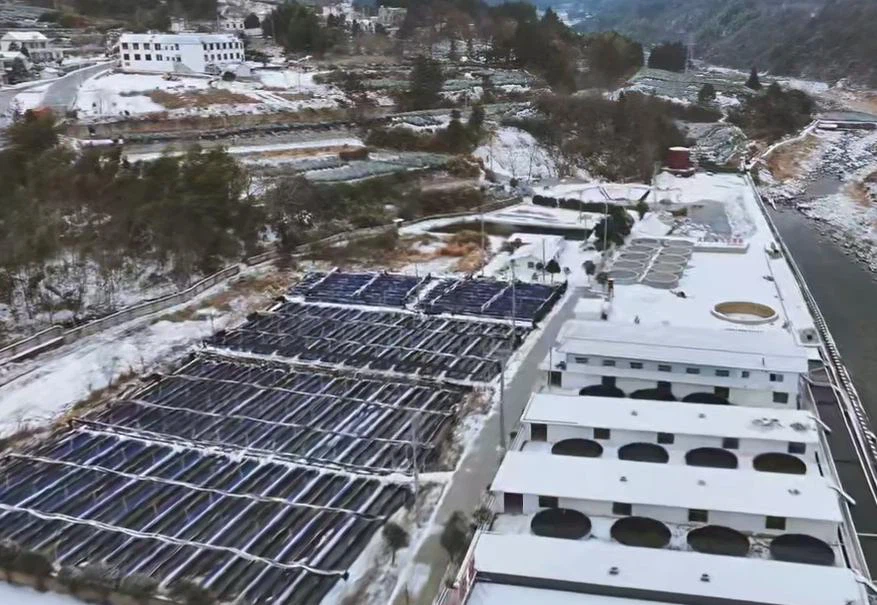
This system is modularly combined, and its parameters can be flexibly adjusted according to the breeding scale and stage, adapting to various scenarios such as industrialized and land-based circular pond culture; the intelligent control system can real-time monitor water quality and automatically adjust parameters, without 24-hour manual on duty, greatly saving labor.
At present, Vannamei Shrimp culture is transforming towards intensification and greenization, and water quality regulation is the key. The microfilter, MBBR and aeration work together to solve breeding pain points and help save water, reduce emissions, improve quality and increase efficiency. Whether it is a new breeding project or the upgrading of an existing system, we can provide customized solutions and one-stop services to help farmers unlock a new path of efficient breeding and achieve a win-win situation of ecological development and considerable benefits.