


Coal washing wastewater carries 500-700 mg/L of suspended solids, fine coal dust, and clay that conventional sedimentation tanks simply cannot settle fast enough. A coal processing plant in Central Asia proved the fix: after installing PP hexagonal tube settlers, effluent SS dropped from 150-250 mg/L to below 40 mg/L (over 90% removal), settling time fell from 120 minutes to 35, and coal recovery climbed to 88-90% - turning a compliance burden into a revenue stream.
Why Coal Washing Wastewater Is Hard To Treat
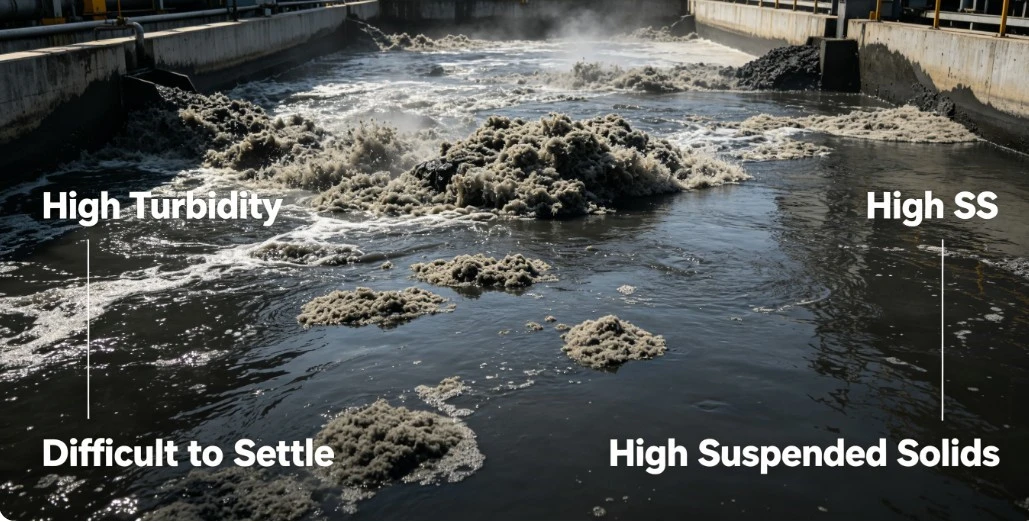
Coal washing produces a slurry of fine particles that behave nothing like municipal sewage. The suspended solids are small, abrasive, and slow to settle, while clay colloids add viscosity that suppresses particle collision and floc growth. In a plain sedimentation tank, these particles need long residence times to drop out - and even then, the effluent stays turbid.
This combination of high SS, fine particle size, and difficult sedimentation is exactly the scenario where lamella technology excels. Tube settlers multiply the effective settling area within a compact footprint, allowing particles to slide down short inclined channels instead of falling the full height of a deep tank.
Project Overview And Wastewater Characteristics
Located in a coal processing plant in Central Asia, this project treats 1,200 m3/day of washing water. The raw wastewater profile is demanding:
- SS concentration: 500-700 mg/L
- Fine particles: coal dust and clay
- High turbidity and viscosity
The high viscosity is a hidden challenge: it slows particle settling and makes even well-flocculated solids behave sluggishly. Any solution had to overcome both the solids load and the fluid properties.
Limitations Of Conventional Sedimentation
Before the upgrade, the plant relied on a traditional sedimentation tank that struggled on four fronts:
- Long sedimentation time of ≥120 minutes, forcing a huge tank footprint
- Effluent SS remaining high at 150-250 mg/L
- Coal recovery rate of only about 68%, wasting valuable product
- Frequent sludge accumulation requiring manual cleaning and downtime
These limitations produced both environmental risk and economic loss: solids discharged into receiving water, while recoverable coal was flushed away with the overflow.
Tube Settler System Design
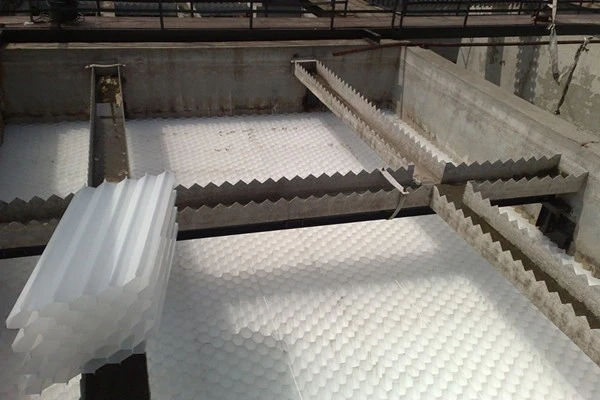
In 2024, the plant upgraded its sedimentation stage by installing a tube settler module. The design was selected to maximize particle capture while keeping the footprint compact:
| Parameter | Design Value |
| Tube Type | Hexagonal inclined tubes |
| Material | PP (anti-fouling design) |
| Inclination Angle | 60 degrees |
| Installation Area | 120 m2 |
| Hydraulic Retention Time | 30-40 minutes |
The 60-degree inclination lets settled solids slide continuously down the tube walls into the sludge hopper, while the hexagonal geometry maximizes wetted surface area per square meter. In parallel, the plant optimized its flocculation process upstream to enhance particle aggregation before water enters the settler - critical for capturing the finest clay and coal dust.
Performance Results: Before Vs After
| Indicator | Before | After | Improvement |
| Influent SS (mg/L) | 500-700 | 500-700 | - |
| Effluent SS (mg/L) | 150-250 | ≤40 | >90% removal |
| Settling Time (min) | ≥120 | 35 | -70% |
| Coal Recovery Rate (%) | 68% | 88-90% | +20% |

Environmental And Economic Benefits
The upgraded system delivered results on both sides of the balance sheet. Environmentally, the reduction in effluent SS ensured the plant met discharge standards, cutting the risk of fines and downstream contamination. Economically, the jump in coal recovery from 68% to 88-90% put saleable product back into the plant instead of the tailings pond.
The 70% shorter sedimentation time brought an additional hidden benefit: because water clears faster, the system footprint can be far more compact. That translates into lower civil construction costs, simpler operation, and reduced maintenance - fewer manual cleaning events and less sludge handling burden.
Conclusion
This case confirms that tube settlers are highly effective for treating high-SS industrial wastewater. They do more than clean water - they create economic value through resource recovery. For coal washing plants and other high-solids industries, a tube settler system is a practical, fast-payback path to compliance and profit.
Recover 90% of Coal From Wash Water
Hexagonal PP tube settlers cut SS 90%+, sped settling from 120 to 35 minutes, and lifted coal recovery to 90%. Juntai tube settlers handle high-turbidity industrial flows.