
|
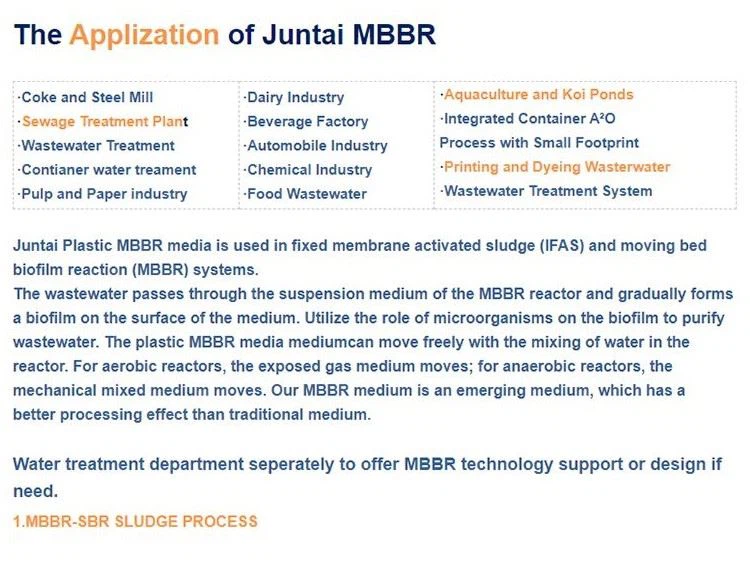
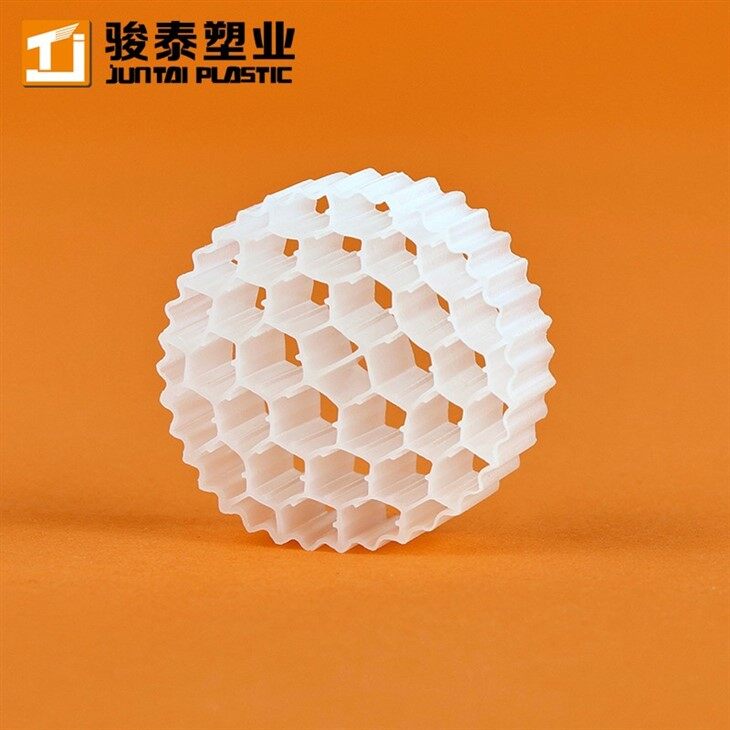
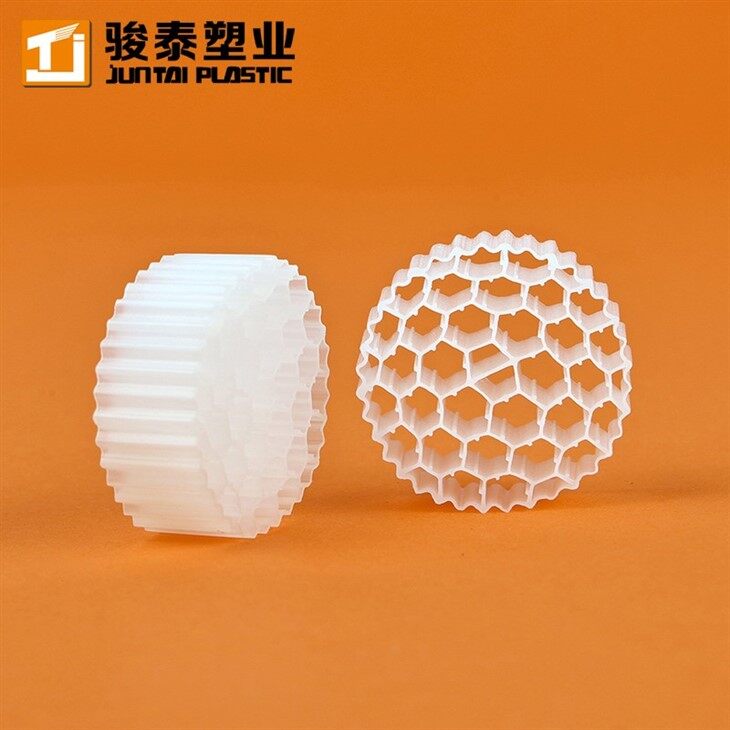
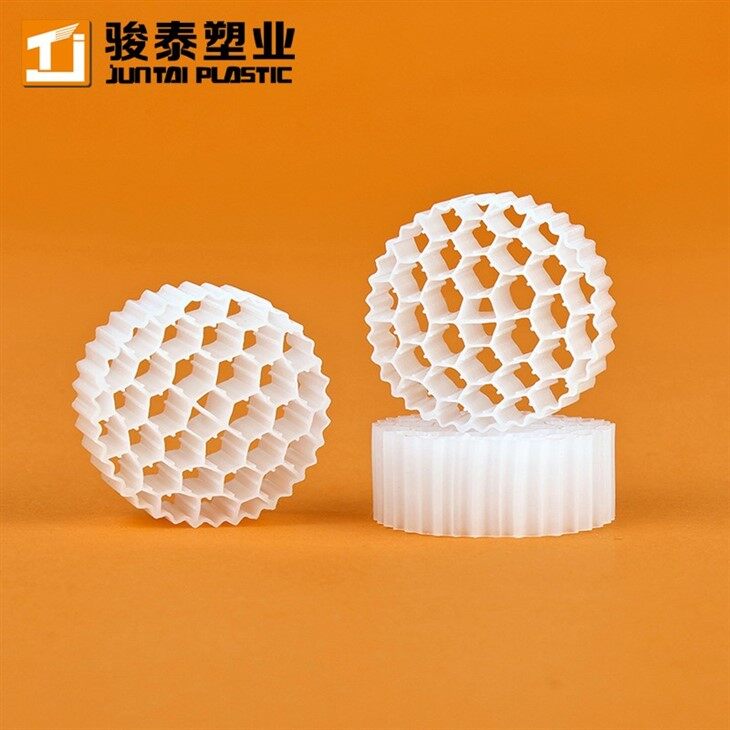
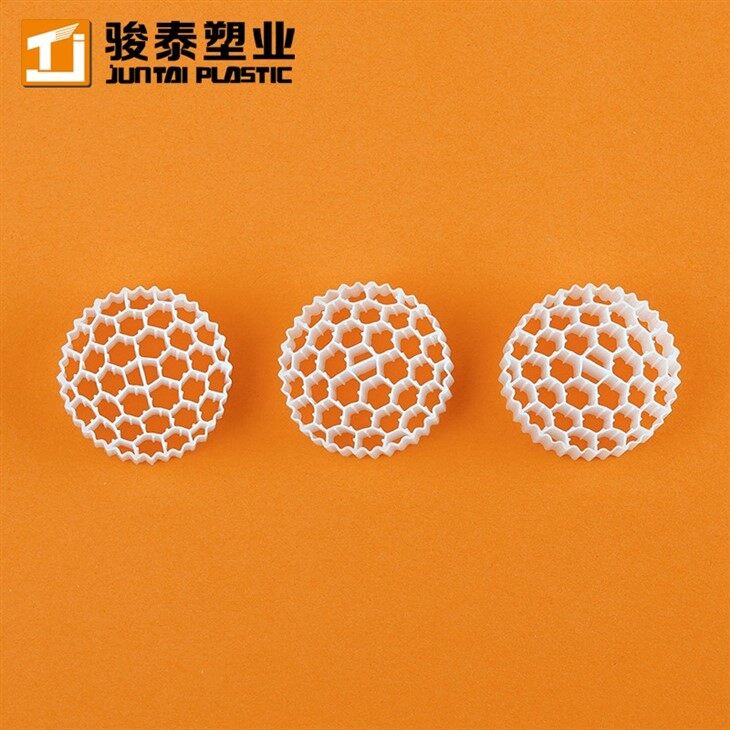
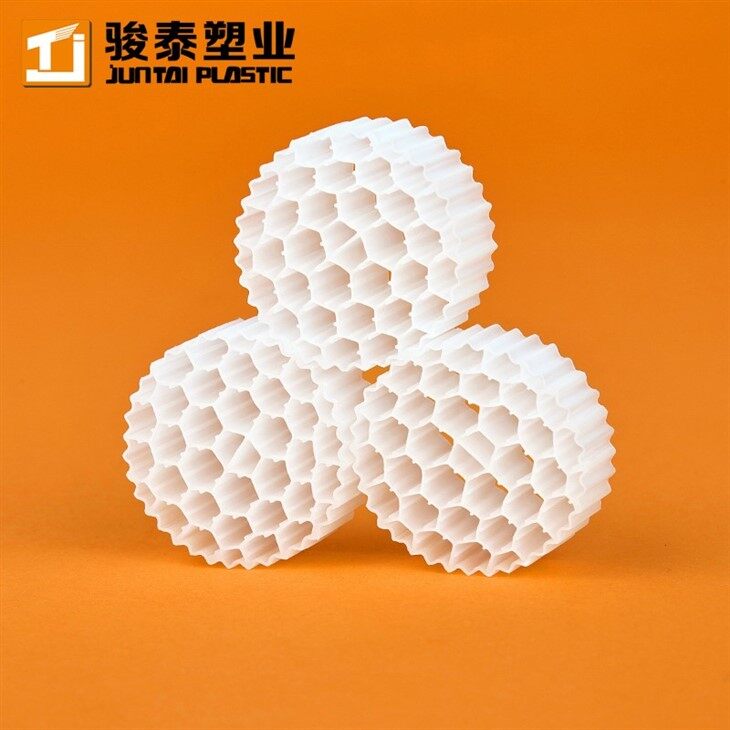
Type: |
MBBR38 |
|
Size: |
Φ25*10mm |
|
Hole: |
38rooms |
|
Surface Area: |
800m2/m3 |
|
Porosity: |
85% |
|
Material: |
HDPE |
Application
- Municipal Wastewater Treatment
- Industrial Wastewater Treatment
- Aquaculture Wastewater Treatment
- Mining Wastewater
- Brewery Wastewater Treatment
- Electronics Industry Wastewater Treatment
- Juice Processing Wastewater
- Textile Wastewater
- Dyeing Wastewater
- Hotel Wastewater Treatment
- Resort Wastewater Treatment
- Plastic Processing Wastewater
- Rubber Production Wastewater
Factors affecting biofilm formation
Biofilm formation is related to the carrier surface properties (carrier surface hydrophilicity, surface charge, surface chemical composition and surface roughness), microbial properties (microbial species, cultivation conditions, activity and concentration) and environmental factors (pH, ionic strength, hydraulic shear, temperature, nutrient conditions and contact time between microbes and carriers).
The carrier surface chargeability, roughness, particle size and carrier concentration directly affect the attachment and formation of biofilm on its surface. Under the normal growth environment, microorganisms have a negative charge on their surface. If the carrier surface can be made positively charged by certain improvement techniques, such as chemical oxidation, low temperature plasma treatment, etc., the attachment and formation of microorganisms on the carrier surface can be made easier. The roughness of the carrier surface is favorable for bacteria to attach and immobilize on its surface.
On the one hand, compared with the smooth surface, the rough carrier surface increases the effective contact area between the bacteria and the carrier; on the other hand, the rough part of the carrier surface, such as holes, cracks, etc., plays a shielding and protective role for the attached bacteria, so that they are protected from the scouring of the hydraulic shear force.
It is believed that, compared with the large particle size carriers, the mutual friction between the small particle size carriers is small and the specific surface area is large, thus it is easier to generate biofilm. In addition, the carrier concentration is also important for the biofilm hanging in the reactor, Wagner in the treatment of difficult to degrade wastewater with airlift reactor found that in the carrier mass concentration is very low, even if the biofilm thickness of 295 μm, but still can not achieve a stable removal rate. However, at carrier concentrations of 20-30 g/L, even if only 20% of the carriers had 75 μn thick biofilms, the reactor was still able to achieve a stable (98%) removal rate, with a COD load of up to 58 kg/(m3-d).
Product Advantage:
- Minimum Area required
- Less manual intervention
- Nominal price
- Easy to handle and Easy to stabilize
- Minimum sludge production
- Lower sludge production
- High efficiency and performance
- Bod and COD reduced to greater extend